Malaysia Defers B20 Expansion in Sabah and Sarawak amid Pandemic
Malaysia revised its B20 dates for Sarawak and Sabah as pandemic restrictions disrupted blending depot upgrades; the peninsula's schedule was unchanged.
Contents (3 sections)
Jakarta — Malaysia has postponed the expansion of its B20 transport biodiesel programme in Sarawak to 1 September 2020 and in Sabah to 1 January 2021. Plantation Industries and Commodities Minister Mohd Khairuddin Aman Razali announced the revised dates on 19 May after COVID-19 movement restrictions disrupted work on blending facilities. The timetable for Peninsular Malaysia remains 15 June 2021.
B20 contains 20% palm methyl ester and 80% petroleum diesel. The programme had already begun in stages in Langkawi on 1 January and Labuan on 15 January 2020, according to Careta's account of the minister's remarks. The announcement therefore concerns a delayed regional expansion, not a suspension of all B20 use in Malaysia.
Revised dates for the two states
Careta reported that Sarawak's target moved from April to 1 September 2020 and Sabah's from August 2020 to 1 January 2021. The government retained 15 June 2021 for Peninsular Malaysia. These are announced implementation targets, rather than evidence that distribution will necessarily start on those exact dates.
The Malaysian Reserve also reported the same revised dates for Sabah and Sarawak, and the unchanged date for the peninsula. It described Sabah's original target as May, however, while Careta quoted August. That discrepancy does not affect the newly announced date, but the original Sabah schedule should be attributed to the particular report cited.
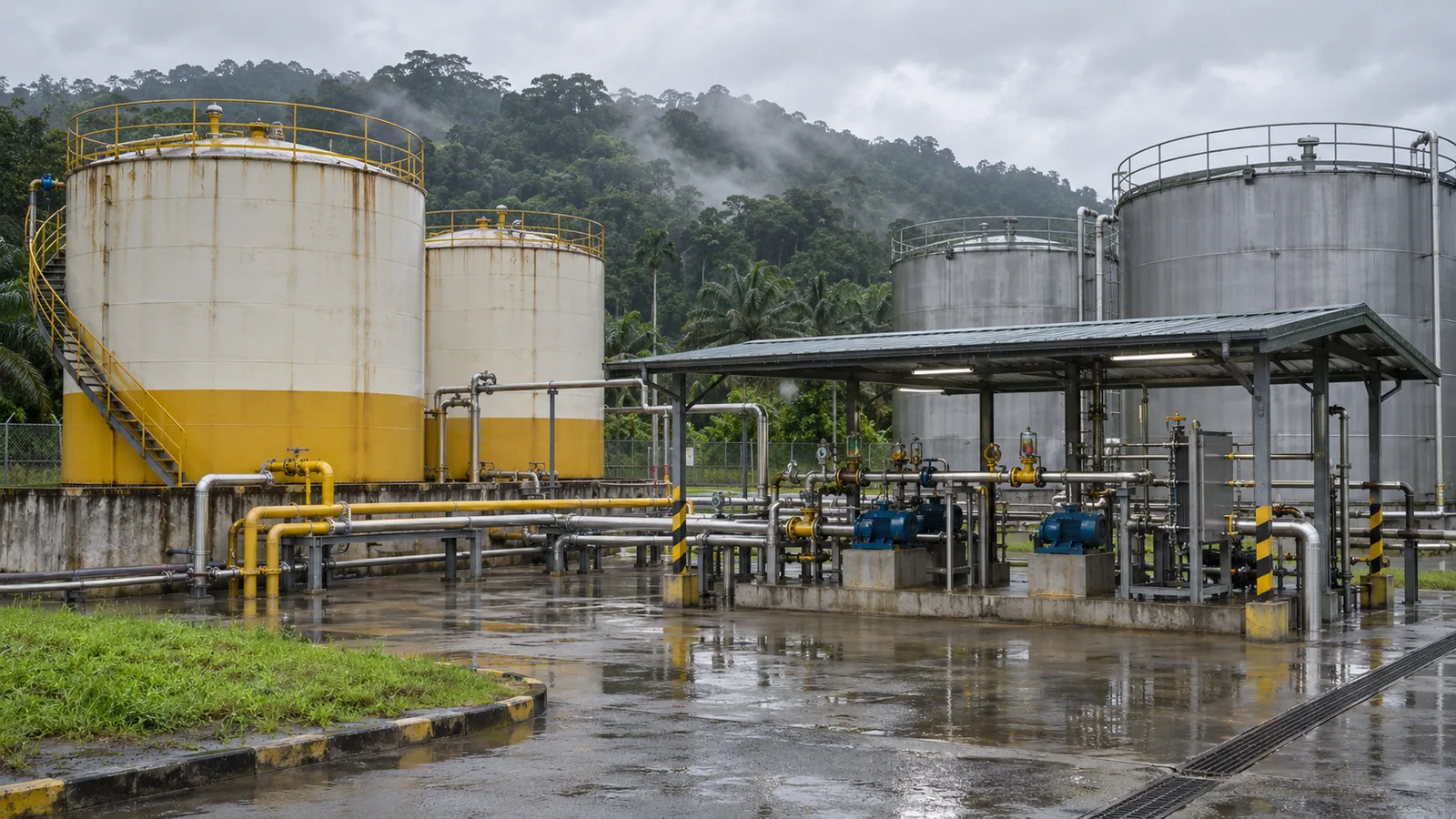
The government discussed the programme with petroleum companies. As quoted by Careta, the minister said the pandemic-related movement control order had created obstacles to upgrading 35 blending depots needed to supply B20. The issue was thus not only the availability of palm feedstock: facilities to blend and distribute the fuel also had to be ready.
Distribution constraints during the pandemic
The phased launch helps explain the different regional schedules. Langkawi and Labuan were early starting points in January, whereas depot upgrades for wider coverage faced movement restrictions. The Malaysian Reserve reported that studies and terminal upgrades had begun in January, with RM35 million allocated for studies and work on 35 terminals to accommodate blends of up to B30. That proposed terminal capability does not mean Malaysia had implemented a B30 mandate.
Malaysia's government framed biodiesel as a means of increasing domestic palm-oil use. Its statements about economic and environmental benefits are projections, not measured outcomes of this delay. The May reports do not separately quantify how much palm oil the change of dates in Sabah and Sarawak might displace; a volume effect cannot be established from the revised schedule alone.
What it means for Indonesia
The useful comparison is how the two countries implement and support their biodiesel mandates, not a claim that Malaysia's postponement automatically changes Indonesian palm prices or exports. Indonesia's Ministry of Energy and Mineral Resources (ESDM) announced in December 2019 that nationwide B30 would take effect on 1 January 2020. B30 blends 30% biodiesel with 70% petroleum diesel. Its higher blend rate alone says little about distribution readiness or programme cost.
On 18 May 2020, S&P Global reported Indonesian government action to support B30 funding as the spread between palm-based biodiesel and diesel prices widened. It described a government injection and an increased palm-oil export levy to help finance blending. By contrast, Malaysia's announcement focused on depot upgrades and regional scheduling under pandemic restrictions. As an editorial comparison grounded in those reports, maintaining a mandate requires both financing and working blending and distribution infrastructure.
Malaysia's announcement does not establish a direct, measurable effect on Indonesian fresh fruit bunch prices, crude palm oil trade or biodiesel exports. For Indonesian readers, the episode instead illustrates why an announced blend percentage should not be mistaken for fuel availability across every region. Funding, terminal readiness and restrictions on activity can govern the pace of implementation even when the domestic palm-utilisation objective remains in place.
Sources & references
- Careta, "Penangguhan tarikh pelaksanaan biodiesel B20 di Sabah dan Sarawak" (19 May 2020) — https://www.careta.my/article/penangguhan-tarikh-pelaksanaan-biodiesel-b20-di-sabah-dan-sarawak
- The Malaysian Reserve, "B20 biodiesel programme for Sabah and Sarawak deferred" (20 May 2020) — https://themalaysianreserve.com/2020/05/20/b20-biodiesel-programme-for-sabah-and-sarawak-deferred/
- S&P Global, "Palm-based B30 biodiesel mandate to continue with Indonesian government backing" (18 May 2020) — https://www.spglobal.com/energy/en/news-research/latest-news/agriculture/051820-palm-based-b30-biodiesel-mandate-to-continue-with-indonesian-government-backing
- Ministry of Energy and Mineral Resources, "Narasi Tunggal: Pertama di Dunia, Indonesia Terapkan Biodiesel 30 Persen (B30)" (23 December 2019) — https://www.esdm.go.id/id/media-center/news-archives/narasi-tunggal-pertama-di-dunia-indonesia-terapkan-biodiesel-30-persen-b30
Stay on top of Indonesian biodiesel
The weekly newsletter: the week’s key news, prices and data in one email every Friday. Or follow our channels for daily prices.