US 45Z Proposed Rules: Biofuel Credit Limited to Feedstock from US, Canada and Mexico
Treasury and the IRS released proposed 45Z rules on 3 February 2026: biofuel produced after 2025 earns the credit only if its feedstock comes from North America. The credit runs to 2029.
Contents (3 sections)
Washington — The US Department of the Treasury and the Internal Revenue Service (IRS) on Tuesday, 3 February 2026, released proposed regulations for the Section 45Z clean fuel production credit. The core rule: biofuel produced after 31 December 2025 qualifies only if all of its feedstock was grown or produced in the United States, Canada or Mexico. The credit applies to fuel produced in the US after 31 December 2024 and sold by 31 December 2029.
The proposal, numbered REG-121244-23, implements changes made by the One Big Beautiful Bill Act (OBBBA) budget law in July 2025, according to a summary by law firm Cleary Gottlieb. Public comments are due by 6 April 2026, and a public hearing is scheduled for 28 May 2026.
What the proposal covers
Based on the Cleary Gottlieb summary and a market report carried by Syngenta Canada, the main points are:
- Feedstock origin: feedstock counts as foreign if it comes from outside the US, Canada and Mexico, or is bought from an aggregator located outside those three countries.
- Prohibited foreign entities: taxpayers organised in or controlled from China, North Korea, Russia or Iran are ineligible for taxable years beginning after 4 July 2025; restrictions on "foreign-influenced" entities apply to taxable years beginning after 4 July 2027.
- Indirect land-use change (ILUC): ILUC emissions are excluded from emissions rates for fuel produced after 31 December 2025. Emissions rates also cannot fall below zero, except for fuels made from animal manure.
- The special SAF rate is removed, anti-double-crediting rules are added, and rules on sales through intermediaries are broadened.
- Producers must register with the IRS and meet certification, emissions accounting and reporting requirements.
Welcomed by soybean and canola interests
The feedstock restriction was championed by US soybean growers and processors. When OBBBA cleared Congress in early July 2025, oilseed processors' association NOPA and the American Soybean Association (ASA) said the 45Z changes meant imports such as Chinese used cooking oil (UCO) and foreign tallow would no longer qualify. NOPA President and CEO Devin Mogler thanked Congress for improving the tax provision, while ASA President Caleb Ragland said the 45Z changes would provide critical support to US soybean farmers. NOPA noted that the US soy crushing industry has invested more than US$6 billion since 2021, expanding capacity by over 25%.
Syngenta Canada reported that Canadian canola used in renewable diesel is expected to benefit. The Renewable Fuels Association said the proposal resolves uncertainty over what counts as a qualified fuel sale, while Clean Fuels Alliance America said producers had struggled to use the credit fully since it became available in early 2025 because of limited guidance. The rules are still proposals and may change before being finalised.
Implications for Indonesian palm oil
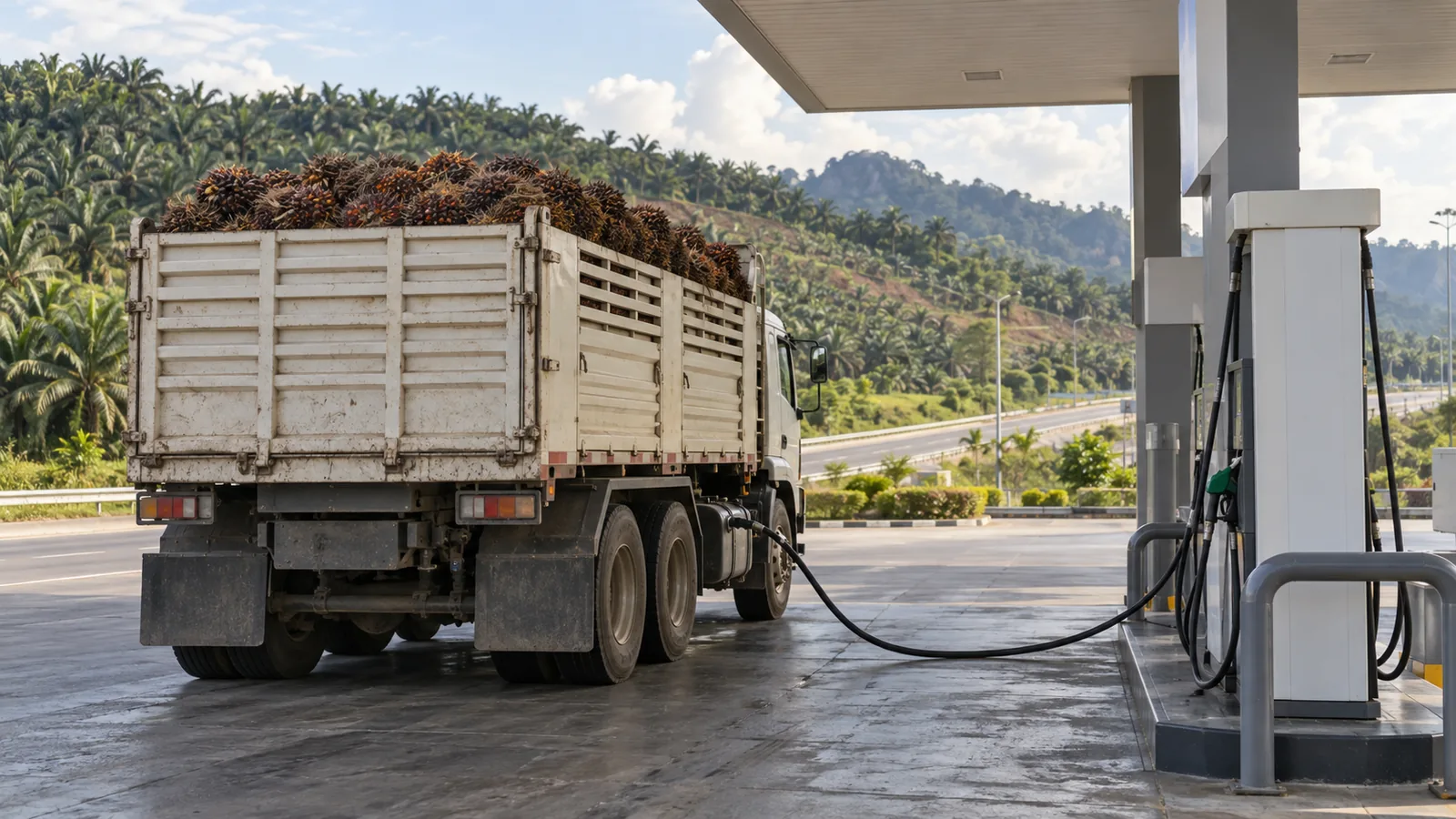
The proposal does not mention palm oil specifically. However, because feedstock must originate in the US, Canada or Mexico, imported feedstock from outside that region, including palm-derived products from Southeast Asia, logically cannot earn the 45Z credit for production after 2025. In effect, the largest US fiscal incentive for biofuels is now channelled entirely to North American supply chains.
For Indonesia, this reinforces a trend of biofuel markets in developed economies becoming more protective against imported feedstock. At the same time, the removal of ILUC from US emissions accounting is notable, given that land-use change has often been used to criticise crop-based biofuels. Related terms are explained in the glossary.
Sources & references
- Cleary Gottlieb, "Proposed Regulations on Section 45Z Clean Fuel Production Credit Issued" (11 February 2026) — https://www.clearygottlieb.com/news-and-insights/publication-listing/proposed-regulations-on-section-45z-clean-fuel-production-credit-issued
- Syngenta Canada (DePutter Publishing), "New 45Z Guidance Limits Feedstock Origins" (3 February 2026) — https://www.syngenta.ca/market-news/new-45z-guidance-limits-feedstock-origins
- NOPA, "NOPA and ASA Applaud Passage of One Big Beautiful Bill, Cementing Clean Fuel Credit Reforms that Prioritize U.S. Farmers" (3 July 2025) — https://www.nopa.org/nopa-and-asa-applaud-passage-of-one-big-beautiful-bill-cementing-clean-fuel-credit-reforms-that-prioritize-u-s-farmers/