Biodiesel Quality Standards: Why Monoglycerides and Water Content Matter
At B50, half the tank is FAME. Learn about SNI 7182, key quality parameters, the tighter B50 specifications and good housekeeping practices.
Contents (5 sections)
The higher the biodiesel share in a blend, the more its quality matters. At B50, half of what is in the tank is FAME, so even a small deviation in quality can affect filters, injectors and engine performance. For this reason Indonesia has a layered system of standards. As of October 2026, B50 is mandatory nationwide.
First layer: the SNI biodiesel standard
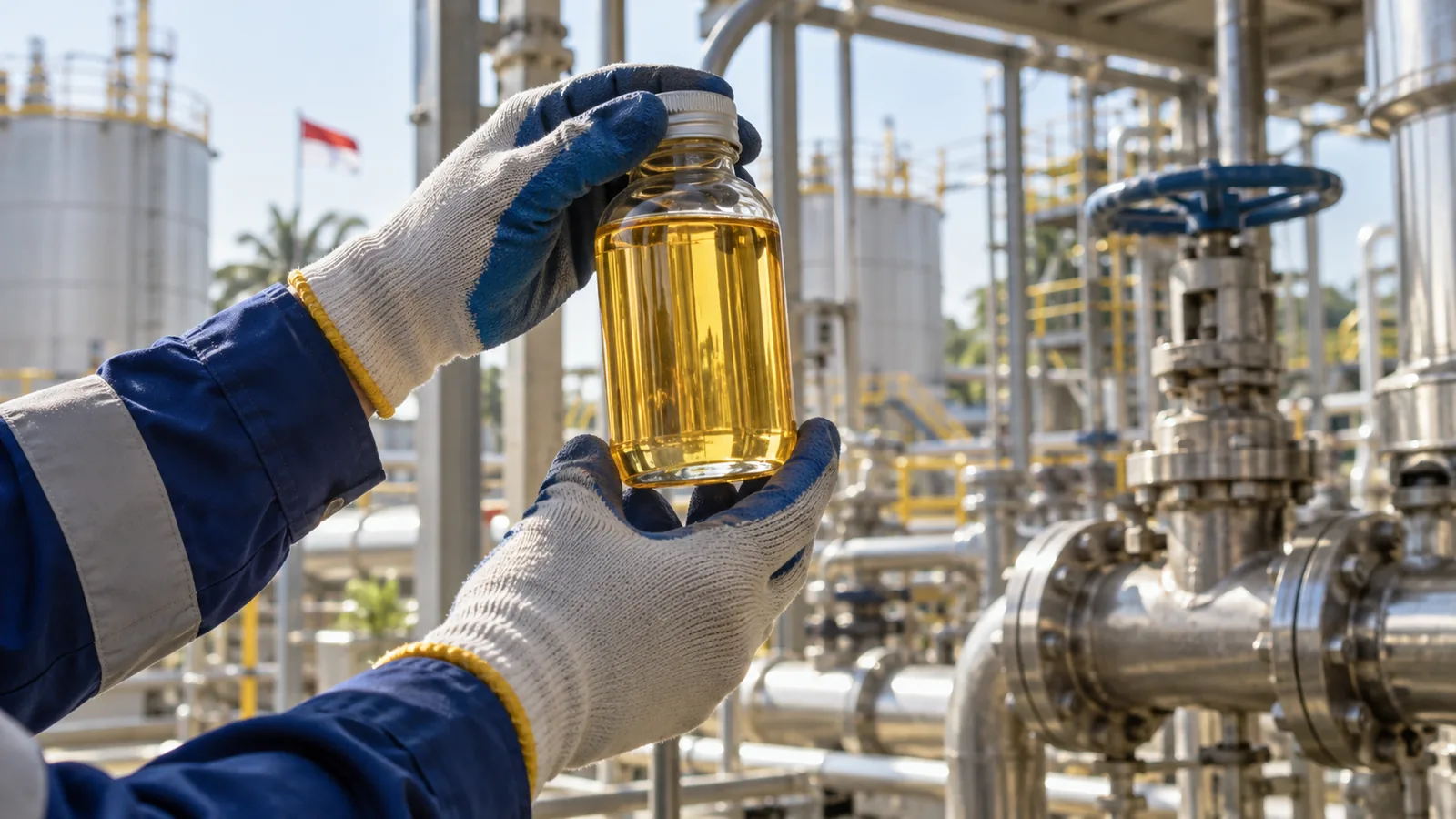
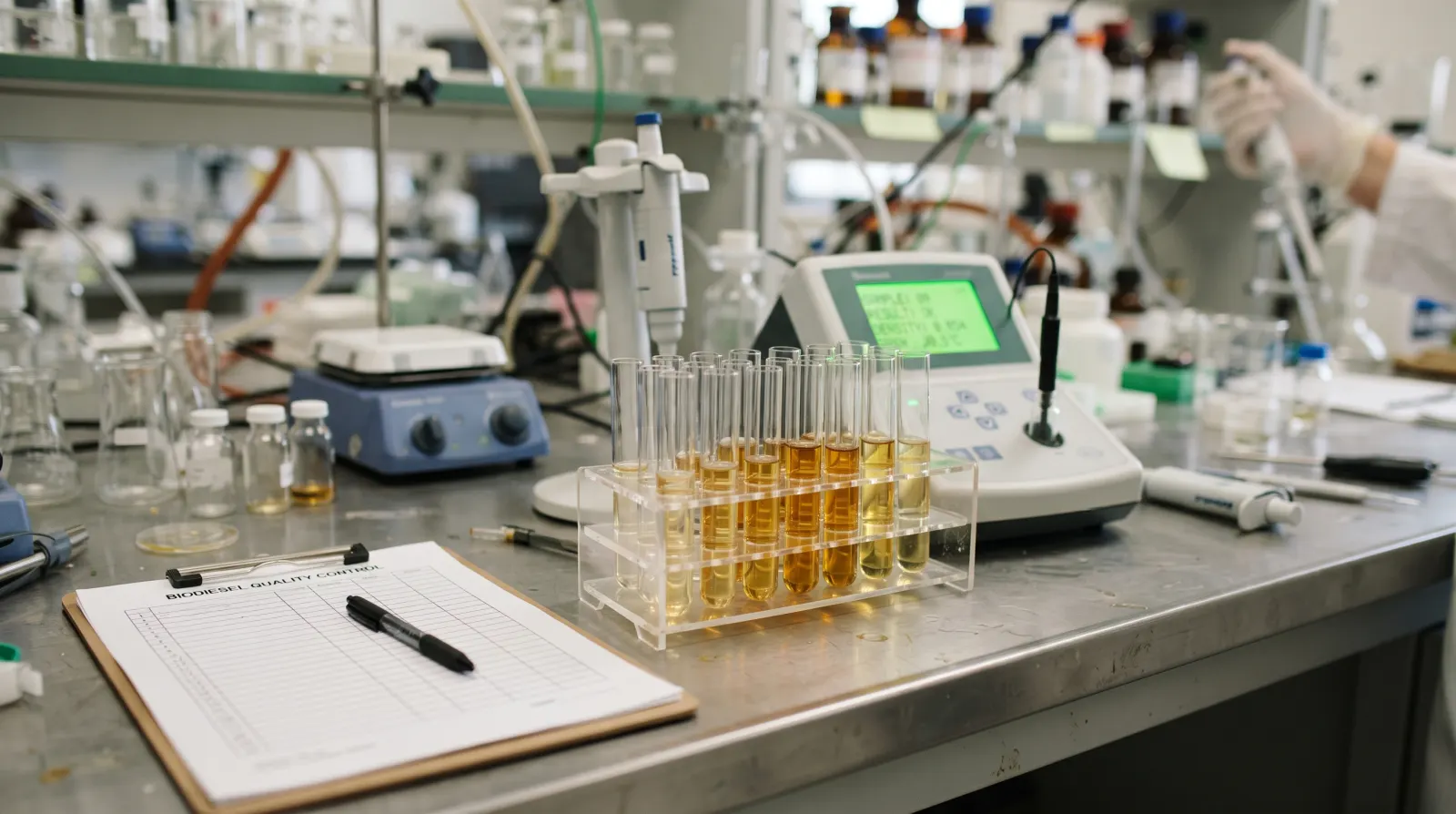
The quality of pure biodiesel (B100) follows SNI 7182, the Indonesian National Standard for biodiesel issued by the National Standardization Agency (BSN). It lists the physico-chemical parameters producers must meet, along with test methods.
Second layer: government specifications
For the mandatory blending programme, the government sets technical specifications that can be stricter than SNI, adjusted to the blend rate in force. For B50, the government issued technical standards alongside ESDM Ministerial Decree (Kepmen) No. 257.K/EK.01/MEM.E/2026, reported to contain about 24 test parameters (the number differs between media outlets). Separately, the specification for the finished B50 blend at fuel stations is set by Director General of Oil and Gas (Migas) Decision No. 75.K/MG.06/DJM/2026.
Key parameters and what they mean
- Methyl ester content. Shows how complete the transesterification reaction was. The higher it is, the purer the biodiesel.
- Monoglycerides. A residue of incomplete reaction. At low temperatures, saturated monoglycerides can crystallise and clog filters. Eniya Listiani Dewi, Director General of New, Renewable Energy and Energy Conservation (EBTKE), said the maximum monoglyceride limit for B50 has been tightened to 0.47% by mass from 0.5% by mass.
- Water content. Water encourages microbial growth, corrosion and deposits. The limit is reported to have been lowered to a maximum of 300 ppm for B50.
- Oxidation stability. The biodiesel's resistance to oxidation during storage. For B50, the requirement is reported to have been raised to 900 minutes from 720 minutes.
- Acid number and total glycerol. Indicators of purity and of the potential for corrosion and deposits.
- Cetane number and sulphur content (for the finished blend). B50 comes in two grades, CN 48 and CN 51; the sulphur limit for CN 48 will be tightened to 50 ppm from 1 December 2027.
Quality is also about handling
Biodiesel that passes tests at the plant can still degrade if poorly handled. For that reason, good housekeeping practices apply from the terminal to the end user:
- Drain water from the bottom of the tank regularly.
- Clean the tank before switching to a higher blend rate.
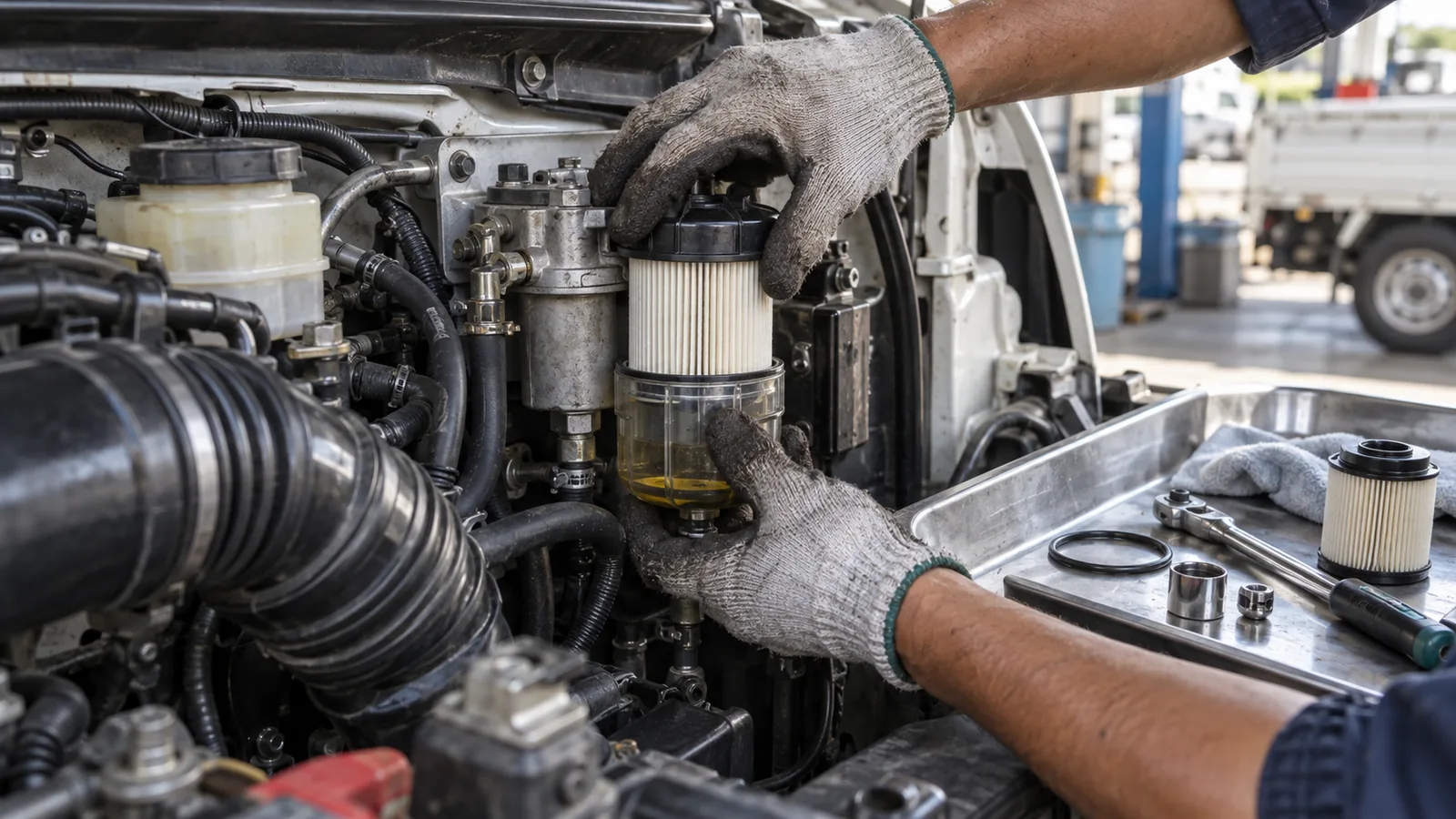
- Check and replace fuel filters on schedule, especially at the start of a switch.
- Avoid storing fuel for too long; apply first-in, first-out stock rotation.
- Use closed tanks to keep out moisture and contaminants.
Key term: road tests
Before the blend rate is raised, the government, together with vehicle manufacturers, Lemigas (the Ministry of Energy and Mineral Resources' oil and gas research centre) and other stakeholders, runs road tests across sectors: automotive, heavy equipment, rail, maritime and power generation. The Ministry of Energy and Mineral Resources reports that B50 road tests in the automotive sector showed safe results. The tighter quality standards are one outcome of this testing process.
Sources & references
- Bisnis.com, "Pemerintah Resmi Terbitkan Standar Teknis B50, Ini Daftar Parameter Mutunya" (28 June 2026)
- CNN Indonesia, "Transisi Berakhir, SPBU Wajib Jual Biodiesel B50 Mulai 1 Oktober" (1 October 2026) — cnnindonesia.com
- Ministry of Energy and Mineral Resources (ESDM) — Uji Jalan B50 Sektor Otomotif Tunjukkan Hasil Aman
- National Standardization Agency (Badan Standardisasi Nasional) — Katalog SNI bidang energi biologi, termasuk SNI 7182:2024