Danantara Explores Palm Oil Refinery in Egypt to Tap African Markets
Danantara and Egyptian partners are exploring a palm oil refinery to bring Indonesian downstream products closer to African and Middle Eastern markets.
Contents (4 sections)
Jakarta — Indonesia’s sovereign investment body Danantara is exploring cooperation on palm oil downstreaming in Egypt, including the possibility of building a refinery for crude palm oil and its derivatives. The project remains at an early discussion stage, with no investment value, capacity, final location or construction schedule announced.
The proposal emerged after President Prabowo Subianto met Egyptian President Abdel Fattah El-Sisi in Jakarta on 11 October 2026. Danantara CEO Rosan P. Roeslani said palm oil was among the sectors discussed with Egyptian investment counterparts.
Egypt is viewed as a gateway to Africa
Indonesian Chamber of Commerce and Industry Chairman Anindya Bakrie described Egypt as a large market and a strategic gateway to African countries. With a population of around 100 million, Egypt also provides trade access to Africa, the Middle East and the Mediterranean region.
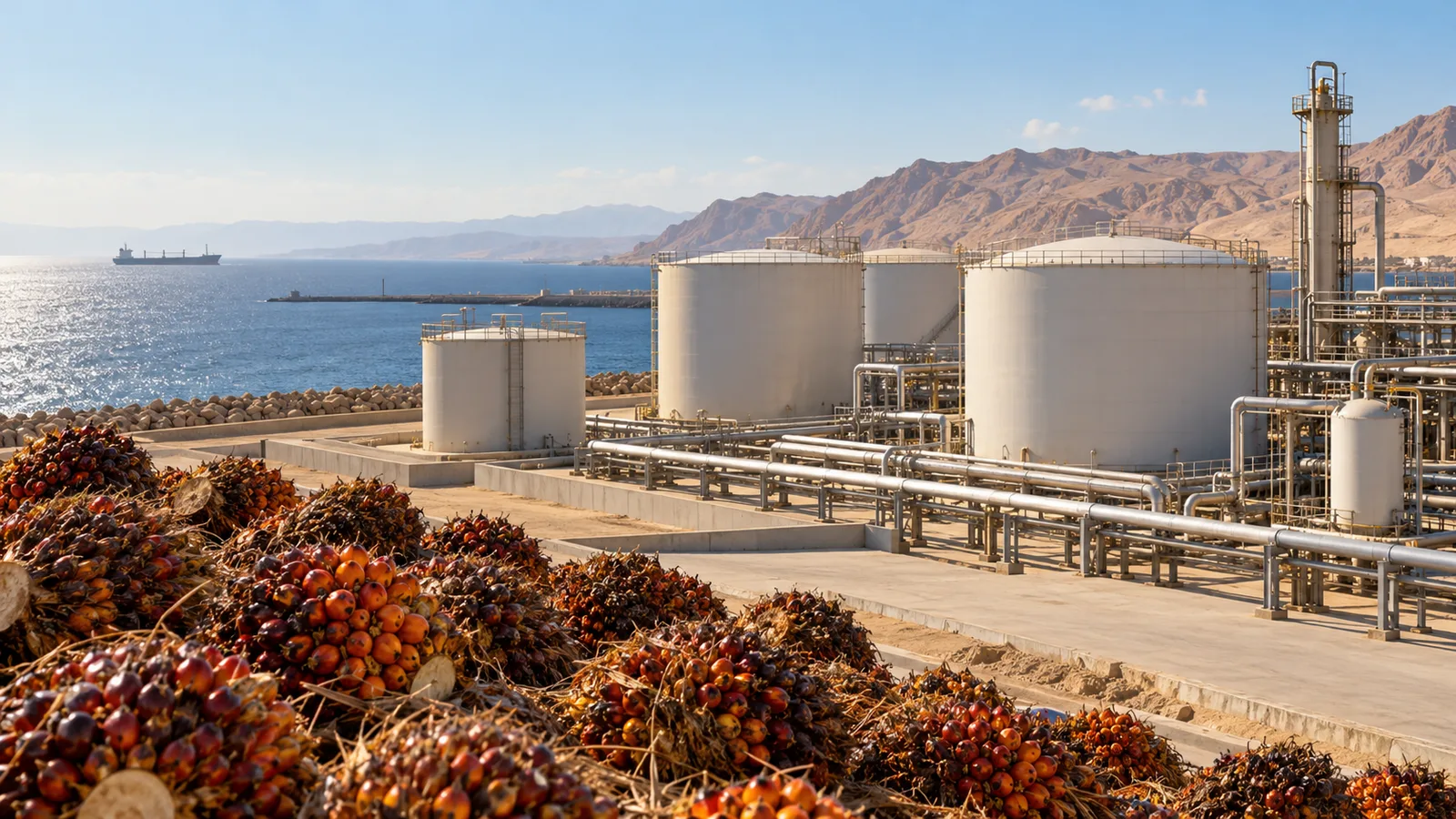
A processing facility closer to the target market could allow Indonesia to sell more value-added palm oil products rather than only raw materials. A refinery may produce different palm fractions for food, industrial and energy uses, depending on its configuration and market demand.
No final investment decision has been made. Rosan said the project value would require further discussion. VOI reported that the Egyptian government had prepared land for the proposed refinery, but the location and formal readiness of the site have not been officially detailed.
The cooperation appears in an official statement
A joint statement published by Indonesia’s Ministry of Foreign Affairs noted progress in strategic cooperation between Danantara Indonesia and the Future of Egypt Authority for Sustainable Development. Opportunities discussed include the production and distribution of CPO and its derivatives, phosphate fertilisers and related raw materials.
The official statement shows that the discussions extend beyond media speculation. However, inclusion in a joint statement does not amount to a final investment decision, financial close or the start of construction.
Presidents Prabowo and El-Sisi also encouraged the creation of a Joint Investment Fund by the two countries’ investment institutions to support strategic projects. The fund’s structure, committed capital and initial projects have not been disclosed.
Palm oil trade provides an existing foundation
Indonesia–Egypt trade already has a substantial palm oil component. KabarBursa, citing Ministry of Trade data, reported that Indonesian palm oil and fraction exports to Egypt reached about US$732 million in 2024, accounting for around 37.8% of Indonesia’s exports to the country.
Total bilateral trade was reported at US$1.74 billion in January–June 2026. Indonesian exports to Egypt reached about US$1.09 billion, while imports from Egypt stood at US$647.70 million. The figures indicate an established market, although a refinery’s economics would still depend on feedstock supply, logistics, tariffs, domestic demand and access to re-export markets.
Questions that remain unanswered
The next developments to watch include the implementing partners, land certainty, processing capacity, intended products, investment value, funding shares and construction timetable. Until those details are available, the proposal should be described as a strategic exploration rather than a confirmed project.
If implemented, an Egyptian facility could expand Indonesia’s palm oil downstream reach and move processed products closer to consumers in Africa and the Middle East. The benefits for Indonesia would depend on ownership, the use of Indonesian feedstock, technology arrangements and how much value added remains within the domestic economy.
Sources & references
- Bisnis.com, "Danantara Jajaki Hilirisasi Sawit di Mesir, Cari Potensi Pasar di Benua Afrika" (12 October 2026) — https://ekonomi.bisnis.com/read/20261012/12/2011901/danantara-jajaki-hilirisasi-sawit-di-mesir-cari-potensi-pasar-di-benua-afrika
- Ministry of Foreign Affairs of Indonesia, "Joint Statement on the Official Visit of H.E. the President of the Arab Republic of Egypt to the Republic of Indonesia" (11 October 2026) — https://www.kemlu.go.id/en/daftar-joint-statement/pernyataan-bersama-pada-kunjungan-resmi-ym-presiden-republik-arab-mesir-ke-republik-indonesia?type=publication
- Cabinet Secretariat of Indonesia, "Presiden Prabowo Perkuat Kerja Sama Indonesia–Mesir di Bidang Ekonomi, Kelautan, hingga Pertahanan" (11 October 2026) — https://setkab.go.id/presiden-prabowo-perkuat-kerja-sama-indonesia-mesir-di-bidang-ekonomi-kelautan-hingga-pertahanan/
- VOI, "Danantara Jajaki Dana Investasi dengan Mesir, Refinery Sawit Ikut Dibahas" (12 October 2026) — https://voi.id/ekonomi/597997/danantara-jajaki-dana-investasi-dengan-mesir-refinery-sawit-ikut-dibahas