How to Care for Your Diesel Tank and Fuel Filter in the B50 Era: Drain Water, Change Filters on Time
A practical guide to looking after a diesel vehicle's fuel system after B50: water separators, filters, tank cleanliness and storage tank handling for fleets.
Contents (4 sections)
Looking after a diesel vehicle in the B50 era — diesel containing 50% biodiesel, in force since 1 July 2026 — comes down to three things: regularly draining water from the water separator, replacing the fuel filter on the manufacturer's schedule, and keeping the tank and filler neck clean. This guide summarises recommendations from manufacturers and the Ministry of Energy and Mineral Resources (ESDM) that car owners, truck operators and fleet managers can apply.
1. Drain the water separator regularly
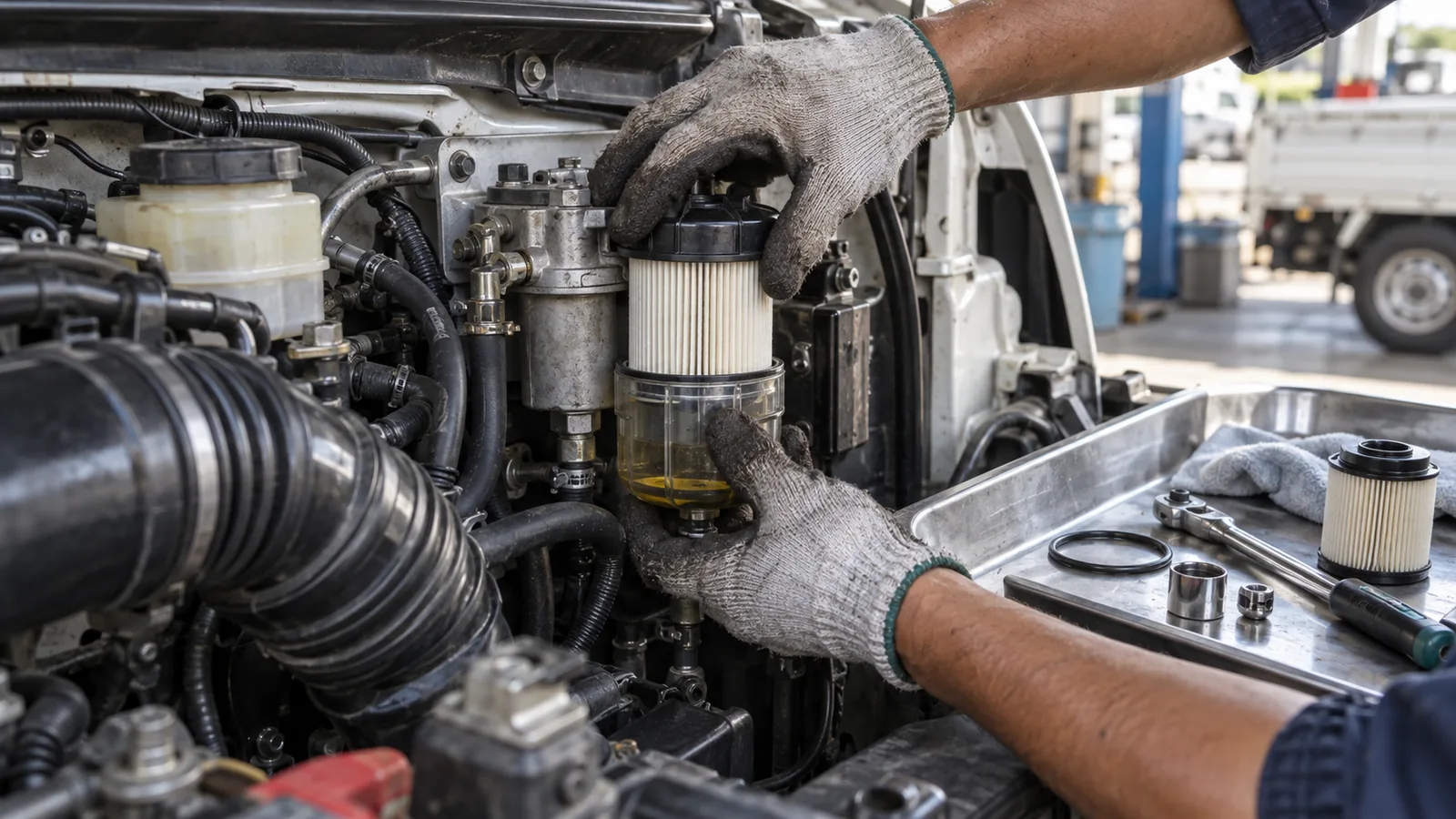
A water separator removes water from diesel before the fuel reaches the injection system. According to Auto2000, it works on the difference in density: heavier water settles at the bottom of the unit while lighter diesel flows on to the fuel system. Some models have a sensor that signals when the collected water reaches a set level.
Water that gets into the fuel system can reduce engine power, impair combustion, and cause corrosion and damage to precision parts such as injectors and fuel pumps. Collected water should therefore be drained periodically from the reservoir at the bottom. If the related warning light comes on, the vehicle should be checked promptly.
In the B50 era, the fuel specification itself has been tightened. ESDM records a maximum water content of 300 ppm for B50, stricter than the 320 ppm limit for B40. Even so, a specification at the depot does not guarantee the fuel in a vehicle's tank stays water-free, so routine checks of the water separator remain important.
2. Replace filters on the manufacturer's schedule
Recommended replacement intervals vary by brand. PT Krama Yudha Tiga Berlian Motors (KTB), the Mitsubishi Fuso distributor, for example, advises replacing the fuel filter and water separator every 10,000 km to keep fuel flowing properly, as reported by Warta Ekonomi from its B50 education programme at GIIAS 2026. Owners should follow their own owner's manual and authorised workshop.
Pay attention to the switch-over period too. In its 2019 technical recommendations for B30, ESDM noted that new vehicles, or vehicles that had never used biodiesel blends, tended to need earlier filter changes when they first used the fuel because of a clogging effect, after which things returned to normal. The ministry asked brand holders to inform customers about this. In other words, after moving to a higher biodiesel blend, monitor filters more closely over the first few thousand kilometres.
When changing filters, KTB advises keeping the work area clean so dirt does not enter the fuel system. Use parts that meet the manufacturer's specifications.
3. Keep the tank and filler neck clean
KTB also advises keeping the fuel tank and filler nozzle clean to prevent contamination. To protect injectors, KTB recommends using a diesel injector cleaner at every 20,000 km interval. Clean fuel helps protect precision injection parts such as injectors and fuel pumps, which Auto2000 says are vulnerable to damage from water.
4. For storage tank and fleet operators
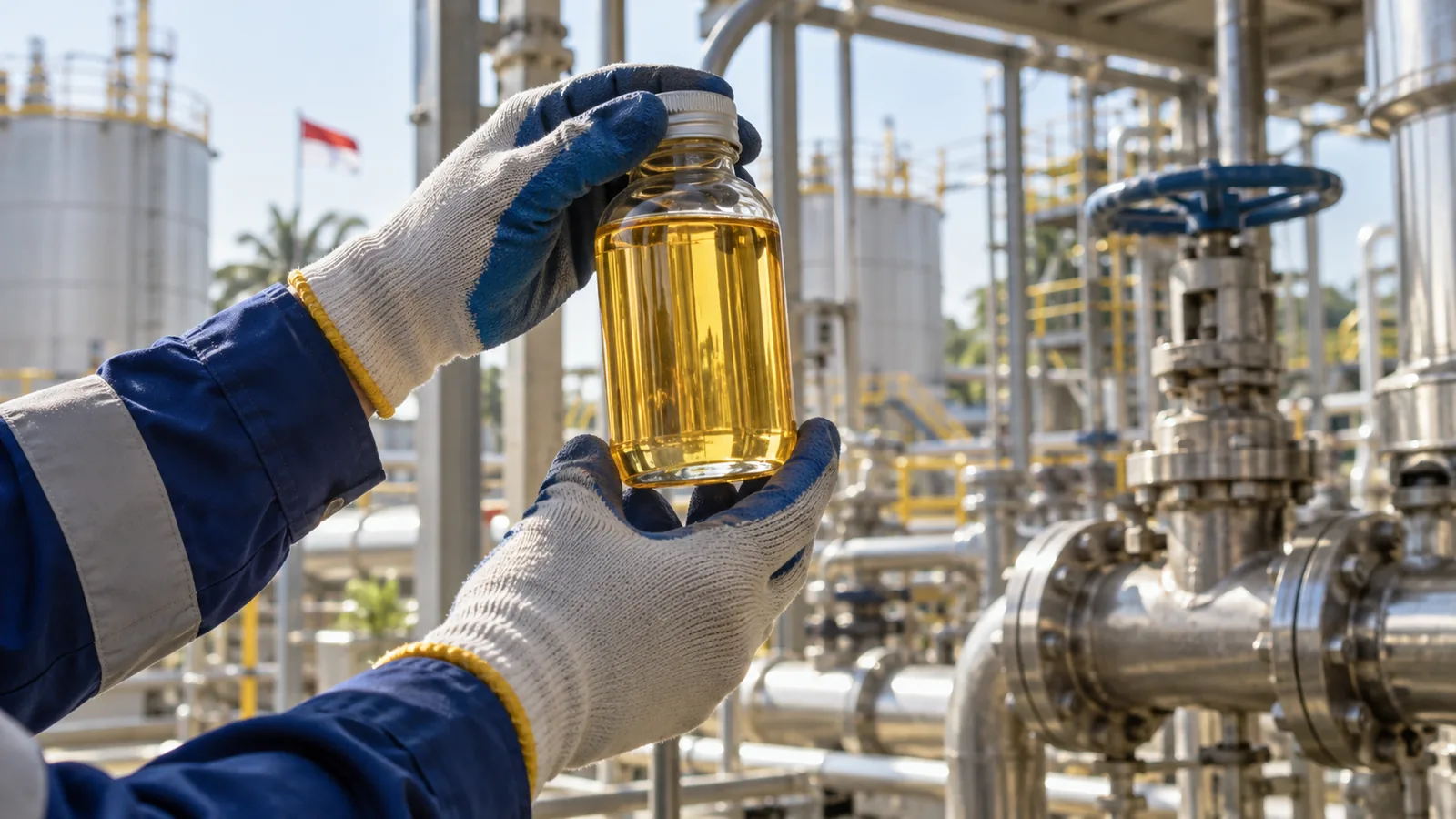
For companies that store their own fuel — such as fleet operators, generator users or heavy equipment owners — ESDM's biodiesel handling principles apply. The B30 technical recommendations say blending, storage and distribution should be controlled and monitored regularly, blending should use standard-compliant equipment so the mix is homogeneous, and pure biodiesel (B100) should be stored in closed tanks, kept away from contact with air and blended with diesel promptly to prevent water content from rising.
| Component | What to do | Reference |
|---|---|---|
| Water separator | Drain water regularly; check if the warning light comes on | Auto2000, KTB |
| Fuel filter | Replace per owner's manual (Fuso example: every 10,000 km); monitor more closely after switching | KTB, ESDM |
| Tank and nozzle | Keep free of dirt and water | KTB |
| Injectors | Fuso example: injector cleaner every 20,000 km | KTB |
| Storage tanks | Closed, minimal air contact, homogeneous blending | ESDM |
Terms such as FAME, water content and monoglycerides are explained in the Media Biodiesel glossary.
Sources & references
- Warta Ekonomi, "Biodiesel B50 Berlaku, Ini Tips Merawat Mesin Diesel dari Mitsubishi Fuso" (3 August 2026) — https://wartaekonomi.co.id/read626266/biodiesel-b50-berlaku-ini-tips-merawat-mesin-diesel-dari-mitsubishi-fuso
- Auto2000, "Water Separator: Fungsi, Cara Kerja, dan Pentingnya untuk Mesin Diesel" (23 April 2026) — https://auto2000.co.id/berita-dan-tips/water-separator
- Ministry of Energy and Mineral Resources (ESDM), "Uji Jalan B50 Sektor Otomotif Tunjukkan Hasil Aman" (21 April 2026) — https://esdm.go.id/en/media-center/news-archives/uji-jalan-b50-sektor-otomotif-tunjukkan-hasil-aman
- Ministry of Energy and Mineral Resources (ESDM), "Uji Jalan Selesai, Kementerian ESDM Umumkan Rekomendasi Teknis Mandatori B30 di 2020" (28 November 2019) — https://esdm.go.id/id/media-center/arsip-berita/uji-jalan-selesai-kementerian-esdm-umumkan-rekomendasi-teknis-mandatori-b30-di-2020