B50 Road Test Reaches 40,000 km as ESDM Tightens B100 Water Limit to 300 ppm
Interim B50 road-test results on nine diesel vehicles show engines and filters in good condition. B100 specs for B50 are tighter: water 300 ppm, monoglycerides 0.47%, oxidation 900 minutes.
Contents (4 sections)
Bandung — Interim results from B50 biodiesel road tests on nine diesel vehicles show engines, fuel filters and lubricants remaining in good condition, the Ministry of Energy and Mineral Resources (ESDM) said. Vehicles above 3.5 tonnes have completed their 40,000 km target, while those below 3.5 tonnes have reached 40,000 km of a 50,000 km target. For B50, the government has also tightened three B100 quality parameters: maximum water content of 300 ppm, maximum monoglyceride content of 0.47% by mass, and minimum oxidation stability of 900 minutes.
The findings were presented by Eniya Listiani Dewi, Director General of New, Renewable Energy and Energy Conservation (EBTKE), at the B50 road-test blending and fuelling station in Lembang, West Java, on Tuesday, 21 April 2026. The government is targeting a nationwide B50 mandate from 1 July 2026.
Nine vehicles in two categories
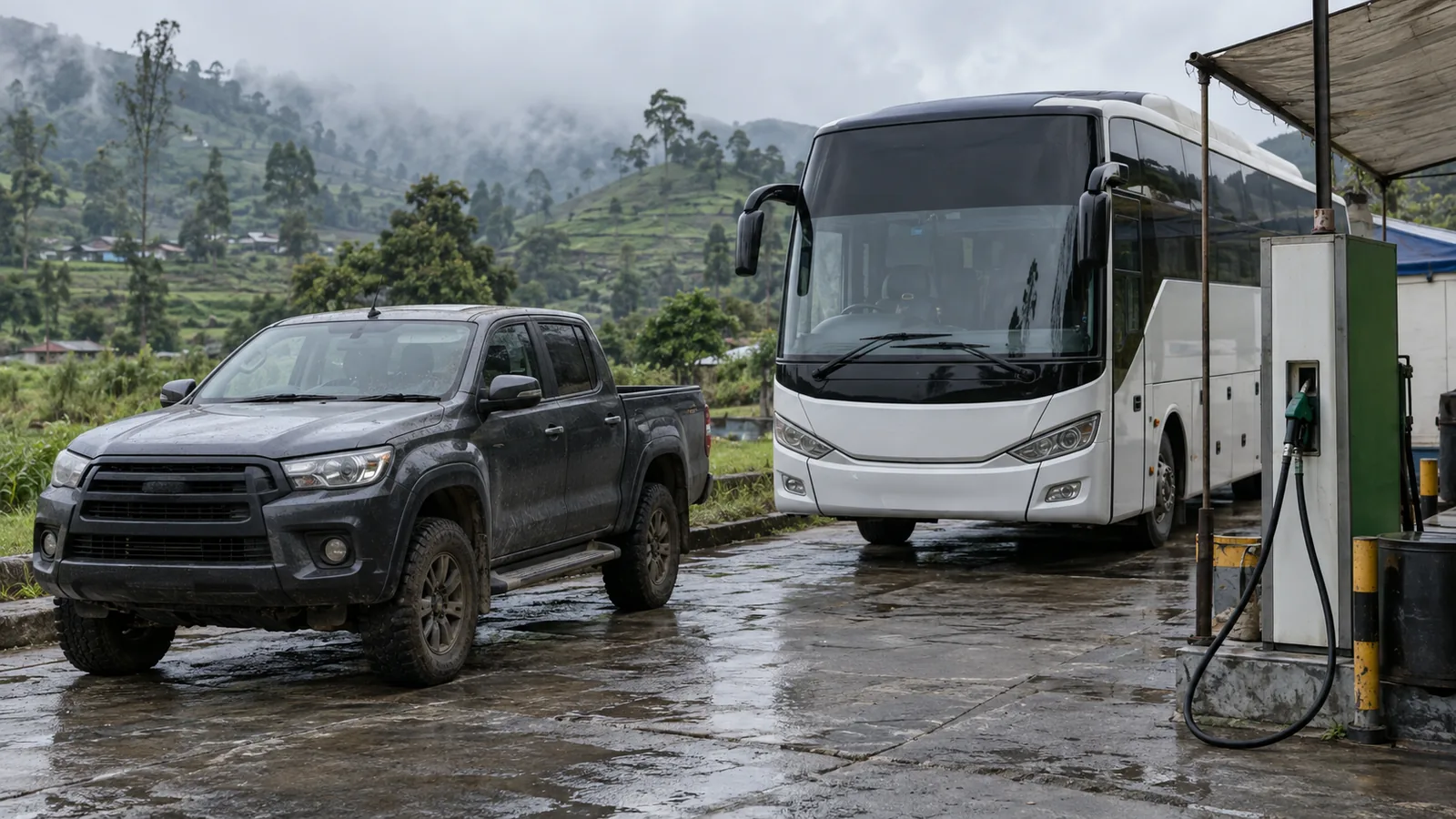
According to Katadata, the automotive road test involves nine vehicles from Japanese and European manufacturers, split into two categories:
- Below 3.5 tonnes: 4 units from 4 brand holders (ATPM), with a 50,000 km target.
- Above 3.5 tonnes: 5 heavy commercial vehicles, namely large trucks and buses, from 4 brand holders, with a 40,000 km target.
Eniya said more vehicles are being tested for B50 than were tested for B40. She expects all vehicles below 3.5 tonnes to reach 50,000 km in May 2026, after which every engine will be inspected. Reports differ on timing: detikOto wrote that the road test and engine inspections were targeted for completion in June 2026.
B50 testing began with laboratory technical tests in early 2025, which were completed by mid-2025. Engine trials then started simultaneously on 9 December 2025 across six sectors: automotive, mining, agricultural machinery, marine transport, power generation and railways.
Tighter B100 specifications for B50
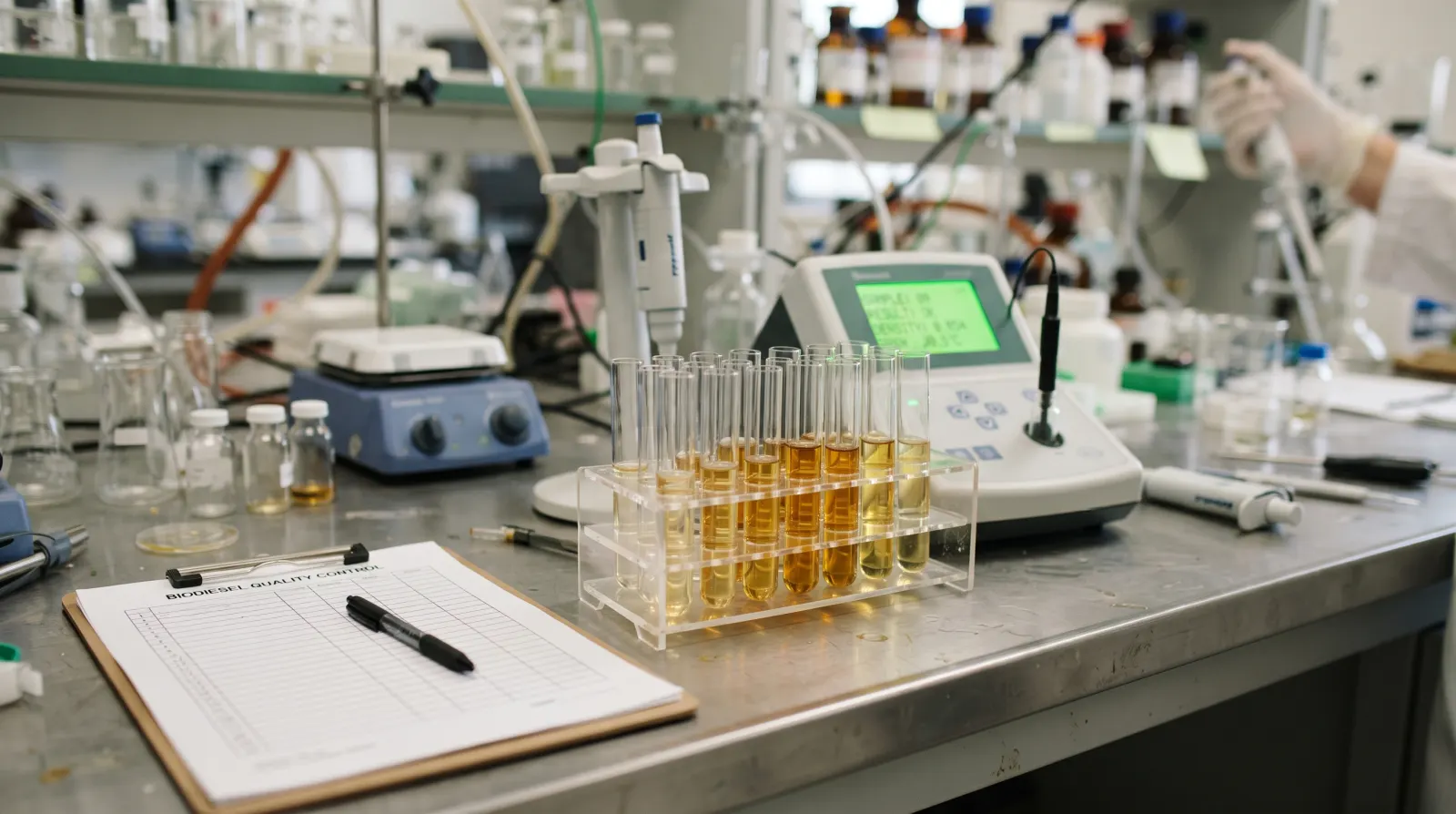
ESDM said the fuel used met specifications, with FAME content of around 49–50%. Following recommendations from the Liquid Bioenergy Technical Committee, three B100 parameters for B50 are stricter than the limits that apply to B40:
| B100 parameter | Limit for B40 | Limit for B50 |
|---|---|---|
| Water content | max. 320 ppm | max. 300 ppm |
| Monoglycerides | max. 0.5% by mass | max. 0.47% by mass |
| Oxidation stability | min. 720 minutes | min. 900 minutes |
An explanation of each parameter is available in our glossary.
Performance, emissions and filter condition
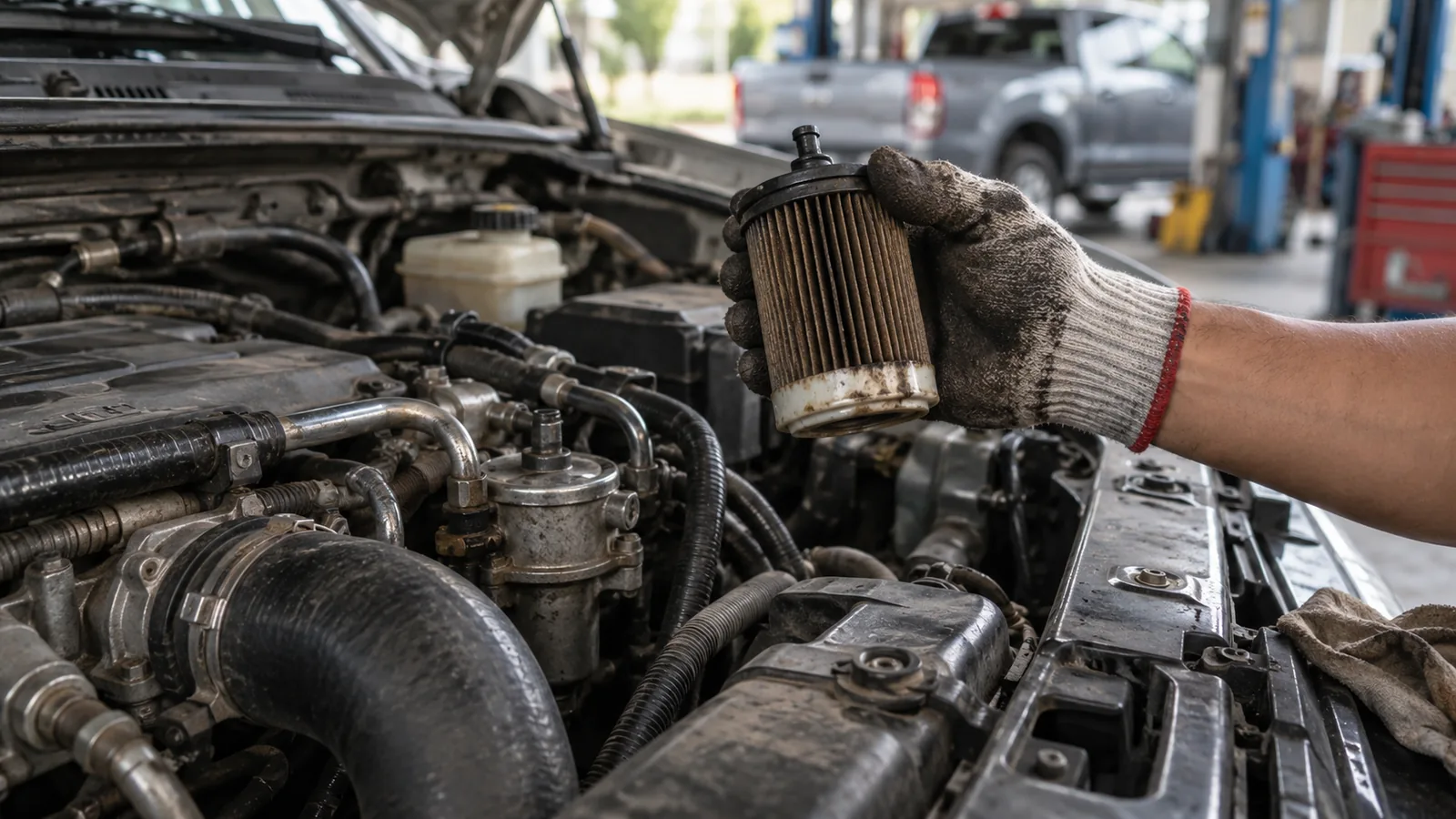
The ESDM release summarised the interim results as follows: vehicle performance was stable with no meaningful decline, fuel consumption stayed within manufacturer standards, carbon monoxide (CO) and opacity were below legal limits, and engine components, lubricants and fuel systems remained in good condition in line with manufacturer recommendations. Fuel filters were also reported to be in good condition.
Participating manufacturers struck a similar tone. Anton Rusli, Vice President Director of PT Isuzu Astra Motor Indonesia, told detikOto there had been no significant problems so far, and that the company would make minor adjustments if issues arose. Susilo Darmawan, Sales & After Sales Director at PT Hino Motors Sales Indonesia, said the filter clogging often associated with biodiesel had not appeared in this test. A representative of PT Krama Yudha Tiga Berlian Motors said the Mitsubishi Fuso test fleet showed no signs of damage and that the company was waiting for results after 50,000 km.
Gaikindo member Abdul Rochim, quoted by Listrik Indonesia, called the interim results promising and said he hoped the fuel specification used in the test would become the standard when B50 is rolled out.
Further testing in other sectors
According to Katadata, similar trials are under way in other sectors. In agriculture, B50 is being tested on two-, three- and four-wheel tractors; mining trials involve two companies, including PT Harmoni Panca Utama in Samarinda; and in the maritime sector B50 has already been used in a sea-going vessel trial. Railway tests were scheduled on the Lempuyangan–Pasar Senen and Gambir–Surabaya Pasar Turi routes, followed by an engine-start test in the cold Bromo area of East Java. The government said policy decisions will be based on comprehensive test results. Several outlets noted that these results are still interim and that post-test engine inspections had yet to take place.
Sources & references
- Kementerian ESDM, "Uji Jalan B50 Sektor Otomotif Tunjukkan Hasil Aman" (21 April 2026) — https://esdm.go.id/id/media-center/arsip-berita/uji-jalan-b50-sektor-otomotif-tunjukkan-hasil-aman
- Katadata, "Kementerian ESDM Uji Jalan B50 pada Sektor Otomotif hingga Kereta, Ini Hasilnya" (21 April 2026) — https://katadata.co.id/berita/energi/69e777ac70763/kementerian-esdm-uji-jalan-b50-pada-sektor-otomotif-hingga-kereta-ini-hasilnya
- detikOto, "Indonesia Terapkan Biodiesel B50 Mulai Juli, Begini Hasil Ujinya" (22 April 2026) — https://oto.detik.com/berita/d-8456403/indonesia-terapkan-biodiesel-b50-mulai-juli-begini-hasil-ujinya
- Listrik Indonesia, "Uji B50 Capai 40.000 Km, Tunjukkan Hasil Positif" (22 April 2026) — https://listrikindonesia.com/detail/19816/uji-b50-capai-40000-km-tunjukkan-hasil-positif