B40 Road Test Reaches Engine Teardown; Technical Report Targeted for December
Some B40 test vehicles reached engine teardown; early findings were not the final result for the whole fleet.
Contents (3 sections)
Jakarta — Indonesia's road tests of B40, a diesel blend containing 40% biodiesel, reached engine teardown and component inspection on 21 November 2022. The Ministry of Energy and Mineral Resources (ESDM) said on 22 November that some B40 and B30D10 test vehicles had completed 50,000 kilometres. The full technical report was still targeted for December; an interim inspection did not amount to a decision to mandate B40.
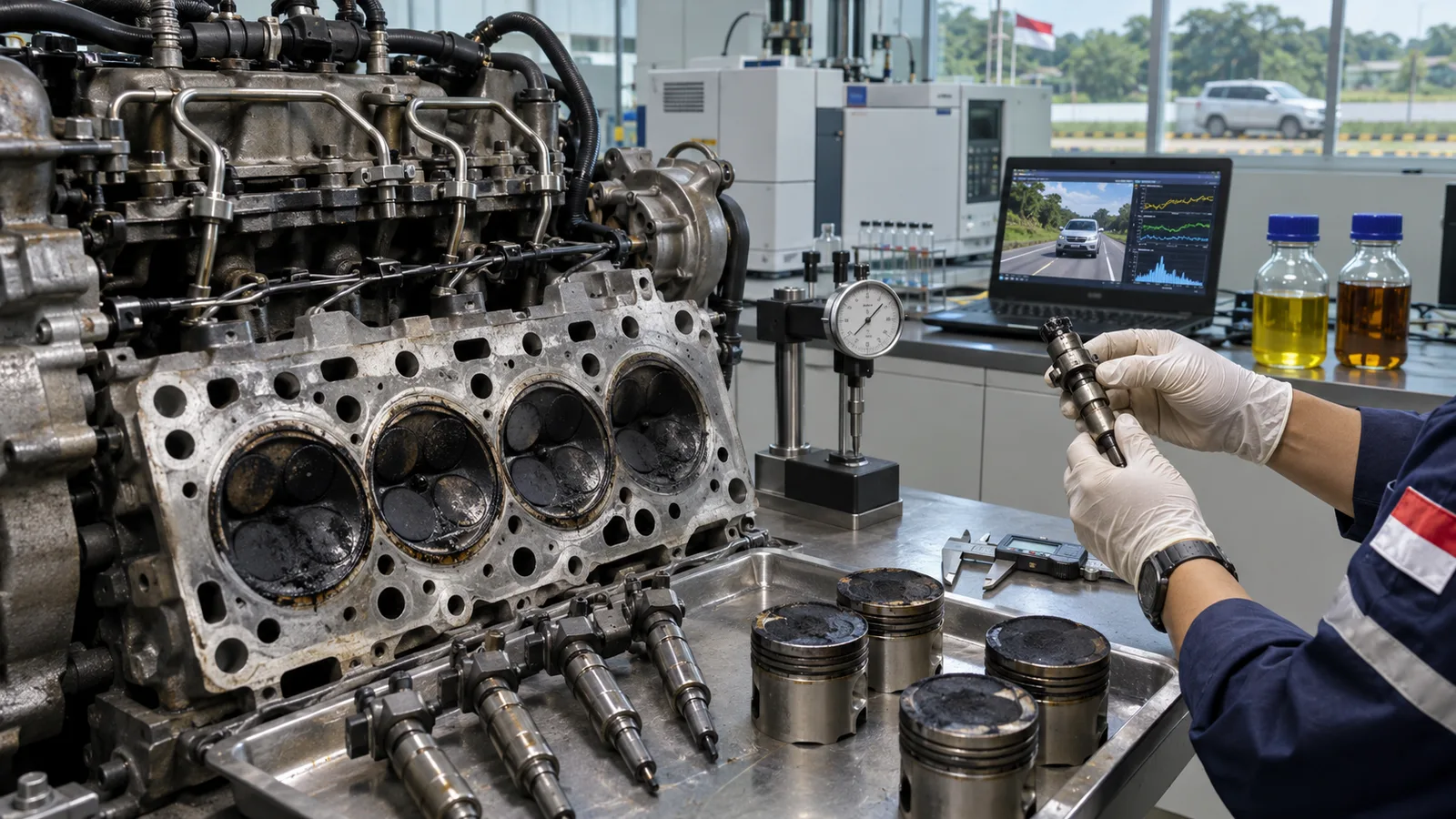
The milestone directly concerns biodiesel fuel quality and engine compatibility. Researchers opened engines after extended road use to look for wear and deposits. This stage provides more detailed evidence than simply observing whether a vehicle continued to run during the test.
Two formulations and road-test distances
According to ESDM, the B40 formulation under test consisted of 40% biodiesel and 60% petroleum diesel. The B30D10 comparator contained 30% biodiesel, 10% renewable diesel or hydrotreated vegetable oil (HVO), and 60% petroleum diesel. Both contained a 40% bio-derived share, but they were not the same formulation.
The road-test programme launched in July involved lighter and heavier diesel vehicles. The planned distance was 50,000 kilometres for vehicles under 3.5 tonnes and 40,000 kilometres for the heavier group, ESDM said. By November, some vehicles had reached their distance targets and were being stripped for inspection. “Some” is an important qualification: neither source said that all units had completed final assessment.
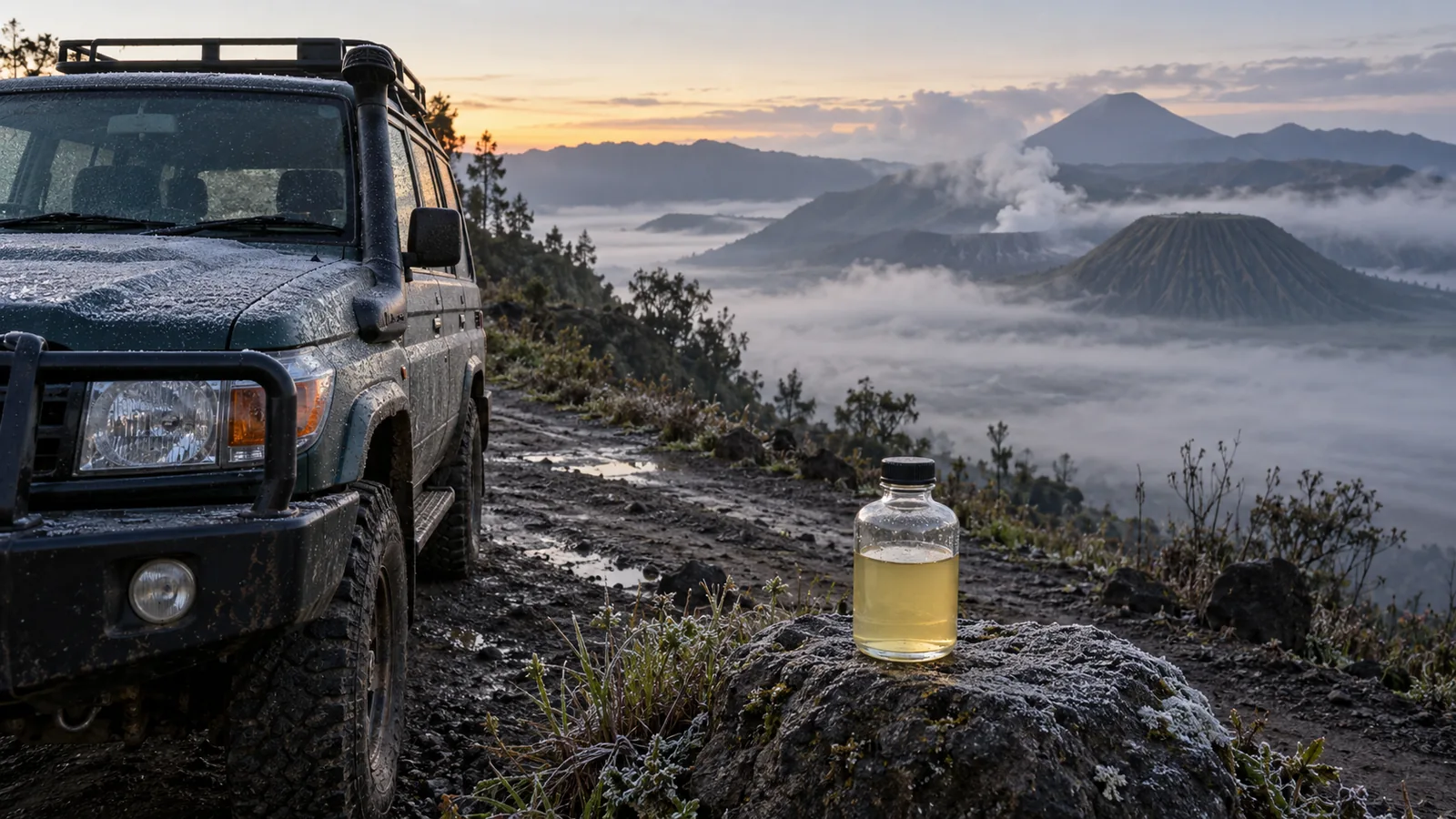
Kompas.com also reported monitoring in Lembang and testing in Dieng. Bioenergy director Edi Wibowo said an additional cold-condition test at Mount Bromo was planned. As of this report, the proposed Bromo testing could not be counted as completed.
What the P1 engine inspection showed
LEMIGAS research team leader Cahyo Setyo Wibowo said that the reviewed tests found no significant adverse effect from B40 or B30D10 on the components of the inspected P1 vehicle over 50,000 kilometres. Measurements including ring gap, side-ring clearance and cylinder-bore liner remained within manufacturer manual limits, according to the ministry. Kompas.com also reported those findings.
Cahyo described scratches seen on the piston skirt as normal in the combustion process rather than caused by the test fuels. This was the team's assessment of the vehicle examined, not proof that every engine type in every sector carried no risk. A result from a particular vehicle and stage should not be presented as universal certification.
The wider programme included fuel and lubricant quality checks, consumption analysis, chassis-dynamometer performance testing and component ratings to examine deposits. Those measurements were intended to inform a technical recommendation. Readers may consult the fuel glossary and biodiesel mandate history to distinguish trials from implementation.
A final recommendation was still pending
ESDM expected the B40 and B30D10 technical report in December 2022. The tests were carried out by LEMIGAS with other testing and research bodies and funding from the plantation fund agency BPDPKS, according to the ministry. The final report would provide the basis for policy advice; the two contemporary sources did not establish a completed fleet-wide result on 22 November.
The news, therefore, was progress in technical testing, particularly engine teardown after a long road trial. Claims about readiness across all fleets, nationwide distribution or a B40 mandate date could not be inferred from the P1 inspection alone. That distinction matters to diesel operators who need evidence of engine performance and confidence in fuel quality before making a switch.
Sources & references
- Kementerian ESDM, "Persiapan B40 Hampir Selesai, Sudah Sampai Overhaul Dan Rating Mesin" (22 November 2022) — https://www.esdm.go.id/id/media-center/arsip-berita/persiapan-b40-hampir-selesai-sudah-sampai-overhaul-dan-rating-mesin
- Kompas.com, "Ditargetkan Rampung Akhir Tahun, Sampai Mana Uji Jalan B40?" (22 November 2022) — https://money.kompas.com/read/2022/11/22/104100426/ditargetkan-rampung-akhir-tahun-sampai-mana-uji-jalan-b40-
Stay on top of Indonesian biodiesel
The weekly newsletter: the week’s key news, prices and data in one email every Friday. Or follow our channels for daily prices.