ESDM Says Indonesia Still Needs 4 New Biodiesel Plants for B50 Despite 22 Million kL Capacity
EBTKE Director General Eniya Listiani Dewi says Indonesia needs about four new 500,000-scale biodiesel plants, even though 22 million kL of installed capacity already exceeds B50 FAME demand.
Contents (4 sections)
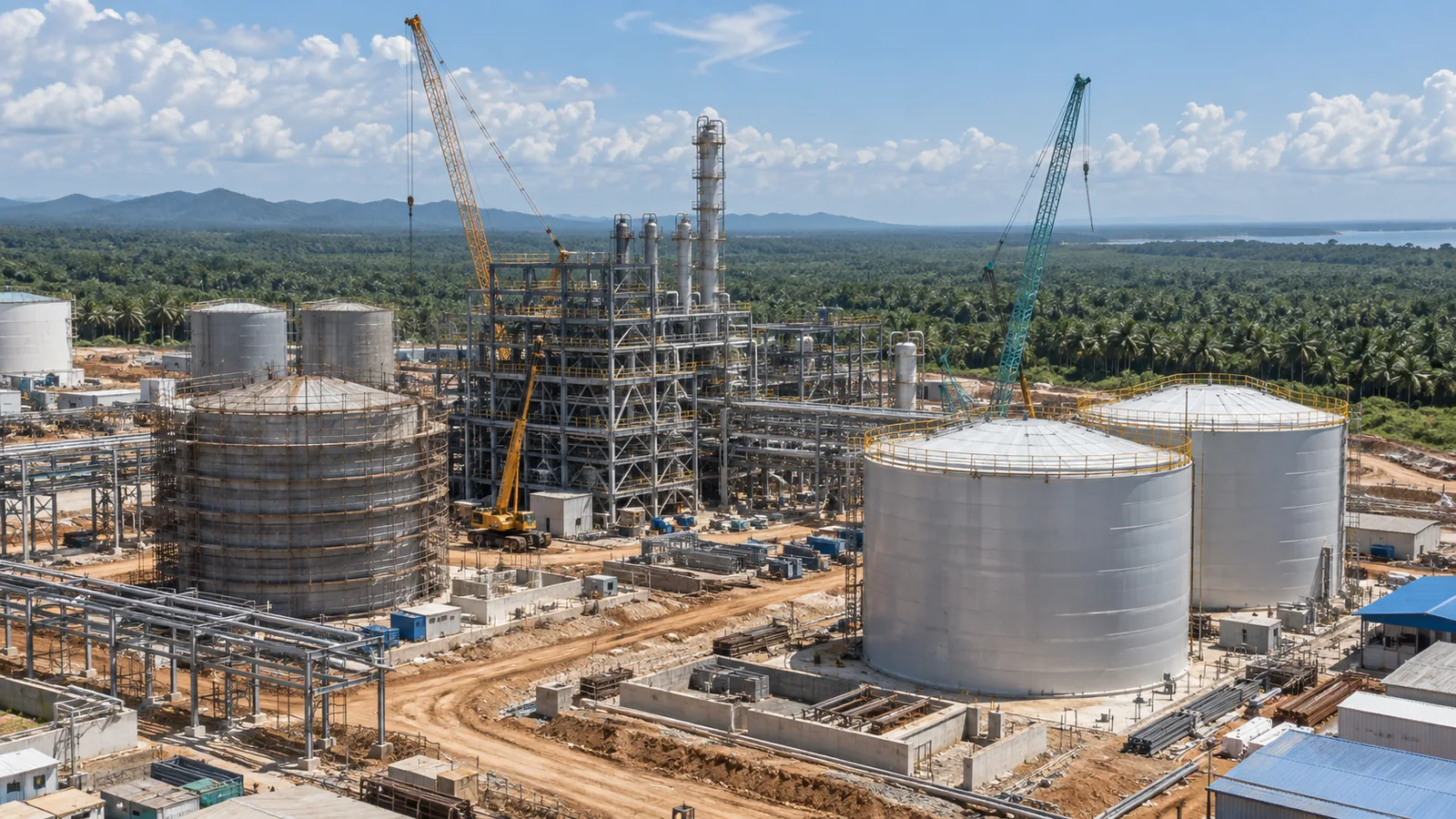
Jakarta — The Ministry of Energy and Mineral Resources (ESDM) says Indonesia still needs about four new biodiesel plants, each with a scale of around 500,000, to support the B50 mandate. EBTKE Director General Eniya Listiani Dewi, speaking on an ESDM ministry podcast reported on Monday, 13 July 2026, estimated that each plant would take about 1.5 years to build, while national installed capacity currently stands at around 22 million kilolitres (kL) a year with utilisation of about 80%.
The remarks came four days after the government formally launched B50 on Thursday, 9 July 2026, at the KM 57 rest area on the Jakarta–Cikampek toll road in Karawang, West Java, Katadata reported.
500,000 what: tonnes or kilolitres?
Two outlets reported different units for per-plant capacity. KabarBursa quoted Eniya as citing four plants of 500,000 tonnes each, while Katadata reported 500,000 kilolitres. Neither report cites an official document clarifying the unit, so the figure is best read as an indication of scale.
Eniya linked the need for new plants to feedstock availability. Based on coordination with the Directorate General of Estate Crops, she said there is about 4 million tonnes of additional palm oil stock that can be allocated to energy without disrupting food needs. She considers the upstream side secure; what is needed now is processing capacity downstream. According to KabarBursa, Eniya also said adding four plants would automatically bring in more potential investment.
22 million kL of capacity versus 16.7–18 million kL of FAME demand
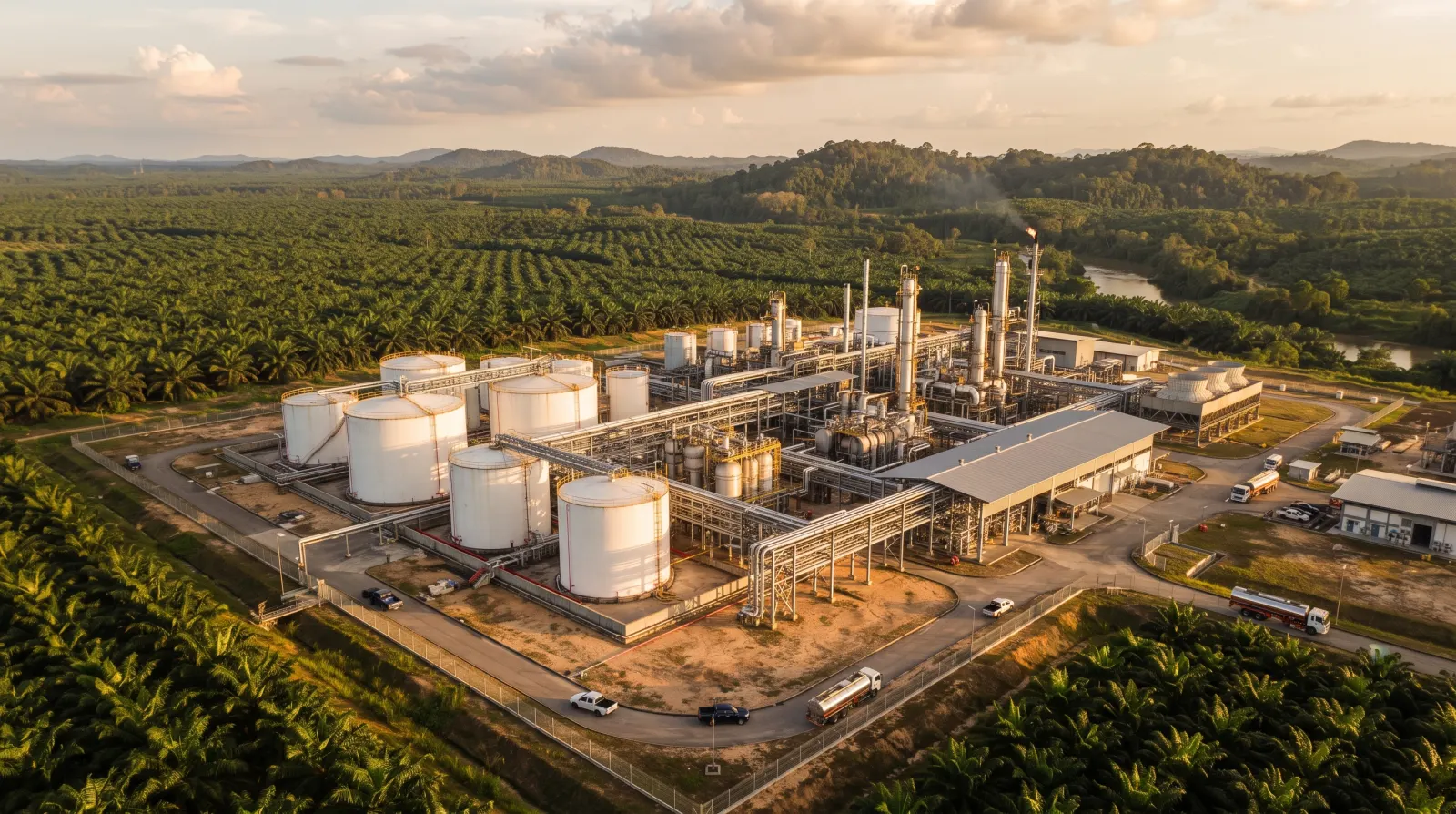
Based on the latest audit cited by KabarBursa, total installed capacity of active biodiesel plants is around 22 million kL a year, above estimated B50 FAME demand of 16.7–18 million kL a year. Utilisation is about 80%, with the remaining 20% described as a buffer for routine maintenance and equipment adjustment.
On that basis, the government says B50 readiness no longer depends on new plants being built. The policy focus has shifted to optimising existing assets: 26 existing biodiesel plants will be retrofitted so that 50% FAME blending is more stable in terms of quality and chemical characteristics. In addition, three plants are under construction by APROBI member companies and a state-owned enterprise in palm-producing areas of Sumatra and Kalimantan, according to KabarBursa. New plants are to be located close to feedstock sources to reduce logistics costs.
| Indicator | Figure |
|---|---|
| National installed capacity | ~22 million kL/year |
| Utilisation | ~80% |
| B50 FAME demand | 16.7–18 million kL/year |
| New plants needed | ~4 units, 500,000 scale (tonnes/kL) |
| Build time per plant | ~1.5 years |
| Existing plants to be retrofitted | 26 |
| Additional palm oil stock for energy | ~4 million tonnes |
A shift from the five-plant, 1-million-kL scenario
The four-plant figure is smaller than last year's estimate. On 17 July 2025, Eniya said Indonesia needed five new plants of about 1 million kL each, with three under construction at the time, detikFinance reported. KabarBursa wrote that the five-plant scenario was an initial simulation for regional supply distribution rather than an additional national capacity requirement. Current producers are listed in our biodiesel producer directory.
Methanol is another challenge
Besides biodiesel plants, Energy Minister Bahlil Lahadalia named methanol availability as one of B50's challenges. After the B50 launch in Cikampek, he said methanol demand has risen to about 2.5 million tonnes a year. The government plans two methanol plants: one in Bojonegoro, East Java, using gas as feedstock, with groundbreaking scheduled this month, and one in East Kalimantan based on coal downstreaming, according to Katadata.
Sources & references
- KabarBursa, "ESDM Bidik Empat Pabrik Biodiesel Baru untuk Dukung B50" (13 July 2026) — https://www.kabarbursa.com/makro/esdm-bidik-empat-pabrik-biodiesel-baru-untuk-dukung-b50
- Katadata, "Pemerintah Masih Butuh 4 Pabrik Biodiesel Lagi untuk Dukung B50" (13 July 2026) — https://katadata.co.id/berita/energi/6a54a30a6807f/pemerintah-masih-butuh-4-pabrik-biodiesel-lagi-untuk-dukung-b50
- detikFinance, "RI Butuh 5 Pabrik Biodiesel buat Genjot B50" (17 July 2025) — https://finance.detik.com/energi/d-8015904/ri-butuh-5-pabrik-biodiesel-buat-genjot-b50