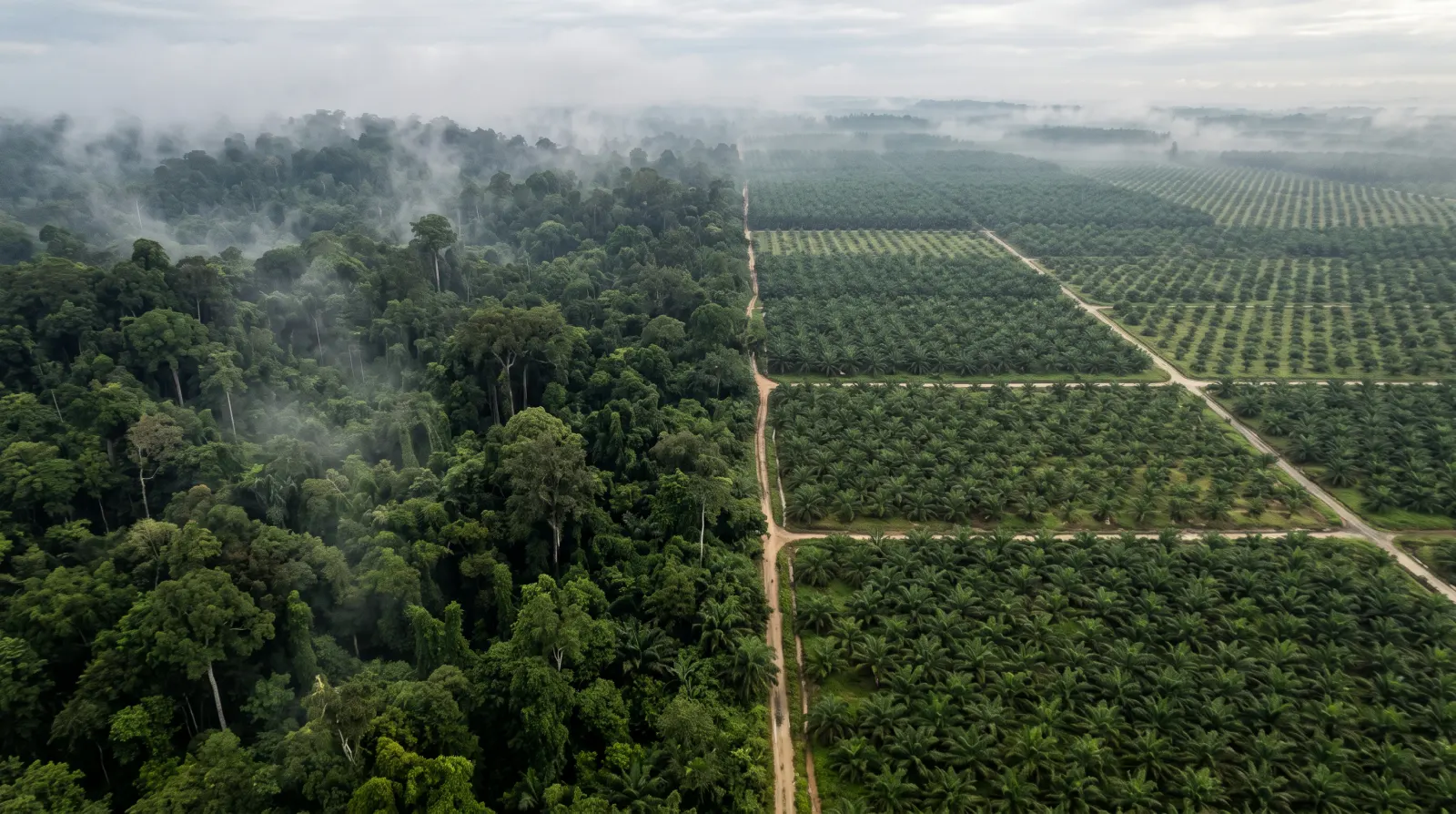
EU Brings Palm Oleochemical Derivatives Under EUDR From 30 December 2027
The European Commission is extending the EUDR to palm derivatives used for oleochemicals from 30 December 2027 and dropping cattle leather. Indonesia keeps pressing for ISPO recognition.

Contents (3 sections)
Brussels — The European Commission announced on Monday, 13 July 2026, that palm oil derivatives used to make oleochemicals will fall under the EU Deforestation Regulation (EUDR) from 30 December 2027. The change, reported by Reuters, also removes cattle leather and hides from the list of covered products. For Indonesia, the expansion adds traceability work in the downstream palm supply chain, including methyl ester products that are also the basis of biodiesel.
What goes in and what comes out
According to the Reuters report carried by ESM Magazine, the Commission is adding palm oil derivatives used for oleochemicals, compounds made from natural fats and oils that are used in paints, pharmaceuticals, lubricants and food additives. Instant coffee and frozen cattle tongues are also being added. Leather, cattle hides and skins, retreaded tyres, soybeans for sowing and items such as car seats are being taken out of scope.
The package stems from a simplification review the Commission published on 4 May 2026. According to a summary by law firm Baker McKenzie, the review stated that the EUDR "will not be reopened" and that existing timelines continue to apply: 30 December 2026 for large and medium-sized companies and 30 June 2027 for small and micro enterprises. The draft delegated act was open for public feedback until 1 June 2026.
An analysis of the May draft by Foods Connected said the targeted palm derivatives include palm-based fatty acids, fatty acid methyl esters (FAME) and palm-derived soaps. FAME is the same compound as biodiesel. The Reuters report on the 13 July decision did not list HS codes, so the exact scope should be checked against the official text.
Criticism over "waste" palm oil exemptions
A week earlier, investigative group Earthsight criticised a draft product list that had been obtained by Euractiv on 30 June. It said the draft broadened the waste exemption for palm products under HS codes 1511, 151321, 151329, 151800 and 382319. These cover oil recovered from palm oil mill effluent (POME) and palm fatty acid distillate (PFAD), which are used as biodiesel feedstocks in Europe. According to Earthsight, Germany and Ireland have banned or are phasing out these feedstocks from their biodiesel mandates.
Earthsight said the EU imported 871,044 tonnes of POME, EFB and SBEO oil worth EUR 904 million in 2025, plus 857,789 tonnes of PFAD worth EUR 765 million. The affected products made up more than a quarter of the EU's 2025 palm imports from Indonesia and Malaysia, worth EUR 1.7 billion. Earthsight said changes of that scale should not be rushed and urged the Commission to reconsider the exemptions. The Reuters report on the 13 July decision did not say whether the waste exemption was kept.
Indonesia's position: ISPO recognition and smallholder protection
Indonesia has consistently pushed for recognition of its national standard. Foreign Ministry spokesperson Yvonne Mewengkang, in a written statement on 29 April 2026 quoted by ANTARA, said Indonesia is seeking recognition of Indonesian Sustainable Palm Oil (ISPO) certification under the EUDR and wants to ensure the rules do not disadvantage smallholders. The statement was linked to preparations for the Indonesia–EU Comprehensive Economic Partnership Agreement (IEU-CEPA), targeted to enter into force in January 2027.
Reuters also noted that Brussels had already delayed the EUDR by two years after objections from Brazil, Indonesia and the United States, which argued compliance would be costly and hurt their exports. The Commission also published adjustments to the information system companies use to file due diligence.
For Indonesian biodiesel and oleochemical producers, the end of 2027 now marks the deadline to make sure supplier plantation data can be traced back to the plot level.
Sources & references
- ESM Magazine/Reuters, "EU Adds Some Palm Oil Products To Deforestation Law, Removes Leather" (13 July 2026) — https://www.esmmagazine.com/supply-chain/eu-adds-some-palm-oil-products-to-deforestation-law-removes-leather-316395
- Baker McKenzie, "EU Commission publishes simplification review of EUDR" (8 May 2026) — https://www.bakermckenzie.com/en/insight/publications/2026/05/eu-commission-publishes-simplification-review-of-eudr
- Foods Connected, "7 key takeaways from the April 2026 EUDR review" (29 May 2026) — https://blog.foodsconnected.com/7-key-takeaways-from-the-april-2026-eudr-review
- Earthsight, "Exemptions for 'waste' palm oil under EUDR contradict EU policy and threaten forests" (8 July 2026) — https://www.earthsight.org.uk/news/proposed-exemptions-waste-palm-oil-EUDR-threaten-forests
- MPOB Palm News/ANTARA, Foreign Ministry statement on EUDR and IEU-CEPA (29 April 2026) — https://prestasisawit.mpob.gov.my/en/palmnews/news/39359