Indonesia Urges Palm Mill Emissions Inventories and POME Methane Capture
Indonesia's environment ministry wants traceable palm-sector emissions data and sees POME methane capture as a potential energy and mitigation measure, not a proven carbon credit.
Contents (3 sections)
Jakarta — Indonesia’s Ministry of Environment/Environmental Control Agency (KLH/BPLH) has urged palm oil companies to maintain traceable greenhouse gas inventories and use them to guide mitigation at plantations and mills. At a conference in Jakarta on Wednesday, 21 October 2026, the ministry highlighted capturing methane from palm oil mill effluent (POME) as a potential way to cut emissions and recover energy.
Ary Sudijanto, the ministry’s deputy for climate control and carbon economic value governance, opened the Carbon Conference & Training on greenhouse gas inventory accounting in oil palm plantations. He read remarks on behalf of Environment Minister and agency head Moh Jumhur Hidayat. The event was organised by the Indonesian Plantation Professional Practitioners Association (P3PI) and Media Perkebunan. Reports by ANTARA and InfoSAWIT do not say that the minister attended in person.
Making emissions figures traceable
According to ANTARA’s report on 22 October, Ary said an emissions inventory should be more than an administrative record: it should inform investment and operational decisions. Companies need to establish where their data came from, apply suitable calculation methods and document who is responsible for each figure. Management support matters if that work is to continue beyond a single reporting exercise.
Plantation, mill, energy, procurement, finance and sustainability teams all have roles in establishing a starting position, choosing improvements, carrying out mitigation and assessing the results. InfoSAWIT reported that the remarks read by Ary sought three practical outputs from the conference and training: a map of emission sources, a list of data gaps requiring attention, and priorities for emission-cutting action. These were proposed outputs, not verified outcomes already achieved across the sector.
Methane capture at mills
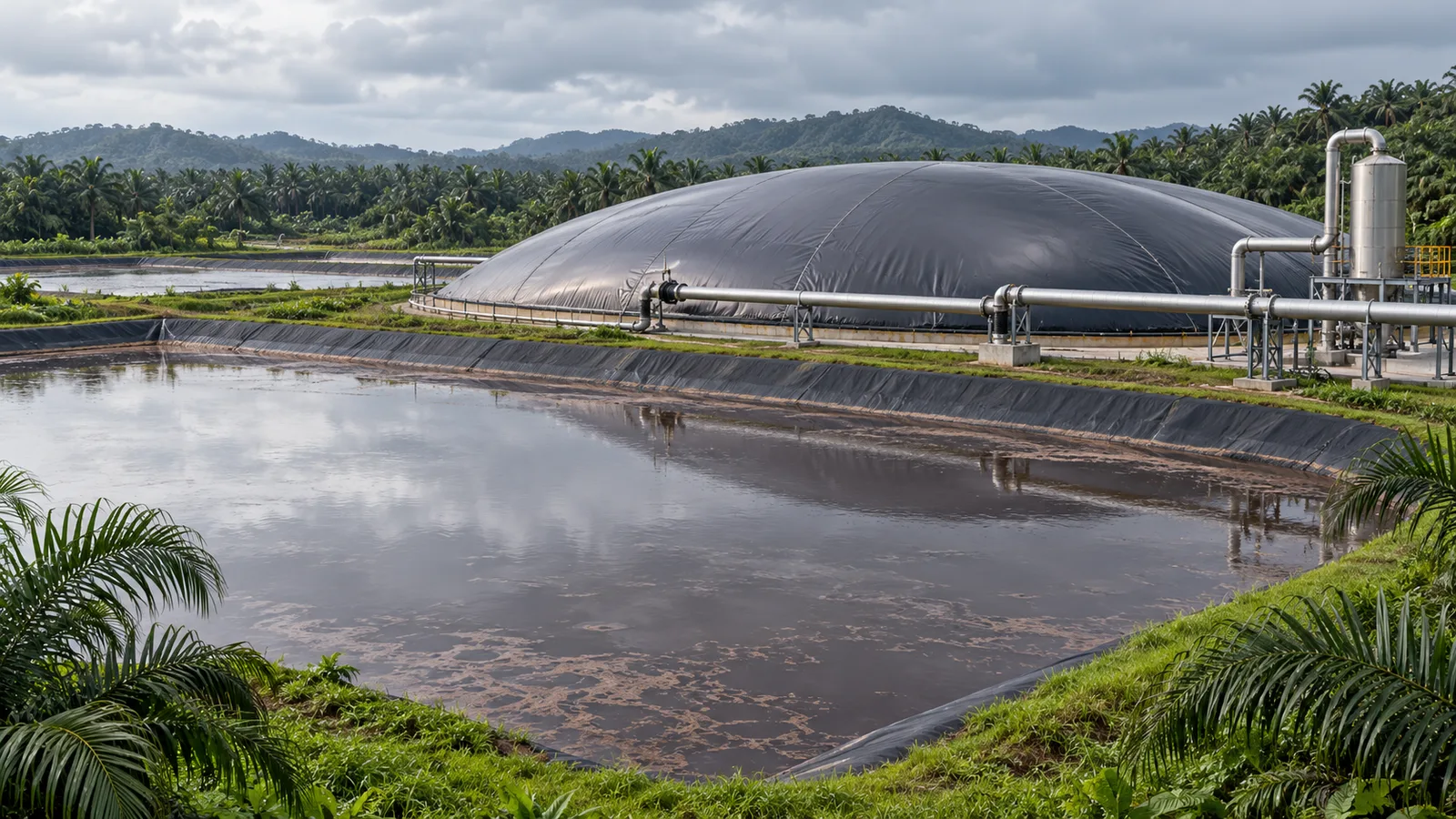
The ministry pointed to POME management as a case in which measurement should lead to action. Capturing and using methane from mill wastewater could both reduce emissions and provide energy. The two reports did not supply verified reductions or energy output from a named installation, however; the opportunity should not be confused with a completed result.
Ary urged businesses to weigh environmental management, mitigation potential and investment viability together when considering POME projects. Facility-level emissions data would help companies decide on measures, assess the performance of technology and substantiate any subsequent reduction. The ministry also wants cultivation, processing, wastewater management and the use of products and by-products considered as connected parts of the palm oil chain, with clear accounting boundaries and traceable records.
Carbon-market prospect, not a new rule
Better facility data could support future carbon economic instruments, including the possibility of gradually introducing emissions trading for industrial wastewater such as POME, the ministry said. That is a potential development, not an announcement of a new trading requirement or a guarantee that methane capture will produce saleable carbon credits.
ANTARA also reported the ministry’s call for partnerships that link investment and operational improvements with ecosystem protection, respect for community rights and stronger capacity among smallholders. Transparency and proportionate sharing of benefits were part of the message. For mills, the immediate sequence is to map emissions, close data gaps and prioritise feasible measures whose outcomes can be measured. The potential energy and carbon-market benefits still depend on implementation and evidence.
Sources & references
- ANTARA, “KLH: Perusahaan sawit perlu perkuat inventarisasi emisi” (22 October 2026) — https://www.antaranews.com/berita/5804541/klh-perusahaan-sawit-perlu-perkuat-inventarisasi-emisi
- InfoSAWIT, “KLH Dorong Inventarisasi Emisi GRK untuk Perkuat Industri Sawit Rendah Karbon” (22 October 2026) — https://www.infosawit.com/2026/10/22/klh-dorong-inventarisasi-emisi-grk-untuk-perkuat-industri-sawit-rendah-karbon/
Stay on top of Indonesian biodiesel
The weekly newsletter: the week’s key news, prices and data in one email every Friday. Or follow our channels for daily prices.