BRIN Puts Palm-Waste Biogas Power Potential at 3.9 GW, Not Installed Capacity
Indonesia's research agency estimates potential power from palm mill waste, but has not identified operating projects at that scale.
Contents (3 sections)
Jakarta — Palm-oil mill wastewater and empty fruit bunches could produce biogas with an estimated electricity-generating potential of about 3.9 gigawatts (GW), according to Indonesia's National Research and Innovation Agency (BRIN) chief Arif Satria. He described the potential after reporting research priorities to President Prabowo Subianto on 27 October 2026. The 3.9 GW figure is an estimate, not installed biogas power capacity or electricity already delivered.
What the potential covers
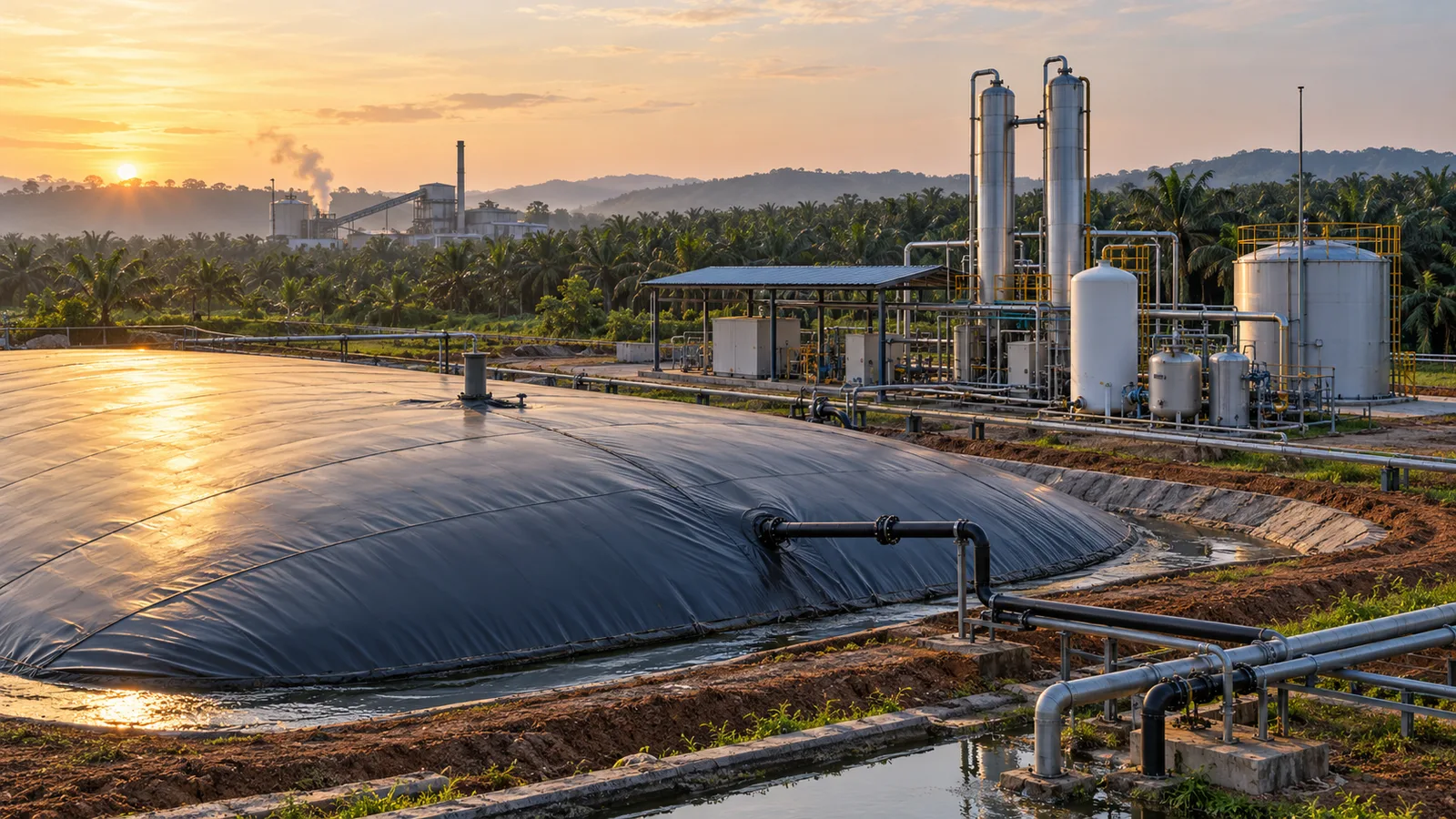
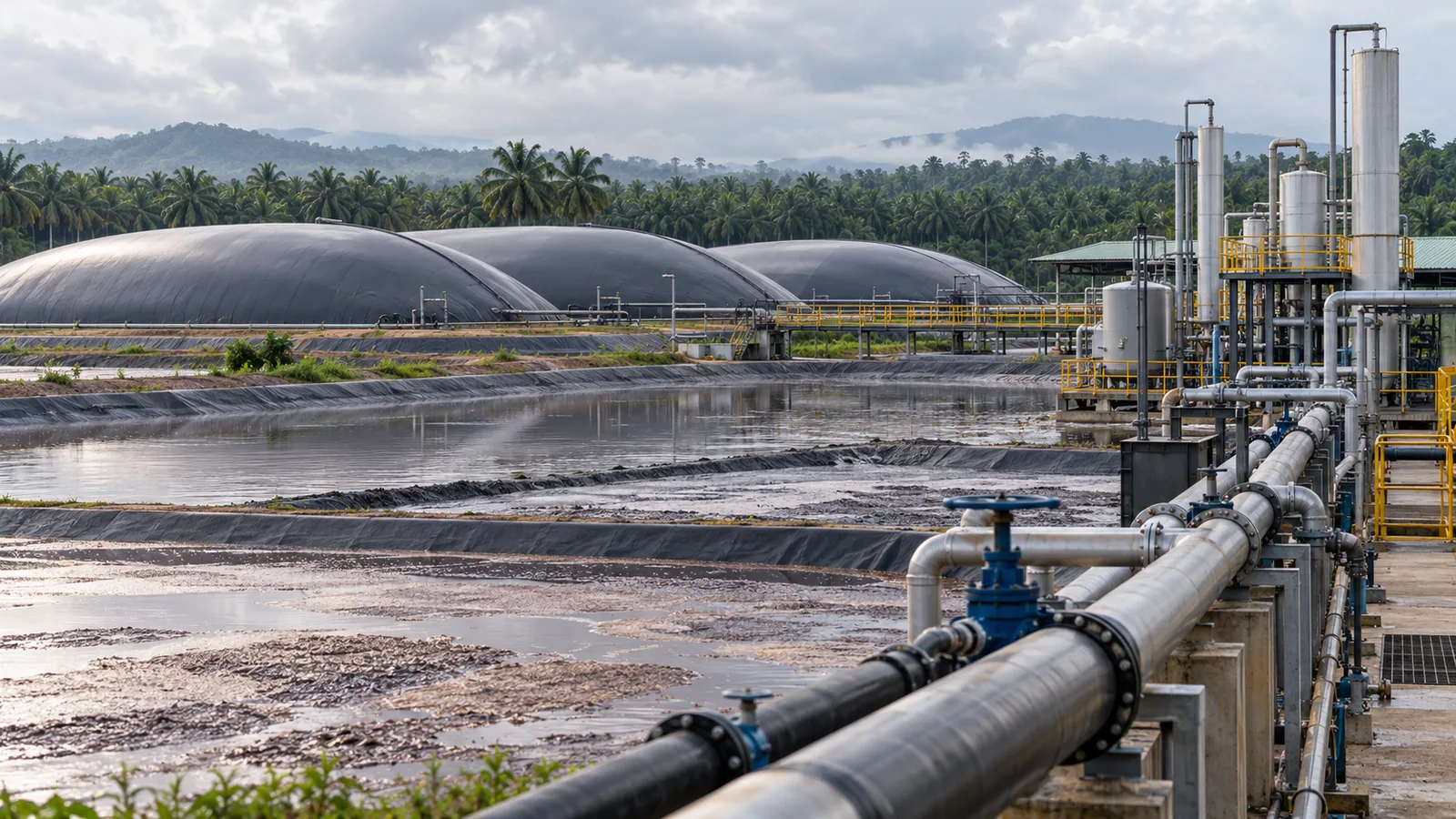
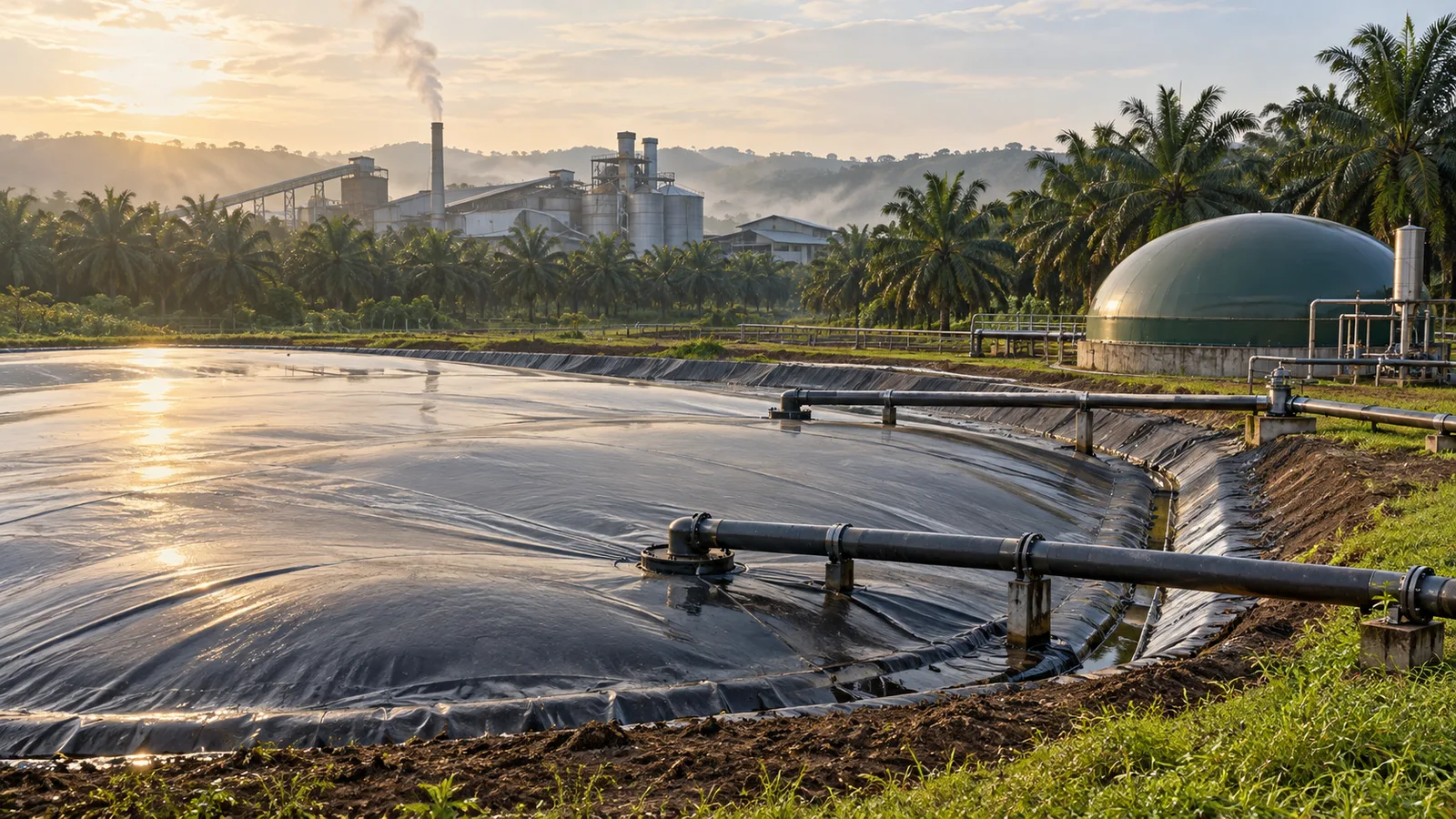
In ANTARA's report from the day of the meeting, Arif identified palm oil mill effluent (POME) and empty fruit bunches as the two waste streams behind the estimate. Their conversion into biogas could, in turn, support electricity generation equivalent to around 3.9 GW of capacity, he said. That unit describes potential power capacity, not an amount of energy already fed into the grid.
Arif also cited estimated Indonesian fresh fruit bunch (FFB) output of around 328.43 million tonnes a year and potential POME volume of 229.9 million cubic metres annually. These are figures attributed to him by ANTARA; the article does not provide a calculation methodology, a list of prospective plants or a construction schedule. The amount of feedstock that could be collected economically cannot be inferred from the nationwide estimate alone.
An official presidential photo report confirms Arif met the president on 27 October and discussed alternative energy from palm waste. It does not publish the 3.9 GW figure. The capacity and feedstock estimates in this article are drawn from Arif's remarks reported by ANTARA, rather than from that official photo report.
Methane capture and bottled gas are separate questions
Arif warned that unmanaged POME can generate methane emissions. Capturing biogas could turn a mill waste stream into useful energy, but generating gas, converting it into electricity and delivering that electricity to users are separate steps. The existence of palm waste does not establish that those systems have been built or operate at the scale of the national estimate.
BRIN has also introduced a metal-organic framework (MOF) material that Arif said could improve gas storage. He envisaged processing biogas for use in cylinders as a possible household-energy alternative. Medcom reported that line of development on 28 October, without identifying an operating nationwide cylinder-filling network for biogas.
Arif put the value of Indonesia's LPG imports at approximately IDR 97 trillion a year while explaining the appeal of domestic alternatives. That is his cited import figure, not an independently demonstrated saving from a biogas project. Potential electricity capacity cannot be converted directly into LPG import savings without separate engineering, economic and distribution analysis.
What still needs evidence
Actual output will depend on waste collection at individual mills, technology and funding, gas use, and the viability of grid connections or gas distribution. The sources reviewed do not provide project-by-project capacity, investment costs, power-plant capacity factors or commercial test results for MOF-based bottled biogas. Reporting the national estimate as if it were operating generation would misrepresent BRIN's statement.
This is distinct from Pertamina's separate exploration of biomethane supply from identified palm mills and a prospective Singapore market. BRIN's statement concerns a national research potential for palm-waste energy. The next evidence to watch is a published methodology for the estimate and measured gas or electricity output from specific projects.
Sources & references
- ANTARA, "BRIN: Limbah sawit berpotensi hasilkan listrik 3,9 GW" (27 October 2026) — https://www.antaranews.com/berita/5815271/brin-limbah-sawit-berpotensi-hasilkan-listrik-39-gw
- Presiden Republik Indonesia, "Presiden Prabowo Ingin Riset Jadi Solusi Nyata: Karhutla Diatasi, Limbah Sawit Jadi Energi, Vaksin Malaria Dipercepat" (27 October 2026) — https://presidenri.go.id/foto/presiden-prabowo-ingin-riset-jadi-solusi-nyata-karhutla-diatasi-limbah-sawit-jadi-energi-vaksin-malaria-dipercepat/
- Medcom, "BRIN: Potensi Listrik 3,9 Gigawatt dari Limbah Sawit Bisa Kurangi Impor LPG" (28 October 2026) — https://www.medcom.id/ekonomi/bisnis/VNxAn9qb-brin-potensi-listrik-3-9-gigawatt-dari-limbah-sawit-bisa-kurangi-impor-lpg
Stay on top of Indonesian biodiesel
The weekly newsletter: the week’s key news, prices and data in one email every Friday. Or follow our channels for daily prices.