Palembang Plans Used Cooking Oil Collection for SAF Feedstock
Palembang's community network may collect used cooking oil, with estimated potential of 3,400 tonnes a year.
Contents (3 sections)
Palembang — The Palembang city and South Sumatra chapters of the Family Welfare Movement (TP PKK), together with Fudwest, are exploring a household used-cooking-oil collection programme as a feedstock source for sustainable aviation fuel (SAF). Discussed on 13 October 2026, the programme is intended to involve community networks across districts, 107 urban villages and neighbourhood-level Dasawisma groups.
Fudwest estimated that Palembang could generate around 3,400 tonnes of used cooking oil a year. The figure was presented during the meeting without a published calculation methodology. The initiative also remains a proposed pilot: no operating date, initial collection target, household purchase price, final processing facility or SAF buyer has been announced.
Building a collection chain from household kitchens
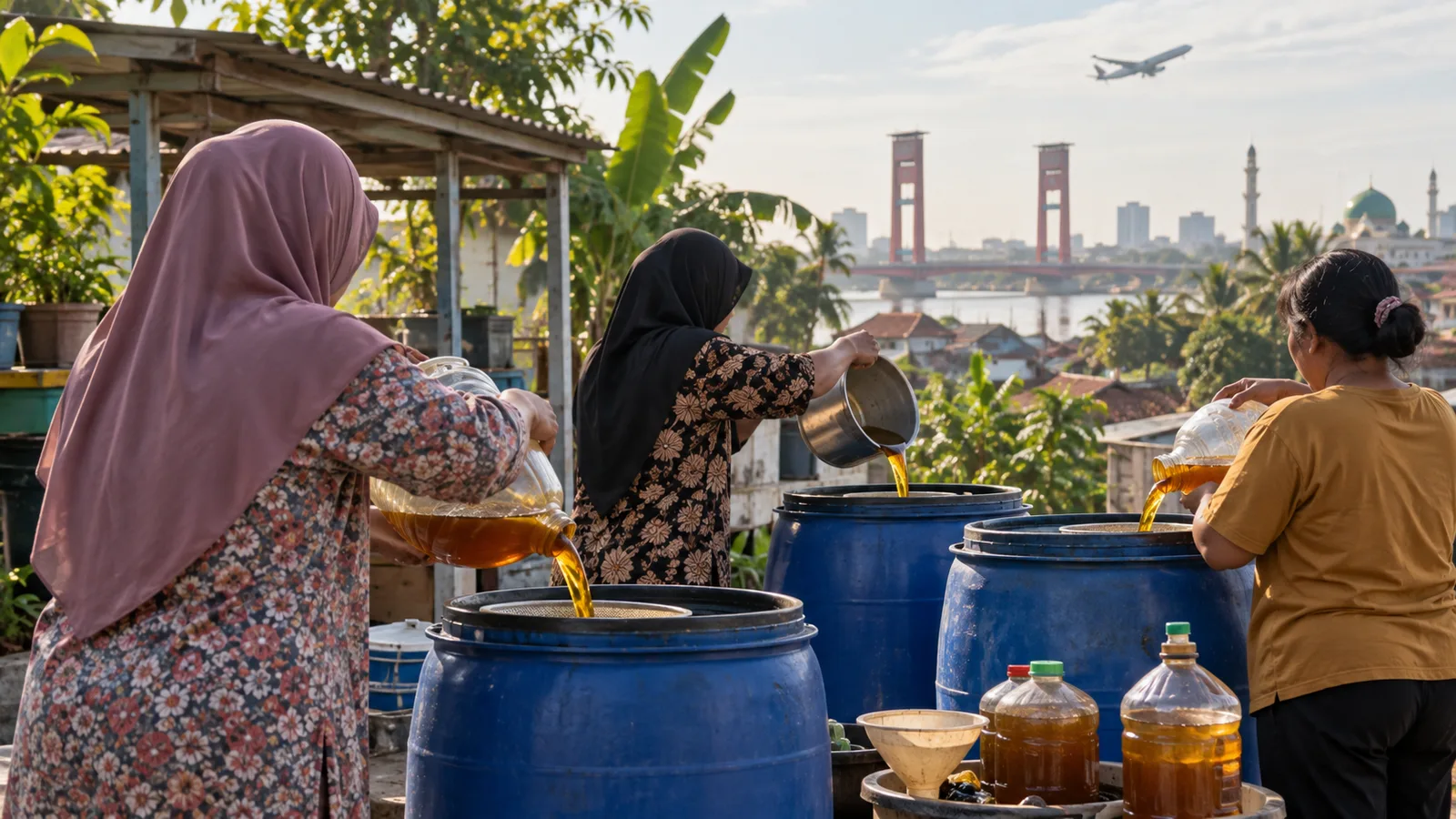
Palembang TP PKK chair Dewi Sastrani Ratu Dewa said the programme would use the organisation's community network to encourage residents not to discard used oil into drains. The waste oil would instead be collected through an organised system intended to create economic value while reducing household waste problems.
Reports by detikSumbagsel and ViralSumsel said the network would extend through districts, 107 urban villages and Dasawisma groups. Households and food businesses could become feedstock suppliers, but the initial announcement did not explain delivery points, weighing, payments or quality-control procedures.
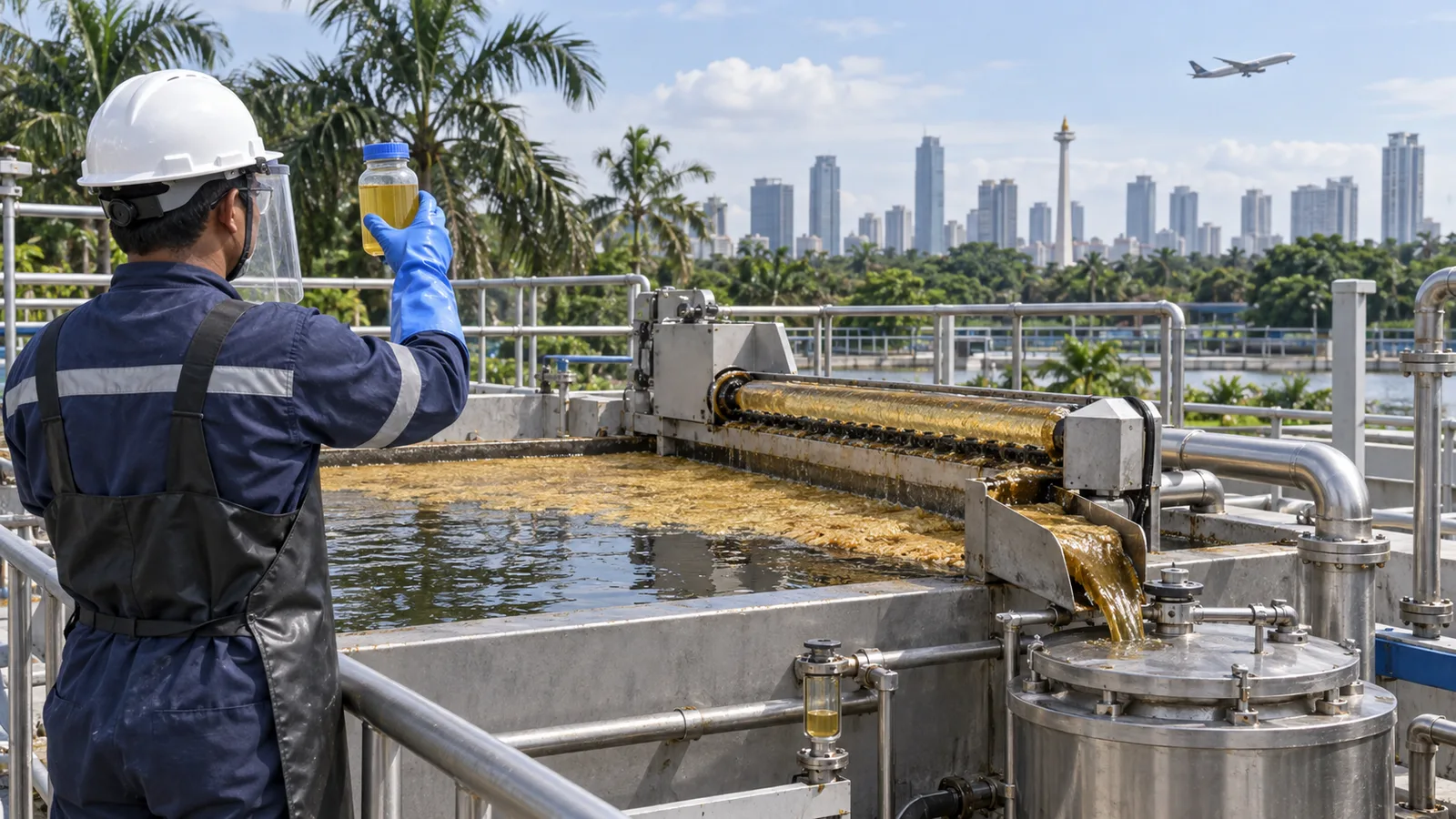
Fudwest commissioner Widiono said similar programmes had operated in other areas and that Palembang was being prepared as a pilot for South Sumatra. Collected oil would reportedly undergo chemical treatment before being sent for further processing into aviation fuel.
SAF is not yet being produced in Palembang
The announcement describes a plan to establish an upstream collection chain, not the launch of a SAF plant. The reviewed reports do not identify a production unit in Palembang, its processing capacity, conversion technology, fuel certification or an offtake agreement with an airline.
This distinction is important. Collecting used cooking oil is an upstream step, while producing aviation fuel requires purification, conversion, testing and compliance with technical standards. The environmental and economic benefits can only be assessed once actual collection volumes, feedstock quality, logistics costs and the final processing destination are disclosed.
A potential South Sumatran SAF feedstock stream
If implemented, the Palembang programme could add a traceable source of used cooking oil to Indonesia's biofuel supply chain. A neighbourhood-level volunteer network may help aggregate small quantities that are otherwise dispersed across households.
From an analytical perspective, the main challenges will be preventing contamination with water or other waste, documenting feedstock origin, providing transparent incentives to residents and maintaining reliable deliveries to a processor. The programme will also need to explain who verifies the claim that the collected oil ultimately enters SAF production.
The initiative adds to local efforts to connect waste management with lower-carbon energy. It nevertheless remains in preparation. Technical design, commercial arrangements and verified collection results are needed before the estimated 3,400 tonnes a year can be treated as available supply.
Sources & references
- detikSumbagsel, "Minyak Jelantah di Palembang Bakal Diolah Jadi Bahan Bakar Pesawat" (14 October 2026) — https://www.detik.com/sumbagsel/berita/d-8705372/minyak-jelantah-di-palembang-bakal-diolah-jadi-bahan-bakar-pesawat
- ViralSumsel.com, "Minyak Jelantah di Palembang Bakal Diolah Jadi Bioavtur, PKK Bidik Potensi 3.400 Ton per Tahun" (13 October 2026) — https://www.viralsumsel.com/minyak-jelantah-di-palembang-bakal-diolah-jadi-bioavtur-pkk-bidik-potensi-3-400-ton-per-tahun/
Stay on top of Indonesian biodiesel
The weekly newsletter: the week’s key news, prices and data in one email every Friday. Or follow our channels for daily prices.