Pertamina and PAL Jaya Study Wastewater FOG for Biofuel and SAF
Pertamina and PAL Jaya will assess wastewater FOG as an alternative biofuel feedstock, including for SAF.
Contents (3 sections)
Jakarta — Pertamina and the Jakarta municipal wastewater company PAL Jaya have signed a memorandum of understanding to study whether fat, oil and grease (FOG) recovered through wastewater management can be used as feedstock for biofuels, including sustainable aviation fuel (SAF). Pertamina Deputy President Director Oki Muraza and PAL Jaya President Director Untung Suryadi signed the agreement at Jakarta City Hall on 12 October 2026.
The partnership remains at an exploratory stage. The companies have not disclosed the available FOG volume, feedstock specifications, processing technology, facility location, investment value or production timetable. The agreement therefore does not mean that FOG from Jakarta's wastewater system is already being used commercially to produce SAF.
Linking wastewater management with energy
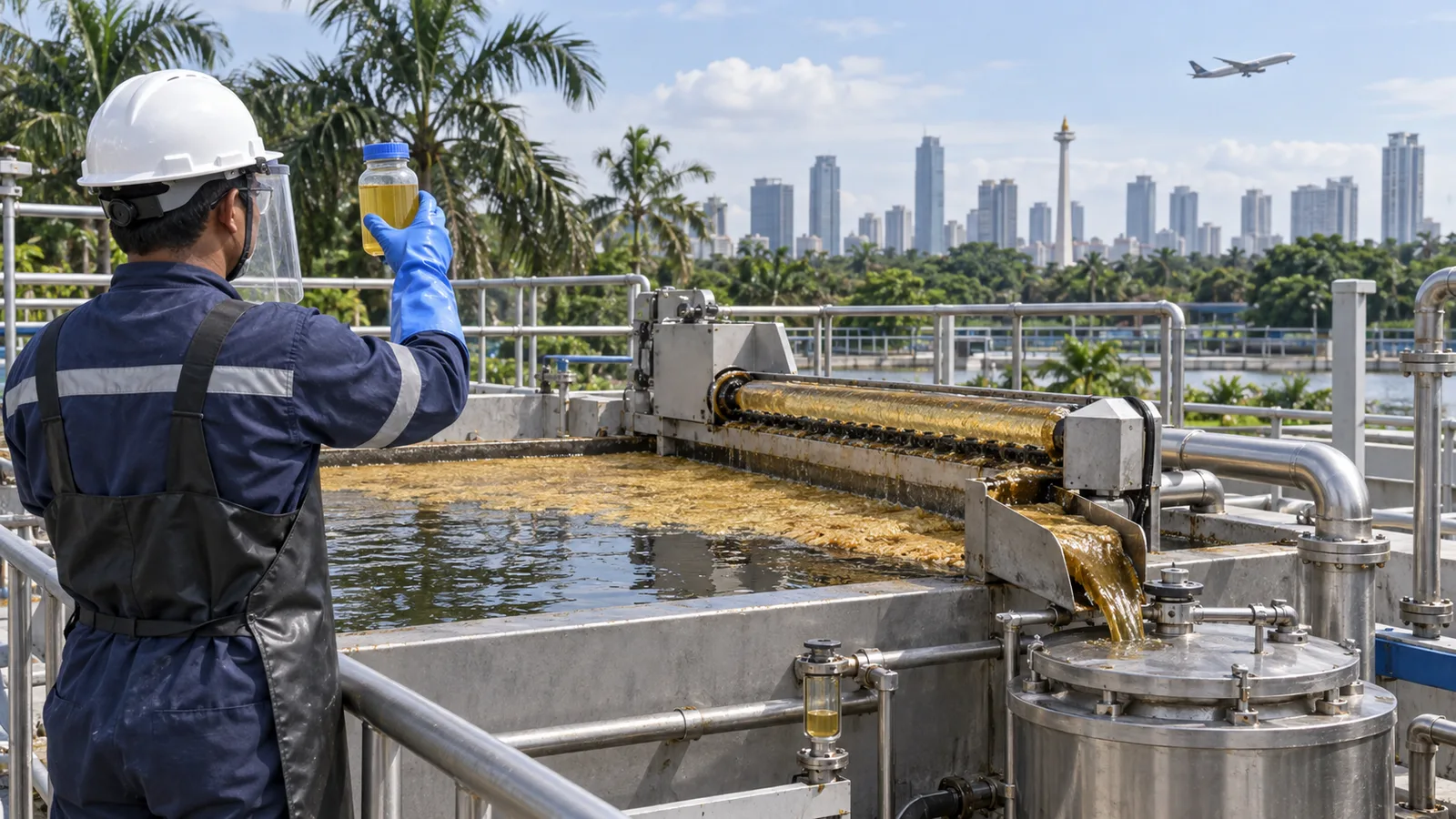
FOG is a mixture of fats and oils generated or handled within wastewater systems. Under the proposed cooperation, Pertamina and PAL Jaya will examine whether part of this material can be redirected from a waste-management burden into an alternative biofuel feedstock.
IDN Times and Suara.com, citing Pertamina's statement, reported that the initiative is intended to connect the energy and wastewater sectors through a circular-economy approach. The assessment is expected to provide the basis for identifying possible follow-up cooperation.
Muraza described the memorandum as part of Pertamina's clean-energy transition and low-carbon business development. The available statement, however, does not specify which conversion pathway would be used or which sustainability requirements would apply if the material were eventually directed towards aviation fuel.
Not the same as separately collected used cooking oil
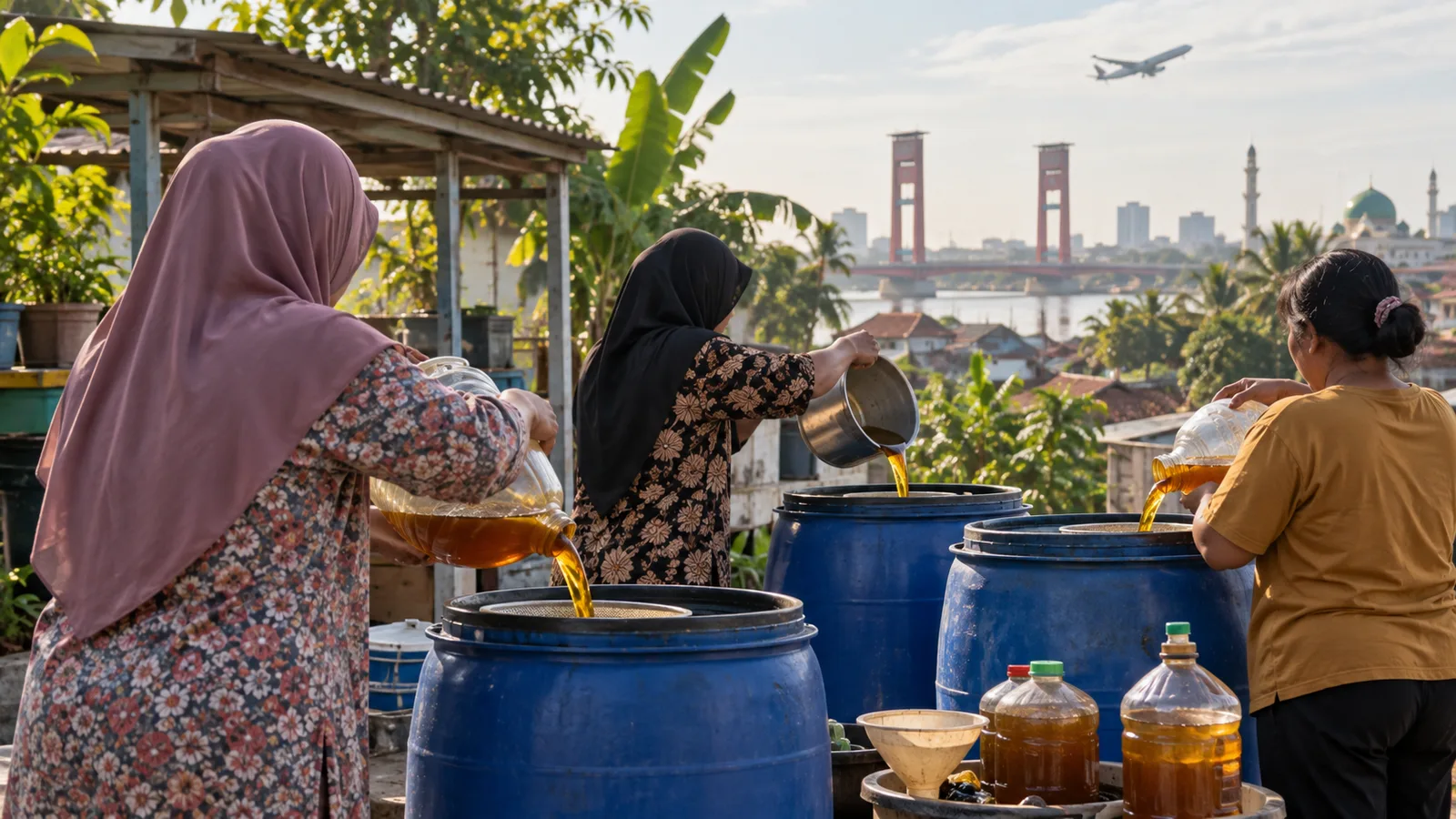
FOG recovered through wastewater management should be distinguished from household used cooking oil collected in dedicated containers. The source, contamination level, consistency and purification requirements may differ. An initial assessment is needed to determine how much material can be recovered and how it must be treated before entering a biofuel production chain.
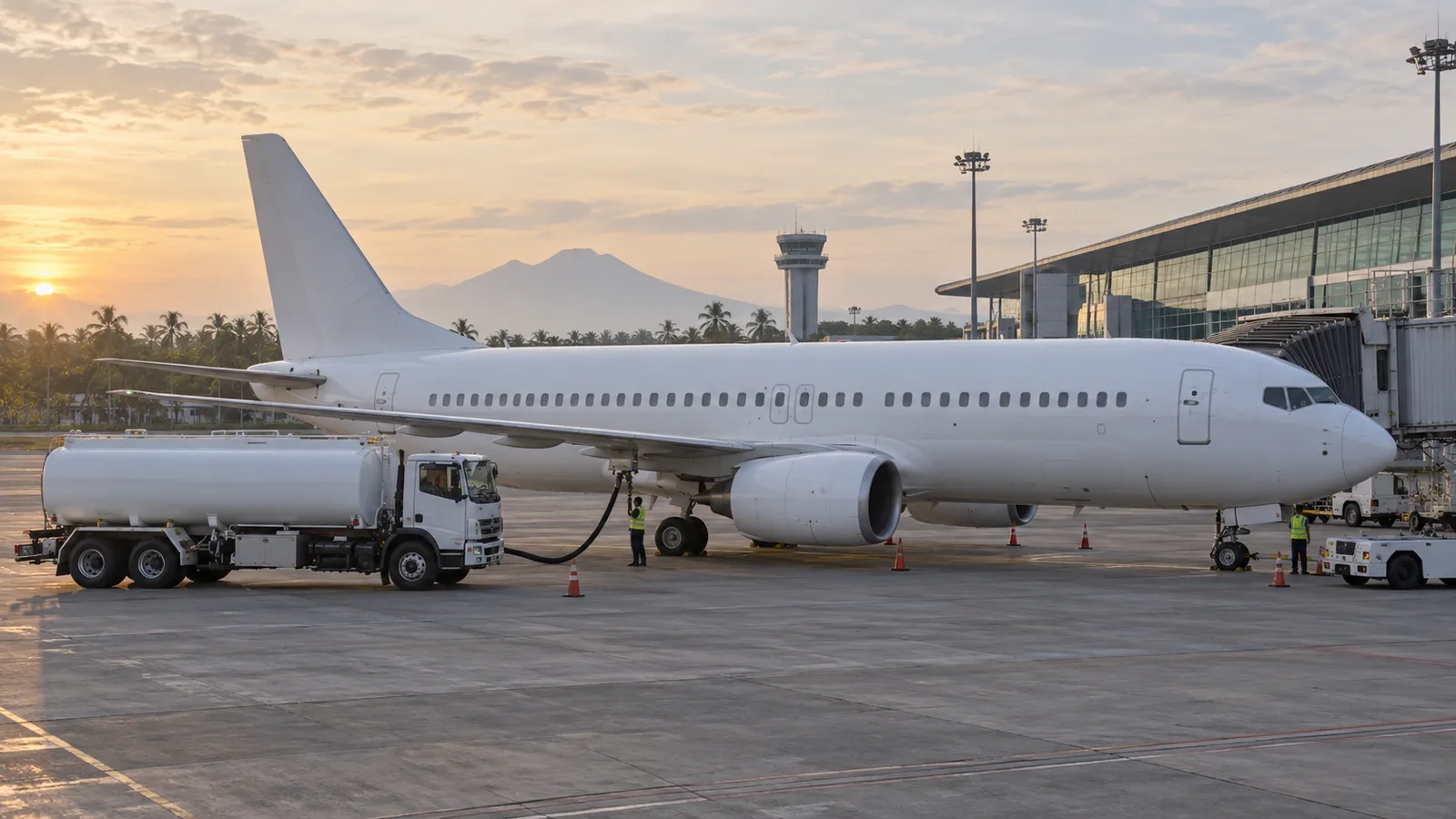
The distinction matters because SAF must meet specific technical and sustainability requirements for aviation use. Pertamina and PAL Jaya have identified SAF as one possible output, not as a product that is already available from this project.
A possible additional low-carbon feedstock
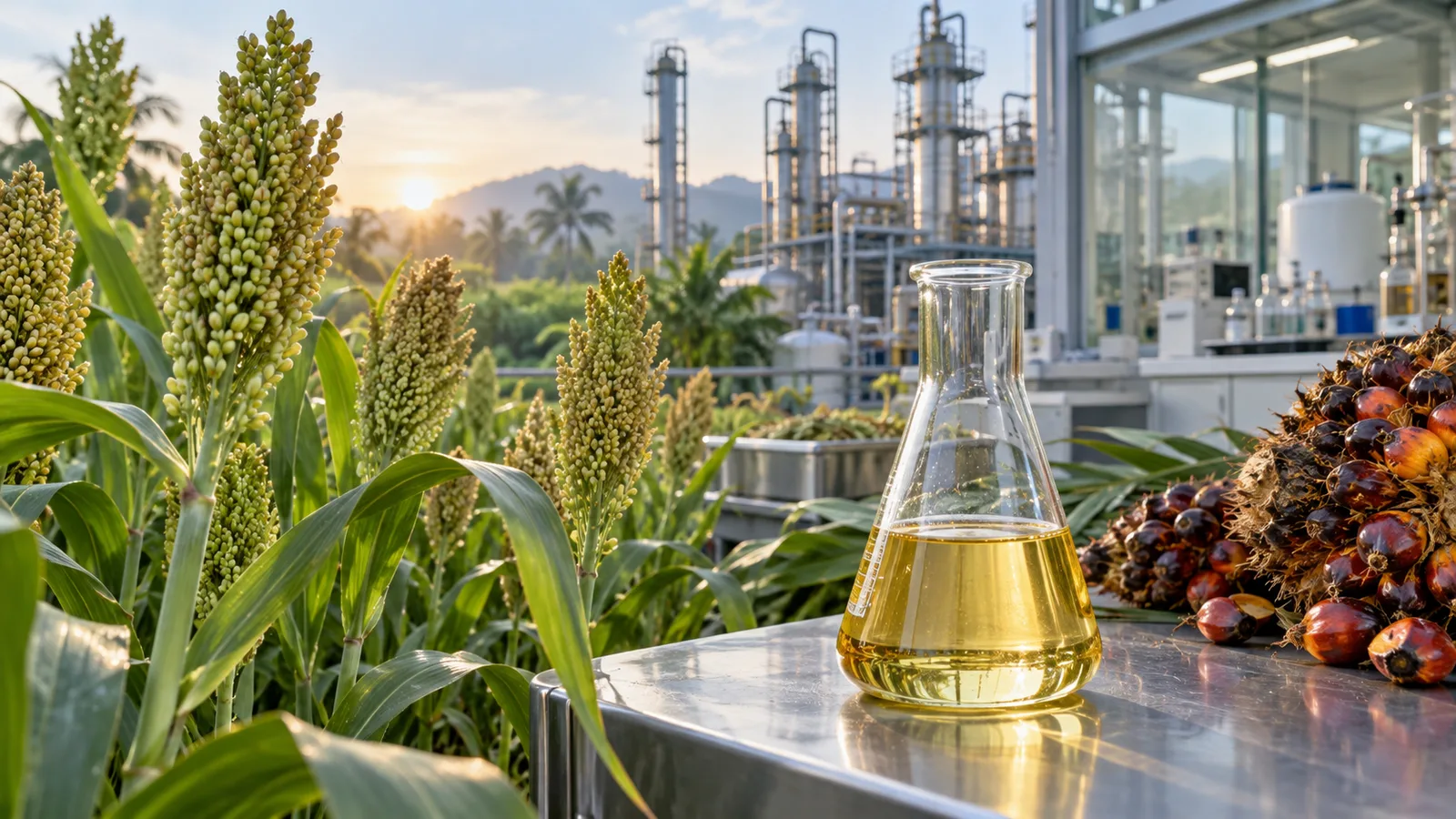
For Indonesia, exploring FOG could broaden the feedstock discussion beyond palm oil. The country has developed FAME-based biodiesel for road transport, while SAF involves a different technology chain and fuel-quality requirements. A basic comparison of biodiesel, HVO and SAF is available in Media Biodiesel's explainer.
From an analytical perspective, the significance of the agreement lies in its attempt to connect urban waste management with energy development. Its viability will depend on feedstock assessment, collection and purification costs, supply reliability, conversion technology and the final product's ability to meet aviation standards. Pertamina and PAL Jaya have not announced when an investment decision might follow the study.
Sources & references
- IDN Times, "Pertamina dan PAL Jaya Jajaki FOG sebagai Bahan Baku SAF" (13 October 2026) — https://www.idntimes.com/business/economy/pertamina-dan-pal-jaya-jajaki-fog-sebagai-bahan-baku-saf-00-481xk-09mfhm
- Suara.com, "Pertamina dan PAL Jaya Jajaki Potensi FOG Jadi Bahan Baku Biofuel, Dukung Bisnis Rendah Karbon" (13 October 2026) — https://amp.suara.com/bisnis/2026/10/13/200842/pertamina-dan-pal-jaya-jajaki-potensi-fog-jadi-bahan-baku-biofuel-dukung-bisnis-rendah-karbon
Stay on top of Indonesian biodiesel
The weekly newsletter: the week’s key news, prices and data in one email every Friday. Or follow our channels for daily prices.