B40 Field Trial Tests Two Walk-Behind Tractors in Bogor
ESDM and BBPSI Mektan tested two walk-behind tractors using B40 in Bogor on 4 June 2024; a 1,000-hour engine endurance test was planned next.
Contents (3 sections)
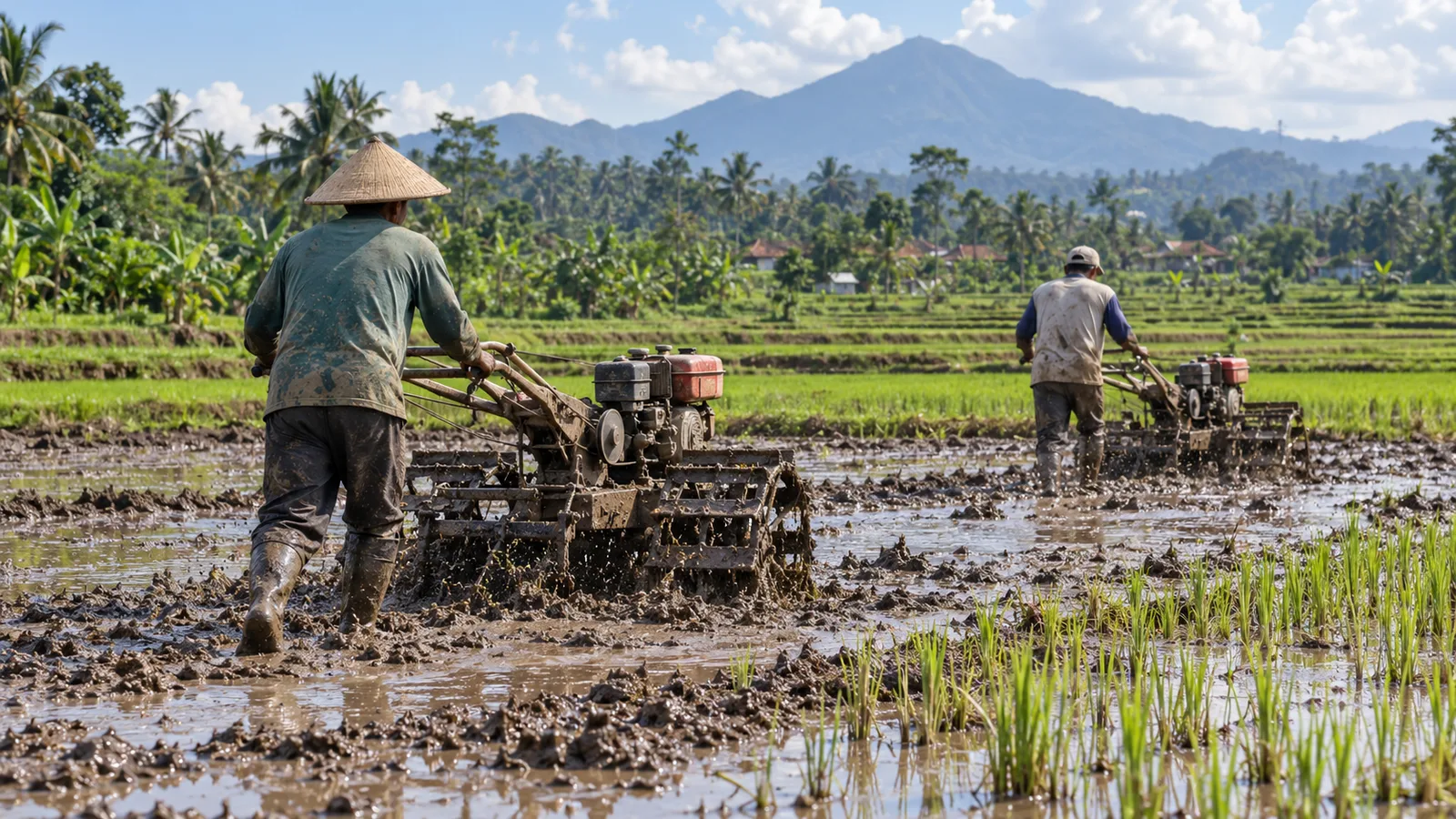
Bogor — Indonesia's Ministry of Energy and Mineral Resources (ESDM) and the agricultural mechanisation testing agency BBPSI Mektan held a field performance trial of two walk-behind tractors running on B40 at the IP2TP Muara rice-field site in Bogor, West Java, on Tuesday, 4 June 2024. According to LEMIGAS, the trial used tractors of two different brands and measured indicators including ploughing speed, ploughing depth and fuel consumption. Conducting a trial is not the same as announcing that the machines passed it.
B40 is a blend of diesel fuel and 40% palm-based biodiesel, as described by the ESDM ministry's Directorate General of Oil and Gas. The field exercise formed part of a broader programme to test the blend in agricultural machinery. It placed the fuel in a working farm setting rather than treating an engine start as a complete assessment of tractor performance.
What was measured in the rice field?
LEMIGAS and the ESDM Directorate General of Oil and Gas reported that two walk-behind tractors of different brands took part. LEMIGAS head Mustafid Gunawan identified ploughing speed, ploughing depth and fuel consumption among the parameters under examination. The published accounts give no numerical results for these measures. They therefore do not establish whether B40 improved, reduced or matched fuel efficiency or ploughing performance against any comparator.
The event began with a briefing on test preparations before participants observed the field work at IP2TP Muara. The agency's account does not identify which of the participating manufacturers supplied each of the two tractors. A field performance observation is one element of a testing sequence, not proof on its own of engine durability over sustained use.
A 1,000-hour endurance test was planned next
Mustafid said the tractor engines would subsequently be sent to their respective manufacturers for a 1,000-hour endurance test to examine how they performed with B40. This was a stated next step at the time of the field event, not a completed endurance result. Neither the field measurements nor the outcome of that longer test was supplied in the published reports available at this point.
The Oil and Gas Testing Centre, BBPMGB LEMIGAS, conducted the testing with BBPSI Mektan. The Bioenergy Directorate within ESDM's Directorate General of New, Renewable Energy and Energy Conservation coordinated the wider agricultural-machinery programme. Funding came from the Plantation Fund Management Agency (BPDPKS), according to LEMIGAS and the ESDM Directorate General of Oil and Gas.
Representatives of PT Yanmar Diesel Indonesia, PT Kubota Indonesia and PT Tri Ratna Diesel Indonesia attended. PT Pertamina (Persero) and the Indonesian Biofuel Producers Association (APROBI) supported the supply of test fuel. Their participation should not be read as certification of all tractor models made by those companies, or as evidence that any model had already been approved for routine B40 use.
A B40 trial, while the national blend remained B35
The nationally operating biodiesel programme at the time was B35, containing 35% biofuel in diesel. The Directorate General of Oil and Gas reported a 2024 B35 allocation of 13.41 million kilolitres. B40 in this case was being tested for agricultural machinery; the field event did not itself change the national blending requirement.
The distinction matters for readers assessing the technology. A measured ploughing exercise can show what researchers intend to examine, while the planned endurance stage addresses longer-term engine operation. Until the organisers publish the field figures and the 1,000-hour results, neither fuel savings nor long-term compatibility can be inferred from the announcement. The available accounts document the start of a testing sequence, not its verdict.
Sources & references
- LEMIGAS, "Pelaksanaan Uji Kinerja Lapang Traktor Roda Dua Menggunakan Bahan Bakar B40" (5 June 2024) — https://www.lemigas.esdm.go.id/publikasi/berita/pelaksanaan-uji-kinerja-lapang-traktor-roda-dua-menggunakan-bahan-bakar-b40
- ESDM Directorate General of Oil and Gas, "Kementerian ESDM bersama BBPSI Mektan Gelar Uji Kinerja Lapang Traktor Roda Dua Berbahan Bakar B40" (5 June 2024) — https://migas.esdm.go.id/post/kementerian-esdm-bersama-bbpsi-mektan-gelar-uji-kinerja-lapang-traktor-roda-dua-berbahan-bakar-b40
Stay on top of Indonesian biodiesel
The weekly newsletter: the week’s key news, prices and data in one email every Friday. Or follow our channels for daily prices.