Fact Check: Has Indonesia Completely Stopped Diesel Imports Because of B50? — Partly True
The government says diesel imports stopped when B50 began in July 2026, but the RDMP Balikpapan refinery also played a role and post-July import data is unpublished.
Contents (4 sections)
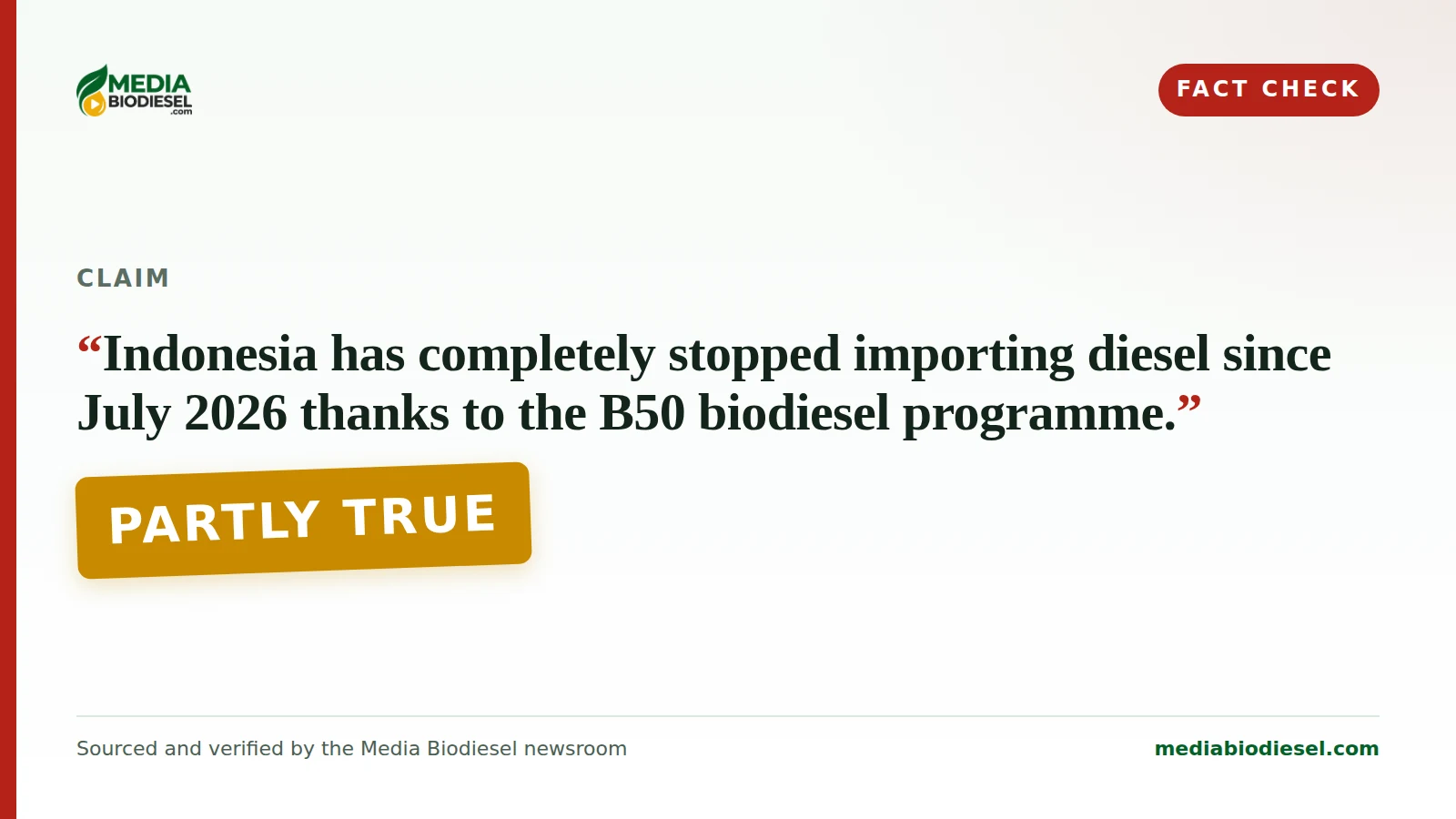
The claim that Indonesia has completely stopped importing diesel because of B50 is only partly true. The government does say diesel imports have been halted since B50 took effect in July 2026, but the halt also rests on the RDMP Balikpapan refinery, inaugurated on 12 January 2026. No independent post-July import data has been published, and in September 2026 Energy and Mineral Resources Minister Bahlil Lahadalia himself narrowed his claim to diesel of the CN48 grade.
Claim
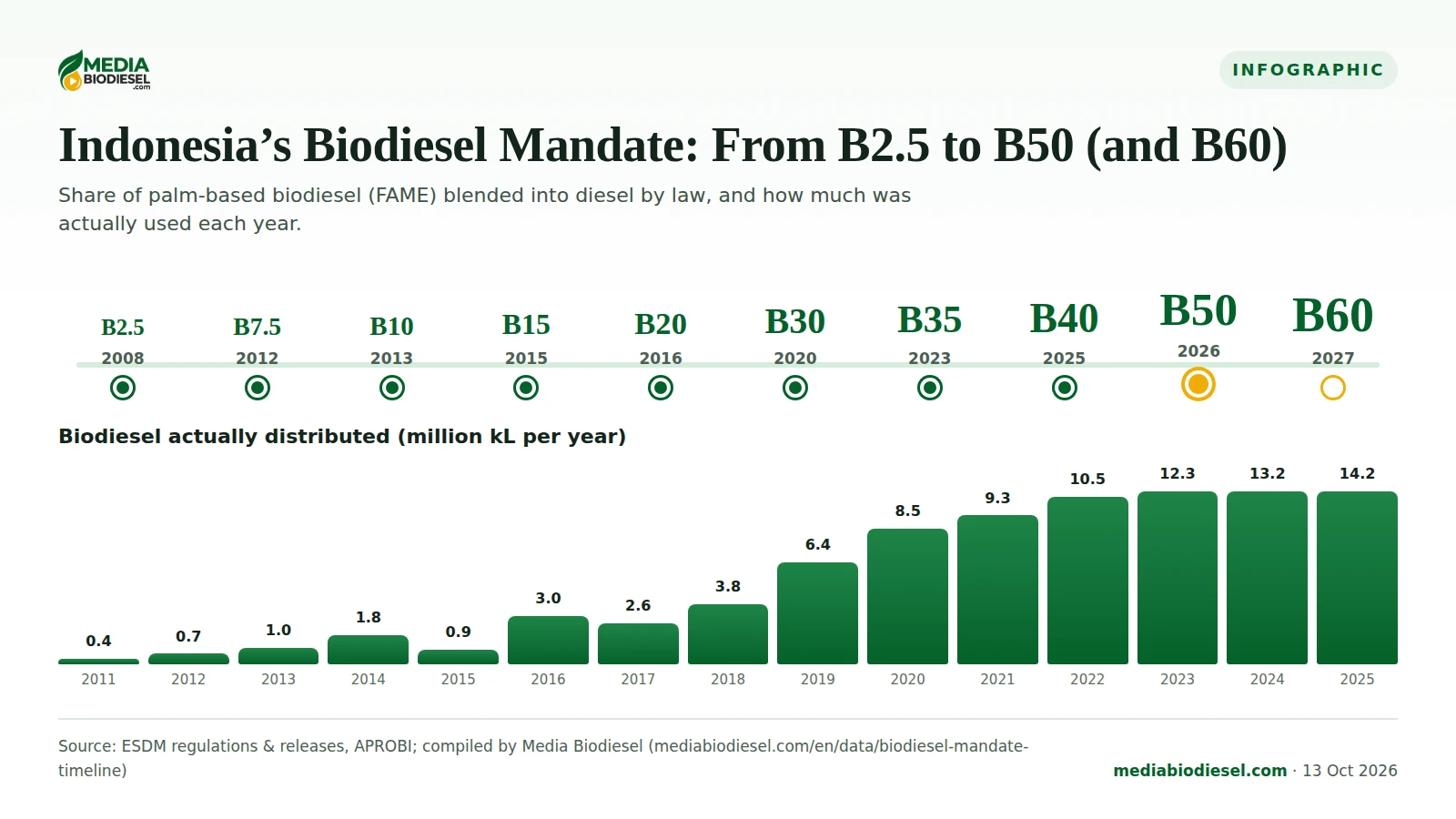
On 9 July 2026, the day B50 was launched at the KM 57 rest area on the Jakarta–Cikampek toll road, Kompas TV ran a story headlined "Indonesia Resmi Stop Impor Solar, Menteri Bahlil: Program B50 Jadi Sejarah Baru" ("Indonesia officially stops diesel imports; Minister Bahlil: B50 programme makes history"). Bahlil was quoted as saying that with B50 in place, Indonesia no longer imports diesel products. President Prabowo Subianto repeated the message on 17 July 2026 in Malang: according to ANTARA, he said Indonesia would no longer import diesel from July because it now produces diesel from palm oil. The message that "B50 has ended diesel imports" then circulated widely.
Verdict: Partly True
It is true that the government says diesel imports have stopped and that B50 substantially reduces the need for fossil diesel. But two elements of the claim are inaccurate or unproven: the halt is not due to B50 alone, and "completely" cannot yet be verified against official import data for the period after July 2026, while the minister's own statements have narrowed to a specific diesel grade.
The facts
- The RDMP Balikpapan refinery is another factor. At a plenary cabinet meeting on 15 December 2025, Bahlil said Indonesia would stop importing diesel from 2026 because RDMP Balikpapan adds more than 100,000 barrels per day of diesel output, even before B50 became mandatory, Investortrust reported. When the refinery was inaugurated on 12 January 2026, he said diesel import permits would no longer be issued, for both CN48 (such as Biosolar, the subsidised biodiesel blend) and CN51 (such as Dexlite), and that private fuel stations must buy from Pertamina.
- Imports still occurred in early 2026. In January 2026 Bahlil said any cargo arriving in January or February would count as leftover 2025 imports. Rizwi Jilanisaf Hisjam, secretary of the ESDM Directorate General of Oil and Gas, told House Commission XII, as reported by Investortrust on 8 April 2026, that diesel import dependency fell from 12.17% in 2025 to 6.26% in January–February 2026.
- The position on industrial diesel shifted. On 8 January 2026, detikFinance quoted Bahlil as saying CN51 diesel imports for industry remained an option because domestic output was not yet sufficient. Four days later he said the ban covered all grades.
- The claim narrowed to CN48. In a KabarBursa article of 28 September 2026, Bahlil was quoted as saying B50 had proven effective in stopping diesel imports "for the CN48 qualification", the grade of diesel such as Biosolar.
- Earlier import figures vary. On 9 October 2025, the ESDM ministry website put 2025 diesel imports at about 4.9 million kL, or 10.58% of demand. At the B50 launch, Bahlil put previous imports at about 3–4 million kL a year, while the oil and gas directorate used an import dependency figure of 12.17% for 2025.
Context
The fall in diesel imports is a real achievement driven by two policies at once: added refinery capacity and a higher biodiesel blend. Crediting B50 alone obscures the refinery's role, while calling the halt "complete" goes beyond the evidence available to the public. As far as our checks found, neither Statistics Indonesia (BPS) nor the ESDM ministry has released monthly diesel import data for the period after July 2026 that would confirm a zero figure, including for higher-grade diesel.
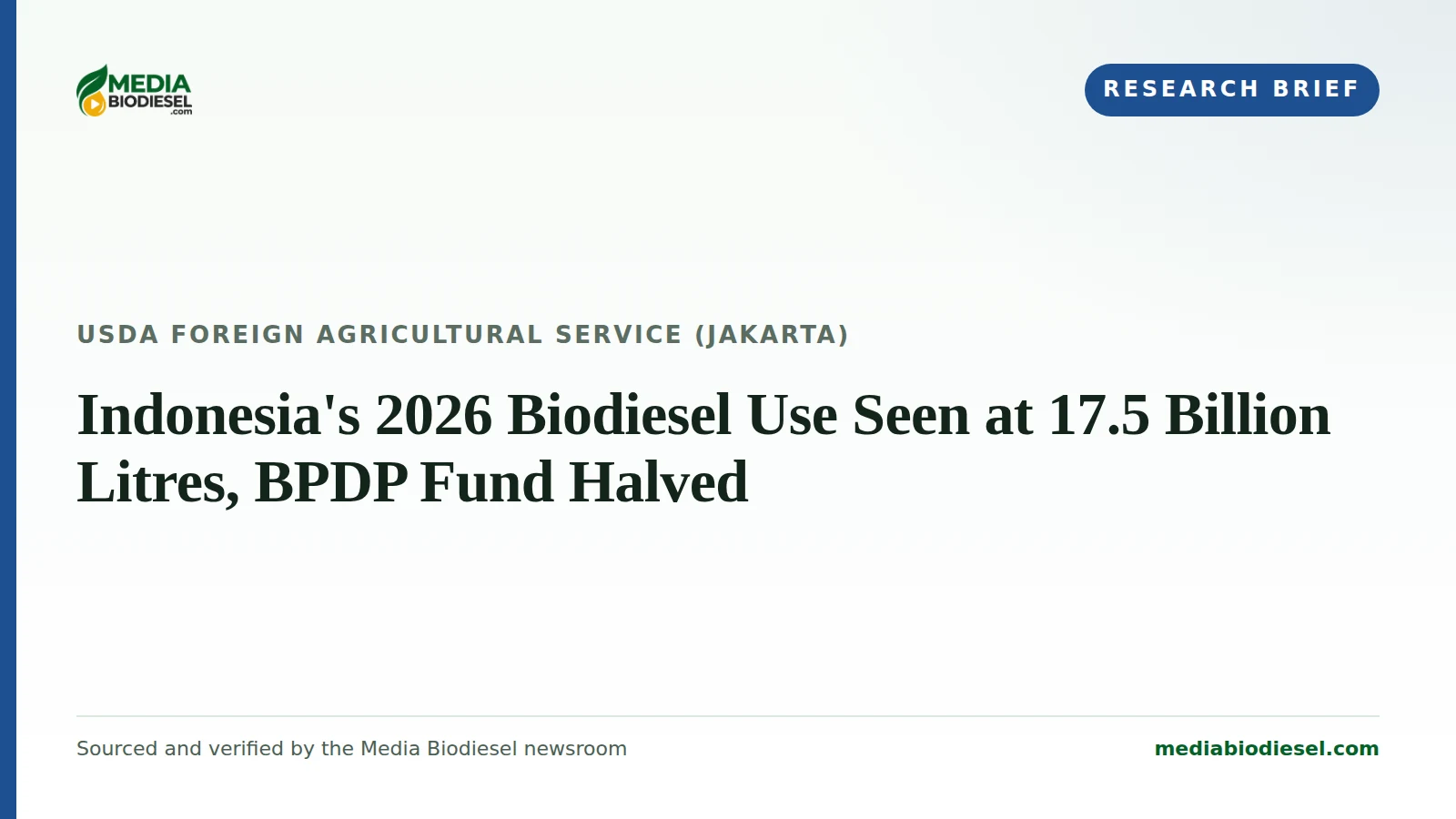
The claim matters because B50's foreign exchange and subsidy savings are often calculated from the imports it is assumed to replace. For projections of B50's effect on imports, see also our report on Pertamina's projection. Final verification will depend on officially published import data.
Sources & references
- Kompas TV, "Indonesia Resmi Stop Impor Solar, Menteri Bahlil: Program B50 Jadi Sejarah Baru" (9 July 2026) — https://www.kompas.tv/ekonomi/679607/indonesia-resmi-stop-impor-solar-menteri-bahlil-program-b50-jadi-sejarah-baru
- ANTARA, "Indonesia to stop diesel imports by July 2026 on B50 success: Prabowo" (18 July 2026) — https://en.antaranews.com/news/423155/indonesia-to-stop-diesel-imports-by-july-2026-on-b50-success-prabowo
- Investortrust, "Bahlil: Kilang RDMP Balikpapan Pertamina Bikin RI Stop Impor Solar, meski Belum Mandatori B50" (15 December 2025) — https://investortrust.id/business/88598/bahlil-kilang-rdmp-balikpapan-pertamina-bikin-ri-stop-impor-solar-meski-belum-mandatori-b50
- Investortrust, "RDMP Balikpapan Diresmikan, Bahlil Pastikan RI Stop Impor Solar, Termasuk SPBU Swasta" (12 January 2026) — https://investortrust.id/business/91065/rdmp-balikpapan-diresmikan-bahlil-pastikan-ri-stop-impor-solar-termasuk-spbu-swasta
- detikFinance, "Solar untuk Industri Masih Bisa Impor" (9 January 2026) — https://finance.detik.com/energi/d-8299811/solar-untuk-industri-masih-bisa-impor
- Investortrust, "Impor Bensin Masih Dominan 59%, Solar Berhasil Ditekan" (8 April 2026) — https://investortrust.id/business/99399/impor-bensin-masih-dominan-59-solar-berhasil-ditekan
- KabarBursa, "ESDM Genap 81 Tahun, B50 Baru Awal dari Ambisi Besar Energi RI" (28 September 2026) — https://www.kabarbursa.com/makro/esdm-genap-81-tahun-b50-baru-awal-dari-ambisi-besar-energi-ri
- Ministry of Energy and Mineral Resources (ESDM), "Stop Impor Solar, Pemerintah Segera Terapkan Mandatori B50 Tahun 2026" (9 October 2025) — https://esdm.go.id/id/media-center/arsip-berita/stop-impor-solar-pemerintah-segera-terapkan-mandatori-b50-tahun-2026