METI Estimates More Than 200 Bioethanol Plants for E50 Scenario
The industry group's E50 plant estimate is not a construction tally; the government is preparing a nearer-term E20 phase.
Contents (3 sections)
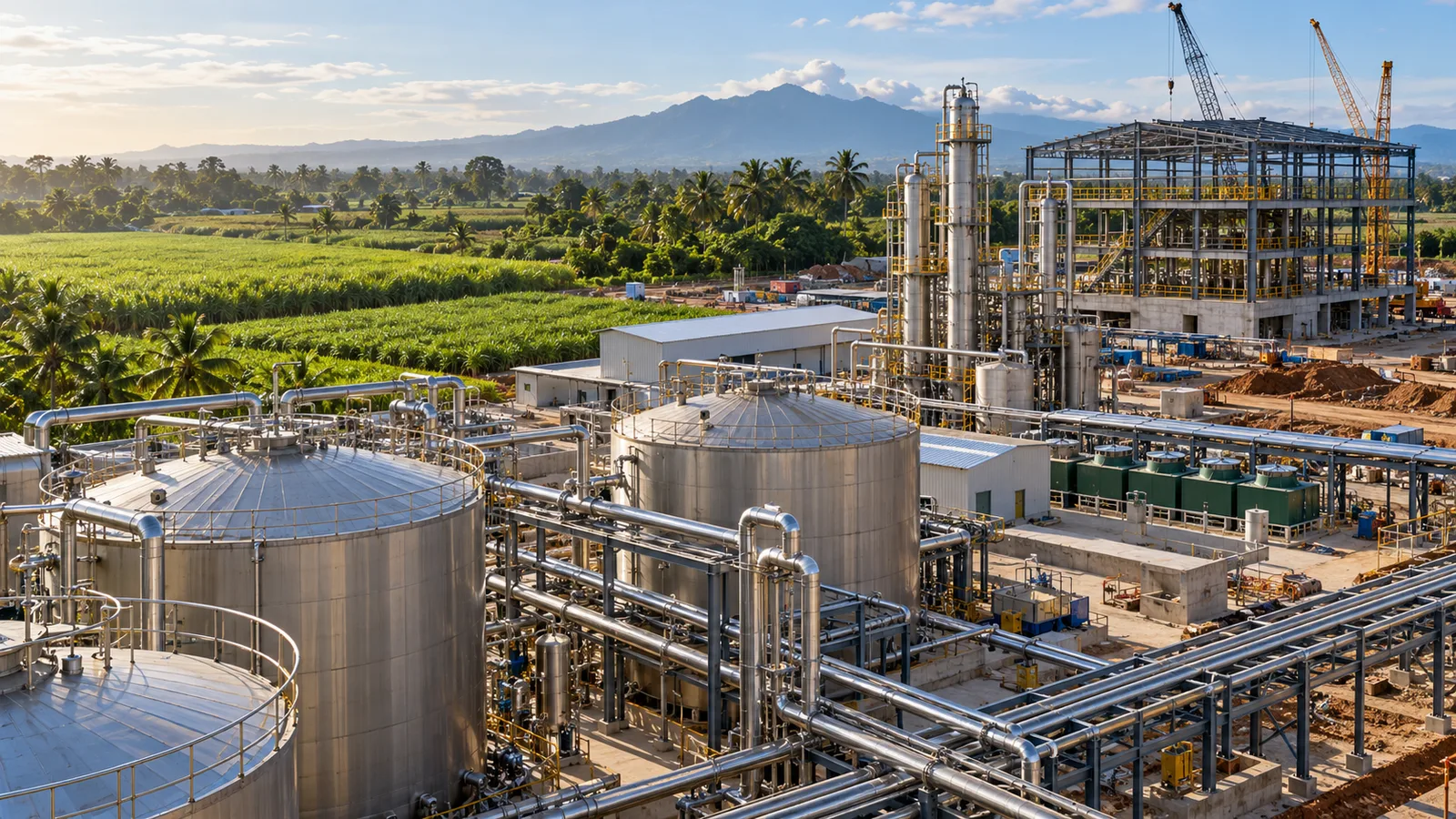
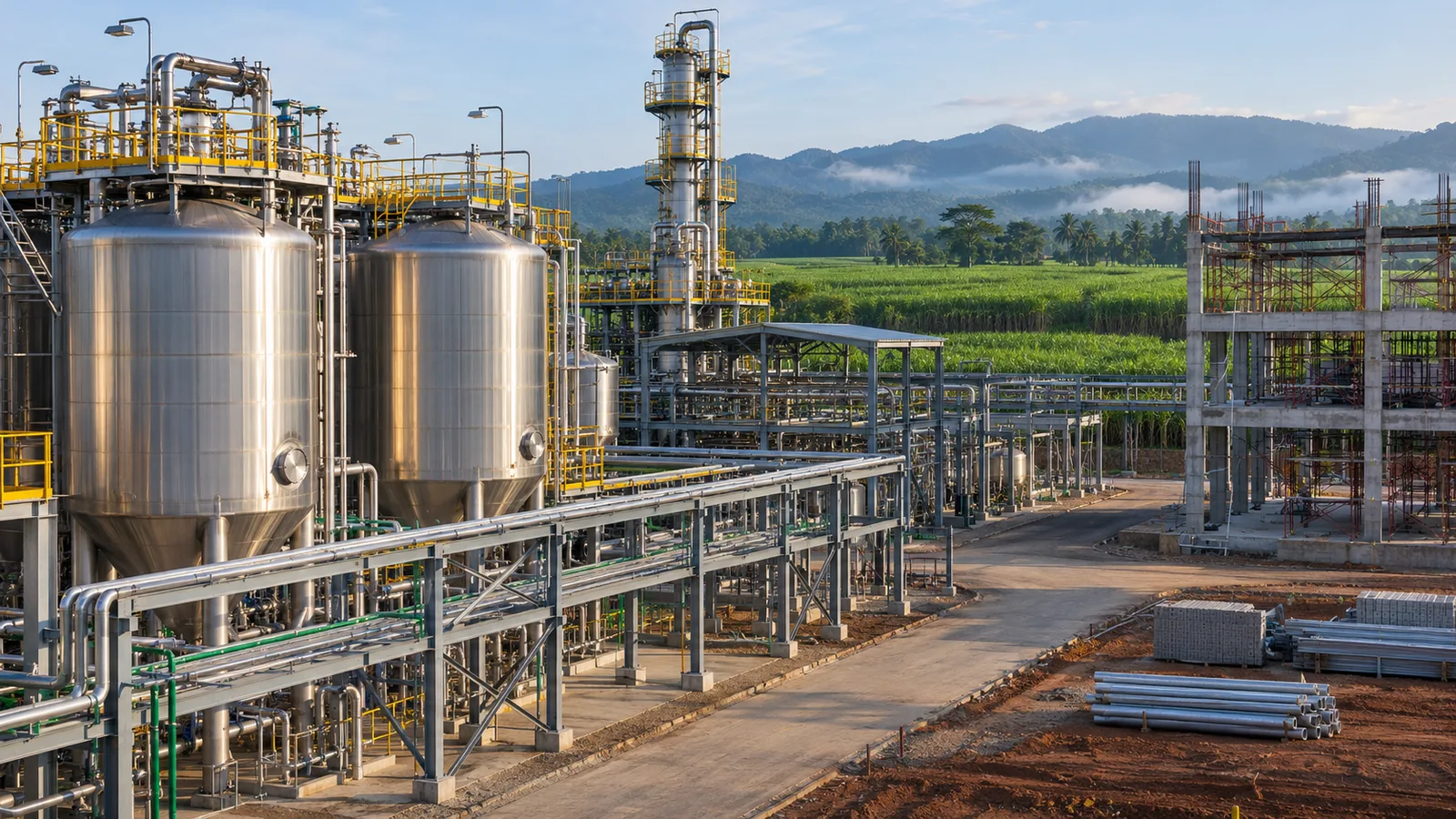
Jakarta — The Indonesian Renewable Energy Society (METI) estimates that more than 200 bioethanol plants would be needed for an E50 petrol-blending scenario. Its chair, Norman Ginting, gave the estimate after the National Energy Forum in Jakarta on Wednesday, 25 November 2026, ANTARA reported. It is an industry group's long-range assessment, not a tally of plants already built or a government decision imposing E50 by 2030.
METI puts the ethanol requirement for that scenario at about 18.5 million–20 million kilolitres. It also cites potential investment of around IDR 107.4 trillion in a long-term roadmap and a possible land requirement of 1 million–2 million hectares. These remain estimates rather than verified sites, financing commitments or available land.
Industry scenario and the government's nearer-term steps
Norman called for a phased progression from E5 to E10, E20 and eventually E50, alongside feedstock, processing, technology and distribution. ANTARA also cited an October estimate by the higher-education minister of 320 ethanol plants, each with 60,000 kilolitres of capacity, for E50. The two plant-count estimates differ and should not be treated as identical calculations without checking their capacity assumptions.
The Ministry of Energy and Mineral Resources' Directorate General of New, Renewable Energy and Energy Conservation (EBTKE) said in September that E20 was targeted for 2028, contingent on a gradual build-out. For the non-subsidised petrol segment, it projected 1.39 million kilolitres of ethanol for E20. At the time, EBTKE said five plants with combined output of about 70,500 kilolitres were ready for Pertamina to absorb; it also described expected plant additions in 2027 and 2028.
Different baselines produce different ethanol figures
EBTKE's 1.39 million-kilolitre E20 projection for non-PSO petrol is not directly comparable with an October statement by Energy Minister Bahlil Lahadalia that E20 would require around 8 million kilolitres. The ministry's publication cites nationwide petrol demand of about 40 million kilolitres annually, whereas EBTKE used a projected 6.65 million kilolitres of non-PSO petrol in 2026. These are different market scopes, not competing measurements of ethanol already supplied.
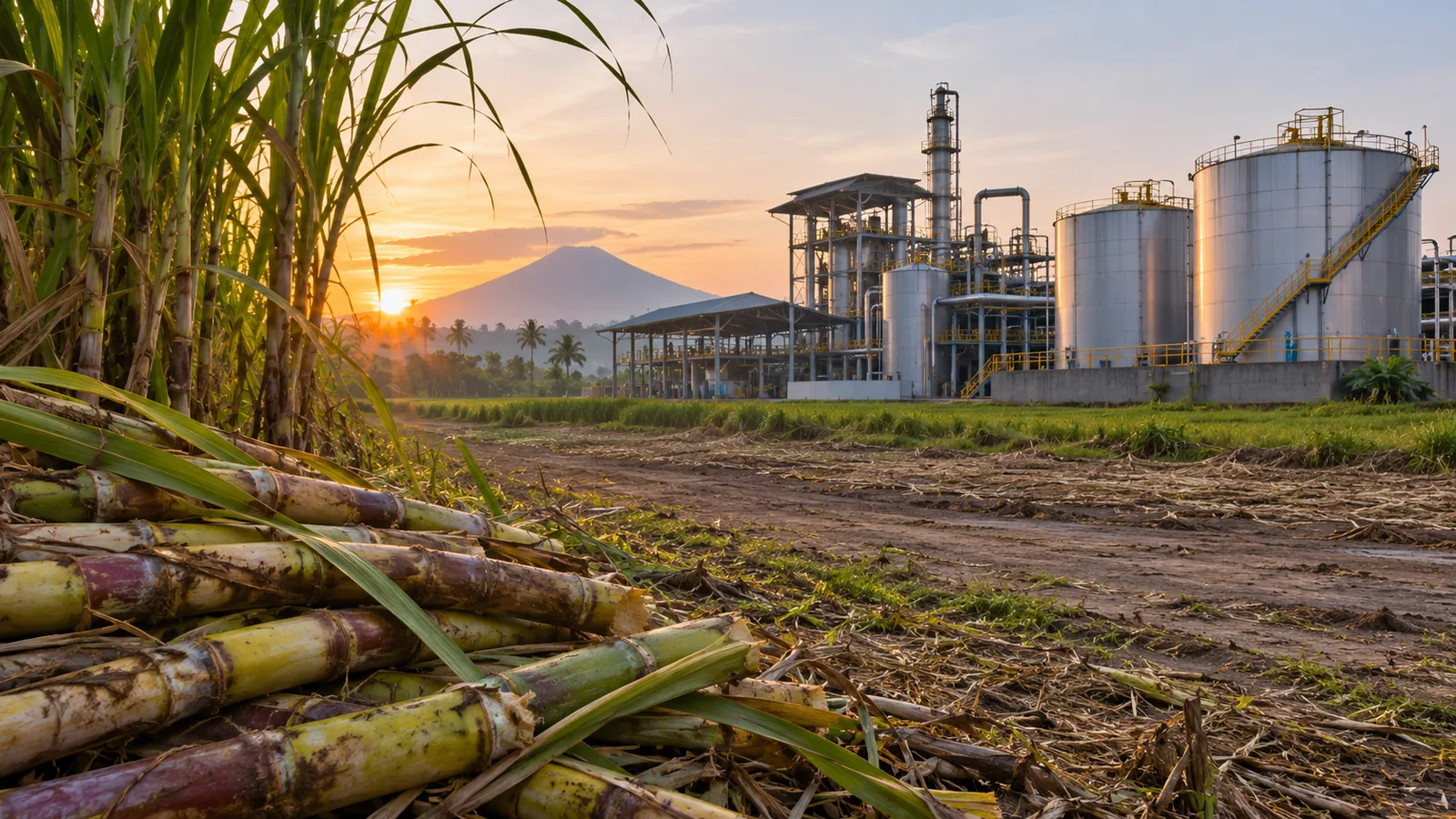
The ministry identified cassava, sugarcane and maize among prospective feedstocks and stressed domestic supply. METI, according to ANTARA, also wants an ethanol-pricing formula and a calculation of net foreign-exchange savings. Neither the longer-range plant estimate nor a blending target establishes that facilities, feedstock and funding are in place.
Lessons from biodiesel have limits
Norman pointed to Indonesia's biodiesel experience as a possible model. Yet biodiesel is blended with diesel, while bioethanol goes into petrol; the production chains and fuel specifications are distinct. EBTKE says E10 and E20 testing and ethanol specifications are still part of the preparation. Progress in the biodiesel mandate therefore cannot be taken as proof of E50 ethanol capacity.
Readers should watch for formal blending rules, completed plants, confirmed feedstock and a published pricing framework. METI's figures describe the scale of its proposed scenario, while official EBTKE materials describe an earlier E20 stage. Keeping those categories apart prevents an industry projection from being mistaken for a mandate already in force.
Sources & references
- ANTARA, "METI estimasi E50 butuh lebih dari 200 pabrik bioetanol" (25 November 2026) — https://www.antaranews.com/berita/5878743/meti-estimasi-e50-butuh-lebih-dari-200-pabrik-bioetanol
- Ditjen EBTKE Kementerian ESDM, "Pemerintah Siapkan Implementasi E20 pada tahun 2028 untuk Kurangi Ketergantungan Impor Bensin" (9 September 2026) — https://ebtke.esdm.go.id/artikel/berita/pemerintah-siapkan-implementasi-e20-pada-tahun-2028-untuk-kurangi-ketergantungan-impor-bensin
- Kementerian ESDM, "Dari Sumur Rakyat hingga Etanol, Bahlil Dorong Rakyat Jadi Pemain Energi" (12 October 2026) — https://esdm.go.id/id/media-center/arsip-berita/dari-sumur-rakyat-hingga-etanol-bahlil-dorong-rakyat-jadi-pemain-energi
Stay on top of Indonesian biodiesel
The weekly newsletter: the week’s key news, prices and data in one email every Friday. Or follow our channels for daily prices.