Indonesia’s E50 Plan Would Need 320 Ethanol Plants, Minister Says
E50 would need much more ethanol capacity than Indonesia now has; 320 plants is an estimated requirement, not a construction tally.
Contents (3 sections)
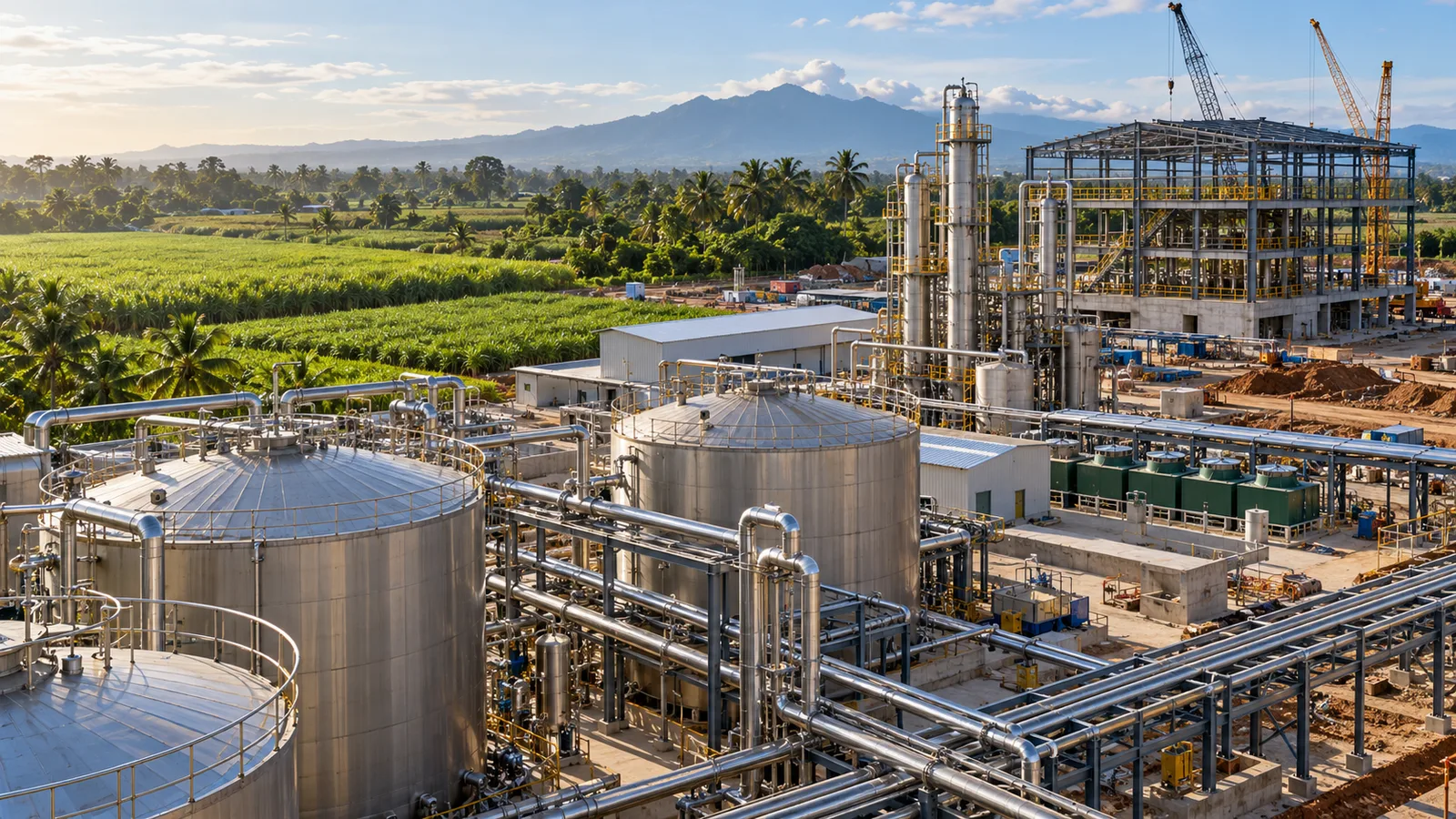
Jakarta — Higher Education, Science and Technology Minister Brian Yuliarto said Indonesia would need 320 new ethanol plants, each with capacity of 60,000 kilolitres, to serve a proposed E50 petrol blend. He made the assessment at a Danantara technology investment forum in Jakarta on Monday, 26 October 2026. It is an estimate of facilities needed under a future programme, not a list of financed or approved projects.
A long-range target and a near-term supply gap
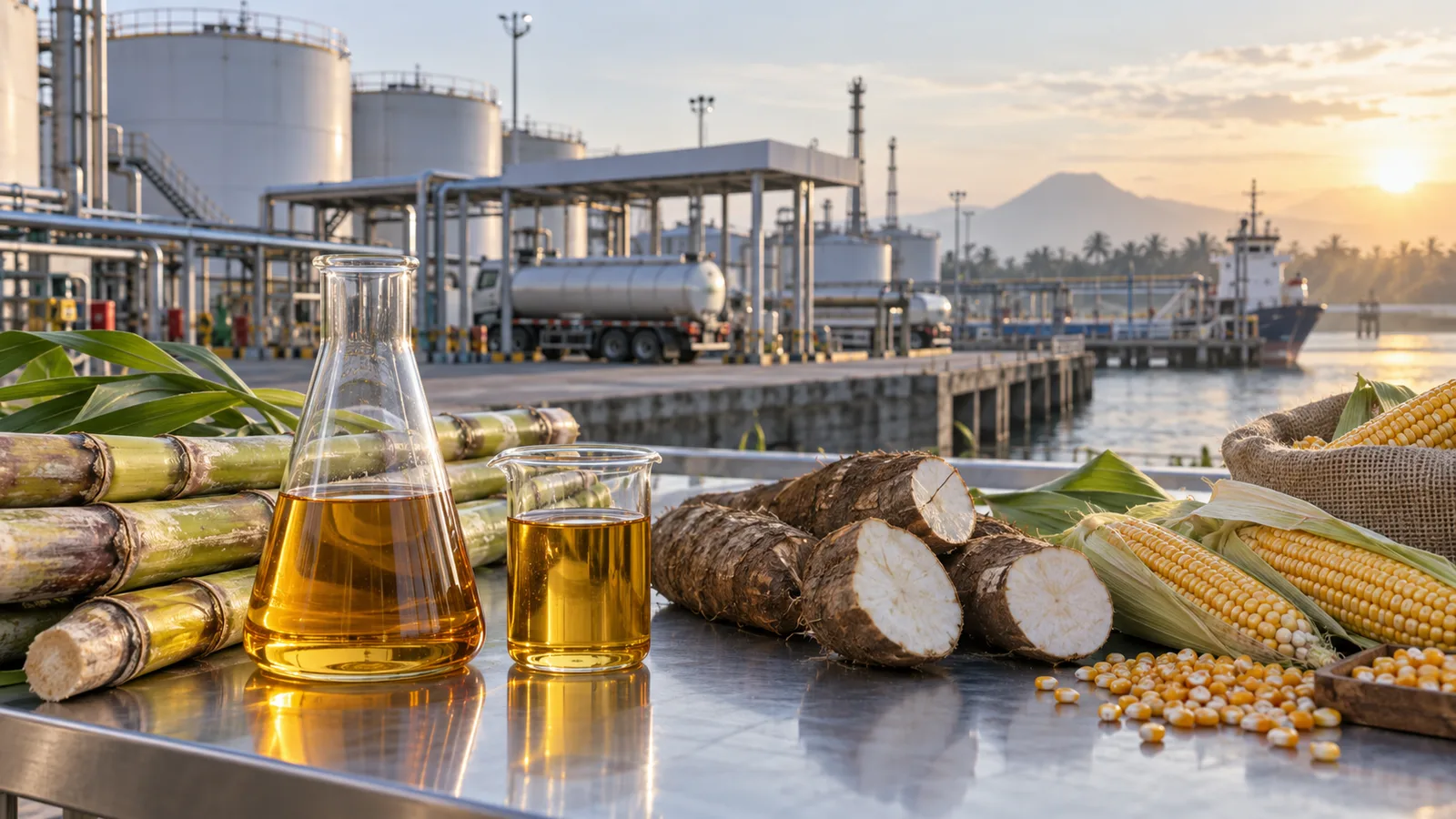
ANTARA reported that Brian linked the processing plants to reducing energy imports. He called for cooperation among government, universities and investors and regulatory changes to bring domestic bioethanol technology to market. Sugarcane, cassava and corn were among the feedstocks mentioned. Neither the availability of crops for each site nor the financing of the proposed plants was specified.
Jakarta Globe described the 320 plants as a requirement for a proposed E50 programme. It reported combined effective capacity of approximately 70,500 kL a year at five existing major bioethanol facilities. The gap illustrates the scale of the proposal, but does not establish that hundreds of plants are being built.
In a separate report published the same day, CNBC Indonesia quoted EBTKE director-general Eniya Listiani Dewi as saying current supply is around 70,500 kL. For an E20 stage targeted in 2028, she described a requirement of 400,000–500,000 kL. Officials were still preparing the technical aspects of a mandatory E10 blend and seeking commitments for domestic feedstocks. She mentioned plans for about 11 new plants, with memoranda and land arrangements yet to be settled.
Different stages, different measures
E10 denotes ten per cent ethanol in petrol, E20 twenty per cent, and E50 fifty per cent. ANTARA described a policy path from E10 in 2027 to E20 in 2028 and eventually E50. Those are reported plans, not proof that each stage already has operative rules, secured feedstock and a ready distribution system.
Brian's 320-plant figure refers to a long-term E50 requirement. Eniya's approximately 11 planned plants relate to a nearer phase. The two figures should not be added or subtracted as though all the facilities already existed. Likewise, a nominal 60,000-kL facility capacity should not be presented as realised ethanol production.
Eniya stressed to CNBC Indonesia that domestic feedstock commitments must be established before mandatory blending. Replacing imported petrol with imported ethanol would not automatically achieve the import-substitution goal officials cited. The reports do not give final investments for every project, regional crop supplies, or a firm date for an E50 obligation.
Separate from diesel's B50 blend
E50 concerns petrol. Indonesia's B50 concerns biodiesel blended into diesel. Palm-based biodiesel supply cannot simply be counted as ethanol supply. The indicators worth following are verified ethanol output, binding feedstock commitments and published regulations, rather than the target number alone.
Brian's statement sets out the scale of an industrial ambition; Eniya's account exposes the supply constraint nearer the start of the proposed programme. Actual production and investment should be measured against those plans as official updates emerge.
Sources & references
- ANTARA, "Indonesia's E50 bioethanol program to require 320 new plants: minister" (26 October 2026) — https://en.antaranews.com/news/437935/indonesias-e50-bioethanol-program-to-require-320-new-plants-minister
- Jakarta Globe, "Indonesia Needs 320 Ethanol Plants to Support 50% Gasoline Blending Target" (26 October 2026) — https://jakartaglobe.id/business/indonesia-needs-320-ethanol-plants-to-support-50-gasoline-blending-target
- CNBC Indonesia, "Terapkan Bensin Campur Etanol 20% E20, RI Butuh 400.000 KL Bioetanol" (26 October 2026) — https://www.cnbcindonesia.com/news/20261026101248-4-779380/terapkan-bensin-campur-etanol-20-e20-ri-butuh-400000-kl-bioetanol
Stay on top of Indonesian biodiesel
The weekly newsletter: the week’s key news, prices and data in one email every Friday. Or follow our channels for daily prices.