What Is Biodiesel? Indonesia's Palm-Based Fuel in Your Tank
Biodiesel is FAME, a plant-based fuel made from palm oil that now makes up half of every litre of Biosolar in Indonesia. Learn the definition, advantages and points to watch.
Contents (6 sections)
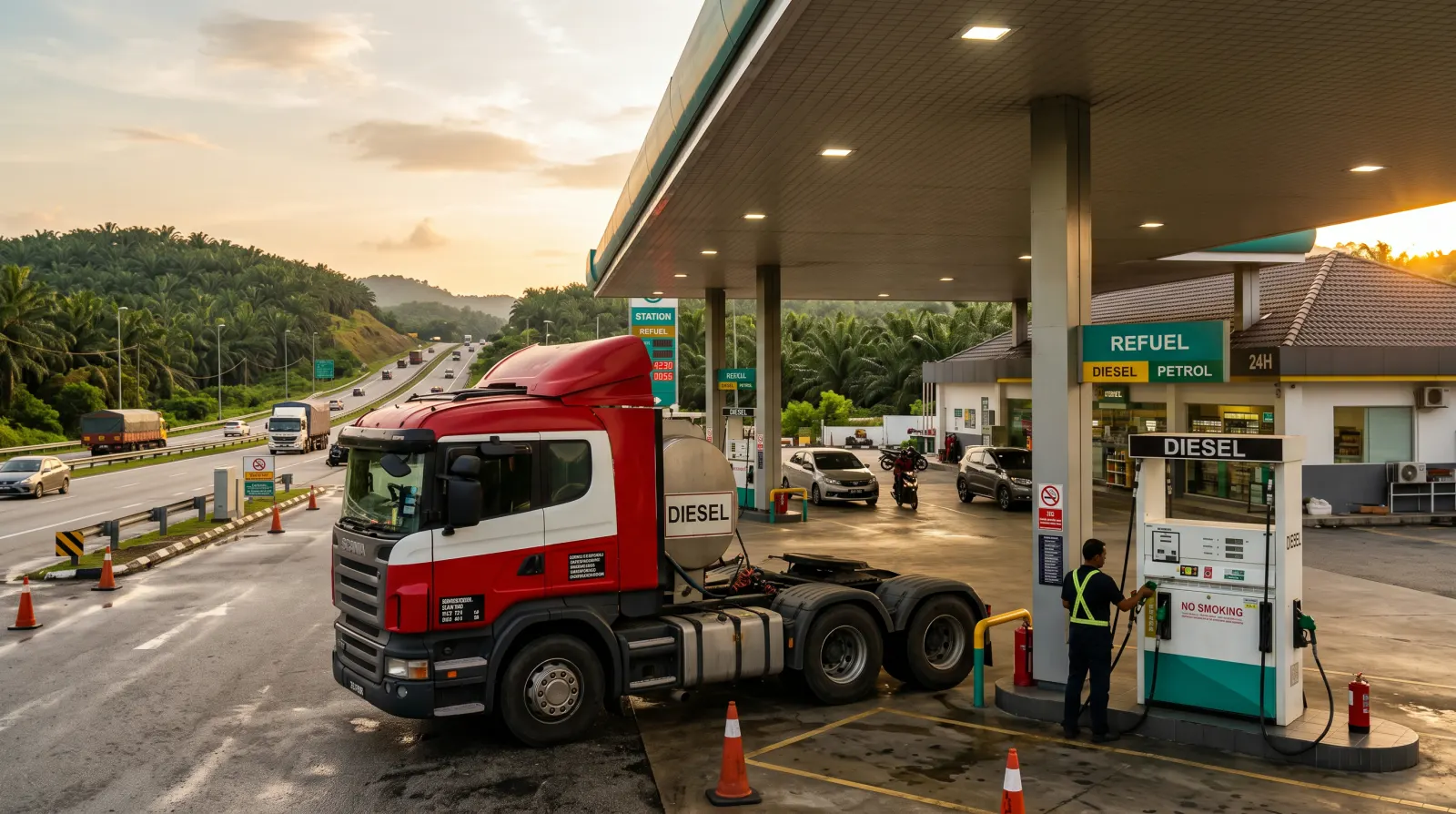
Biodiesel is a plant-based substitute for fossil diesel, and in Indonesia it now makes up half of every litre of Biosolar (subsidised B50 diesel) sold at fuel stations. As of October 2026, the blend is mandatory nationwide, and the fuel comes largely from palm plantations. This explainer covers the basics: what biodiesel is, where it comes from and why it matters.
A short definition
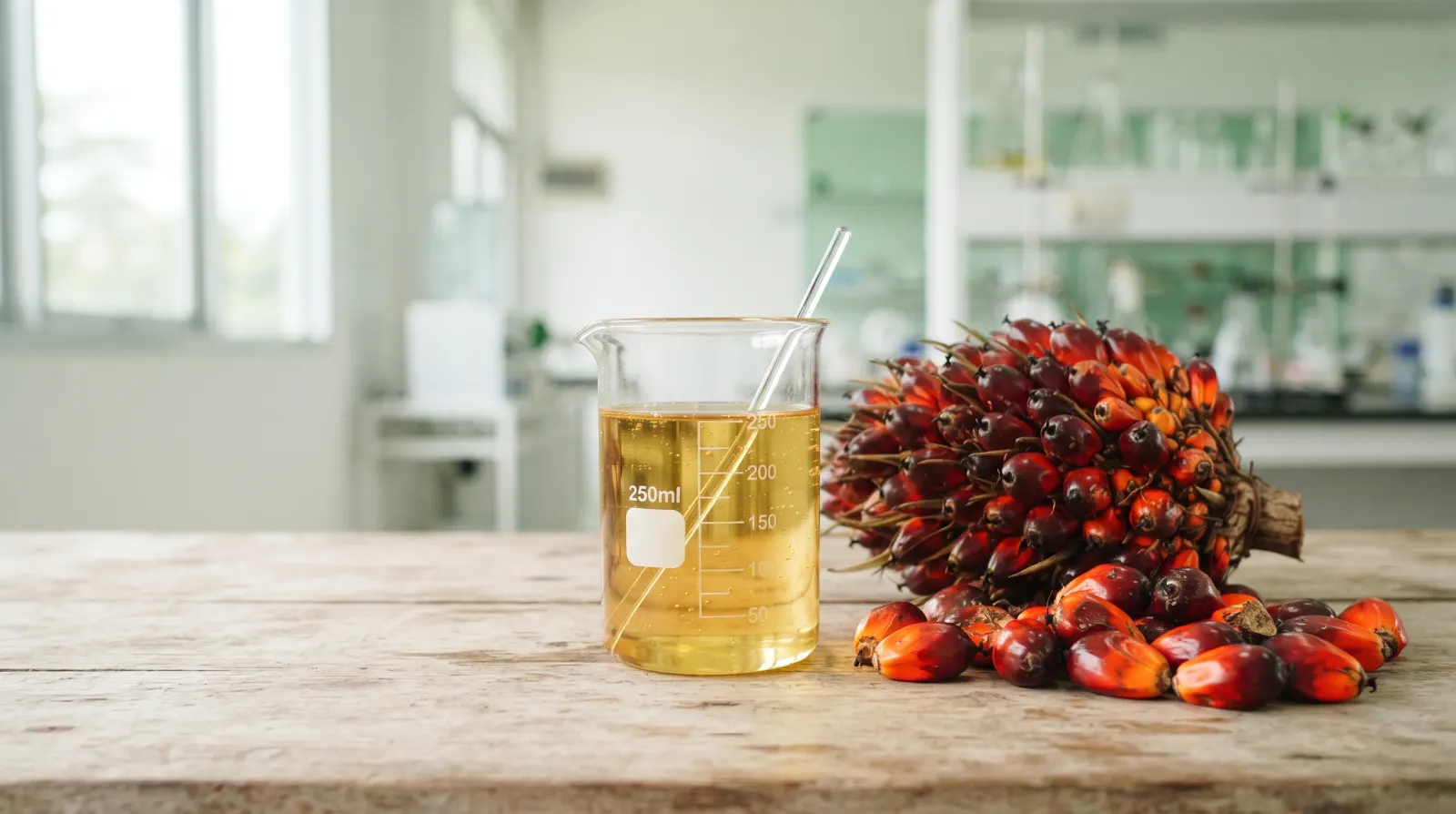
Technically, biodiesel is FAME (fatty acid methyl ester). It is made by reacting vegetable oil or fat with methanol in a process called transesterification. The result is a golden-yellow liquid whose properties are very close to diesel, so it can be blended into diesel and burned in diesel engines.
In Indonesia, the main feedstock is crude palm oil (CPO). The choice is logical: Indonesia is the world's largest palm oil producer, with national output of around 46 million tonnes a year, according to the Ministry of Agriculture.
Biodiesel, Biosolar and B100: what is the difference?
- Biodiesel (B100) — pure, 100% FAME, the product of a biodiesel plant (a biofuel producer, or BU BBN in Indonesian).
- Solar — the local name for petroleum-based diesel.
- Biosolar / "B" blends — a mix of the two. The number after the letter B is the percentage of FAME. B40 means 40% FAME and 60% diesel; B50, mandatory since 1 July 2026 under ESDM Ministerial Decree (Kepmen) No. 257.K/EK.01/MEM.E/2026 issued by the Ministry of Energy and Mineral Resources (ESDM), means 50% FAME and 50% diesel.
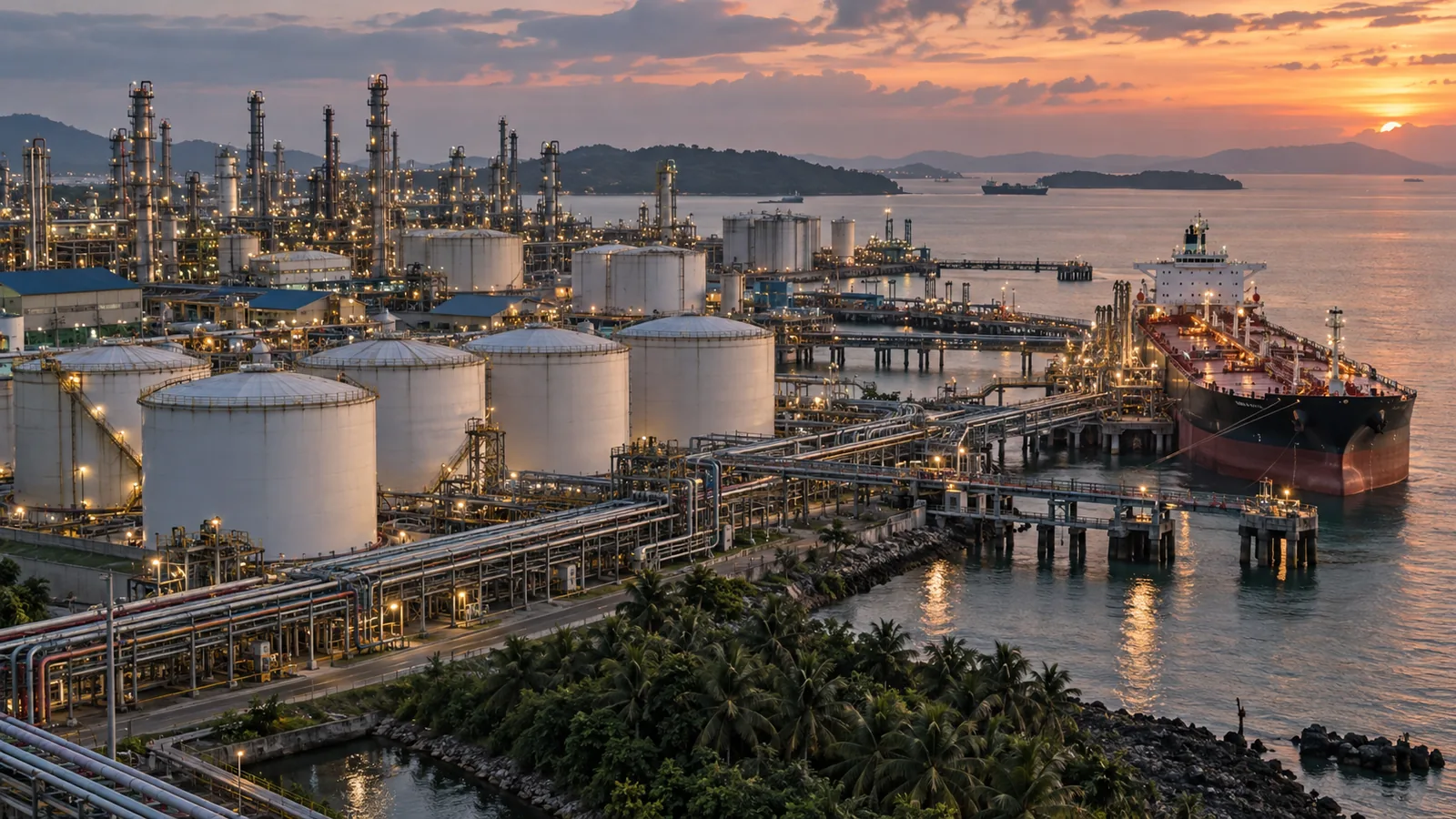
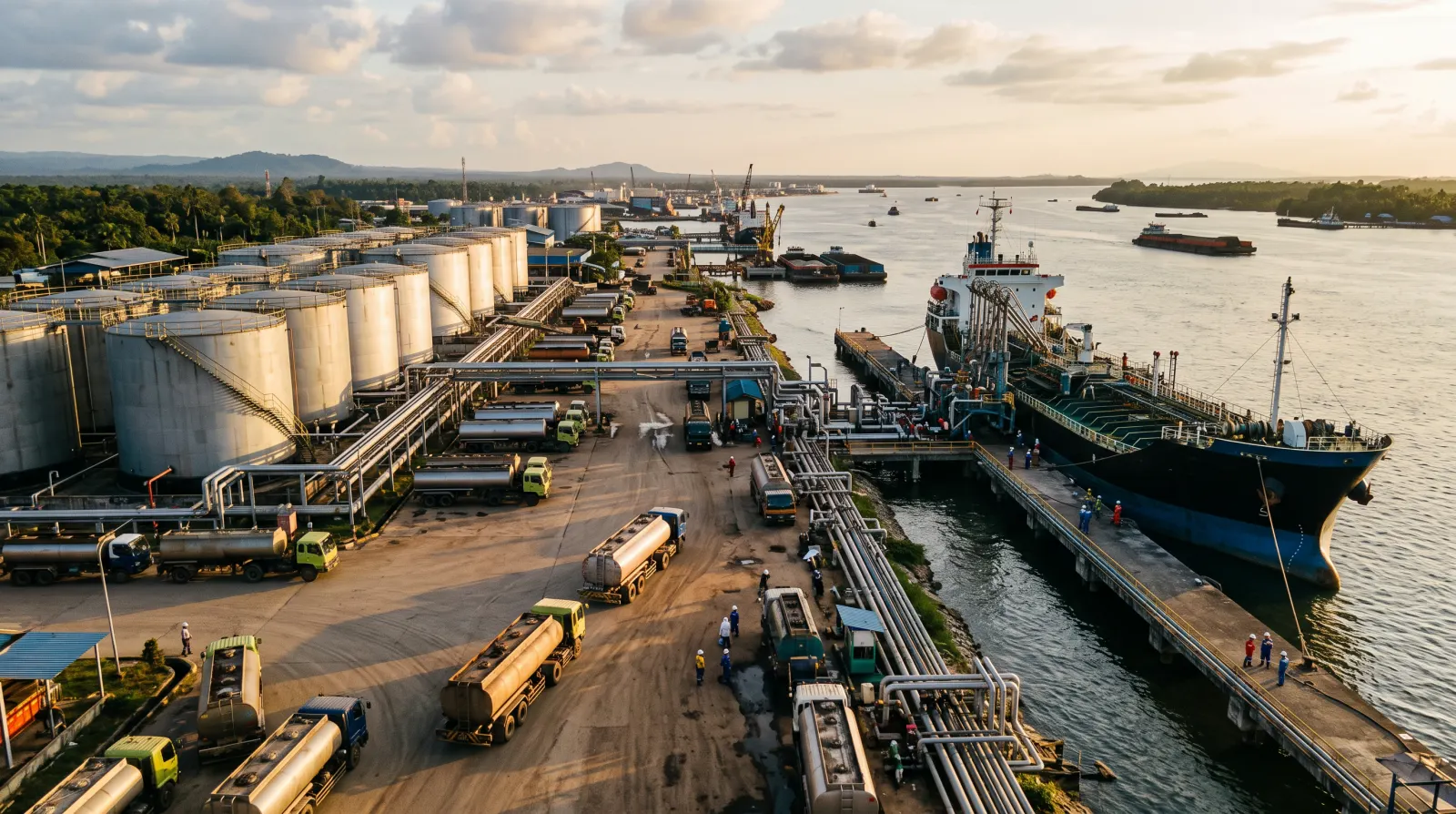
FAME and diesel are blended at fuel terminals before distribution to fuel stations and industrial customers, so consumers receive fuel that is already blended to government requirements.
Not simply "cooking oil in the tank"
Palm oil cannot be poured straight into a diesel engine. Raw vegetable oil is too viscous, contains triglycerides that can form deposits, and burns incompletely. Transesterification splits triglycerides into methyl esters (biodiesel) and glycerol, which is a by-product. This process brings the fuel's viscosity and combustion behaviour close to those of diesel.
Advantages of biodiesel
- Renewable — the feedstock can be replanted, unlike finite petroleum.
- Lower diesel imports — each litre of FAME displaces a litre of diesel, part of which has to be imported, saving foreign exchange.
- Lower greenhouse gas emissions over its life cycle than fossil diesel, particularly when the feedstock is produced sustainably.
- Almost sulphur-free, with good lubricity for fuel injection systems.
- Readily biodegradable if spilled, compared with fossil fuels.
Points to watch
Biodiesel also has particular characteristics. FAME absorbs water more readily and oxidises if stored for too long, and it acts as a "solvent" that can dislodge old deposits in tanks. For this reason the government sets strict quality standards, and users are advised to keep tanks clean and check fuel filters regularly, a practice known as good housekeeping.
Why it matters for Indonesia
Biodiesel serves three major interests at once: energy security (less reliance on diesel imports), palm oil downstreaming (adding value to the commodity at home) and the energy transition (lower emissions from transport and industry). With B50, Indonesia has one of the highest biodiesel blending rates in the world.
Want to know what B20 to B50 mean and how Indonesia got here? See our follow-up explainers on B20 to B50 and the history of Indonesia's biodiesel mandate.
Sources & references
- Ministry of Energy and Mineral Resources (ESDM) — Pahami Istilah B20, B30, B100, BBN dalam Bioenergi
- CNBC Indonesia Research, "B50 Berlaku Besok 1 Juli 2026, Ini Jejak Panjang Biodiesel Indonesia" (30 June 2026) — cnbcindonesia.com
- CNN Indonesia, "Transisi Berakhir, SPBU Wajib Jual Biodiesel B50 Mulai 1 Oktober" (1 October 2026) — cnnindonesia.com