Two Decades of Indonesia's Biodiesel Mandate: From Early Blends to B50
Timeline of Indonesian biodiesel policy since 2006: key regulations, the creation of BPDPKS/BPDP funding, and the steps from B35 and B40 to B50.
Contents (6 sections)
Indonesia's biodiesel programme has run for about two decades, from small blends in the mid-2000s to B50 in 2026. Its path shows how energy policy, the palm oil industry and public funding became intertwined. The timeline below traces the key regulations and milestones.
Foundations: 2006–2008
The use of biofuels began to be promoted in 2006, with initial biodiesel blending of about 5%. The regulatory milestone was Ministry of Energy and Mineral Resources (ESDM) Ministerial Regulation No. 32 of 2008 on the supply, use and trading of biofuels as an alternative fuel. This regulation was the starting point of the mandatory policy: a requirement, no longer just a recommendation.
Stepwise acceleration: 2013–2015
- 1 September 2013 — B10. ESDM Ministerial Regulation No. 25 of 2013 raised the blend to 10%.
- 2014. ESDM Ministerial Regulation No. 20 of 2014 set higher blending targets, up to 30% for some sectors.
- 2015 — B15. ESDM Ministerial Regulation No. 12 of 2015 set B15 and remains one of the main reference points of the national mandate.
Creation of the funding scheme: 2015
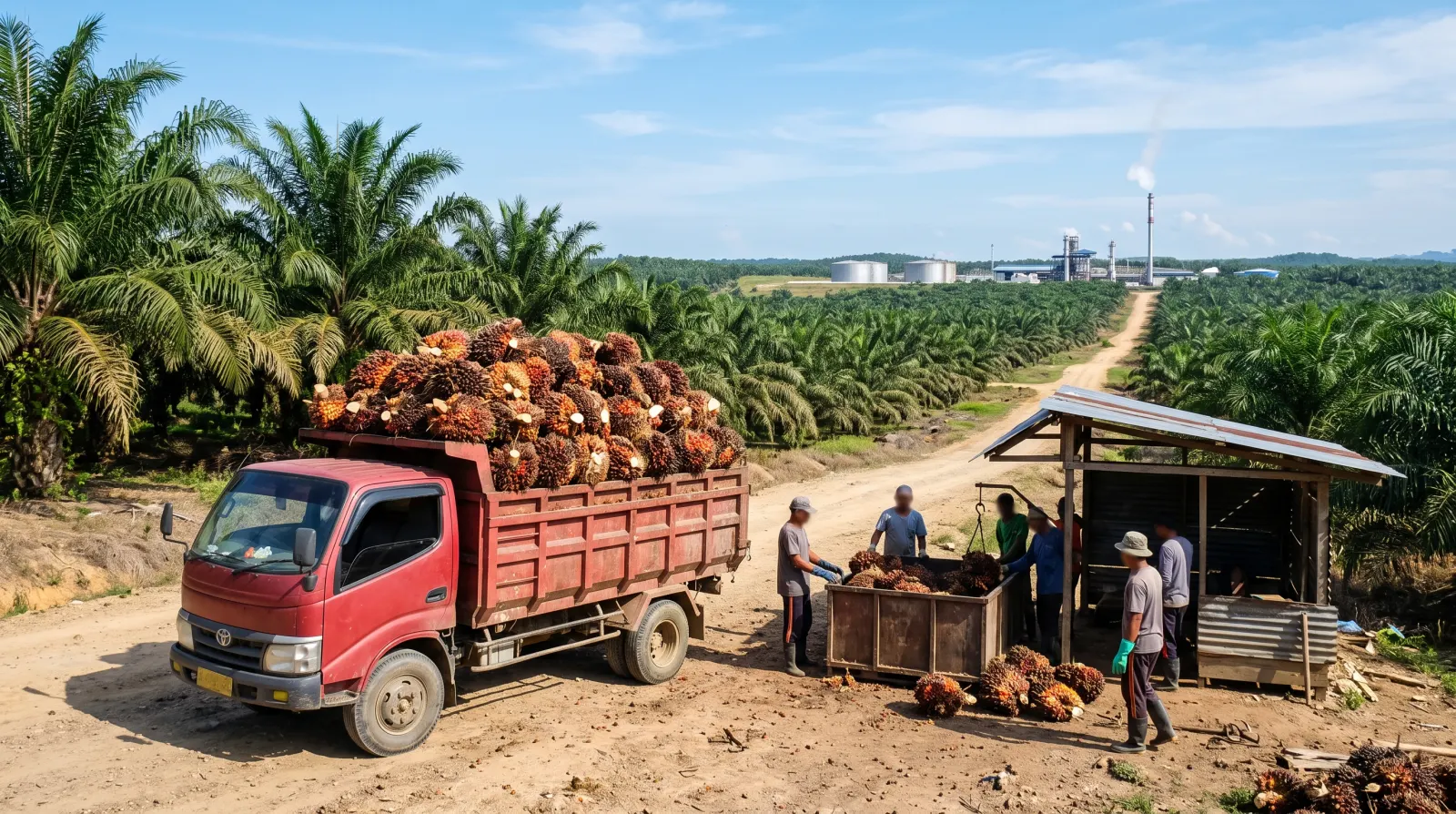
Biodiesel's biggest challenge is the price gap: biodiesel is often more expensive than diesel. To cover the difference, the government created the Palm Oil Plantation Fund Management Agency (BPDPKS) under Presidential Regulation (Perpres) No. 61 of 2015. Its funds are raised from levies on palm oil exports, reported at US$50 per tonne for crude palm oil (CPO) exports in the initial stage. Incentives from this fund have kept the programme running when palm oil prices are high.
In October 2024, Perpres No. 132 of 2024 turned the body into the Plantation Fund Management Agency (BPDP), with a wider remit covering cocoa and coconut, under the Ministry of Finance. For biodiesel, BPDP continues to pay incentives specifically for palm-based biodiesel.
The B20 and B30 era: 2016–2022
- 2016 — B20 began to be applied widely in the subsidised transport sector (PSO).
- 2018 — B20 extended to the non-PSO (unsubsidised) sector, so that almost all diesel on the domestic market contained biodiesel.
- January 2020 — B30. Indonesia became the first country to apply a 30% blend nationwide. According to the Ministry of Energy and Mineral Resources, the B30 programme delivered economic value of more than US$4 billion in 2021.
B35, B40 and B50: 2023–2026
- 1 February 2023 — B35. It was initially planned for 1 January, then delayed by a month to ensure infrastructure and supply were ready. The downstream oil and gas regulator BPH Migas estimated B35 foreign-exchange savings in 2023 at about IDR 120.54 trillion.
- 1 January 2025 — B40. The 2025 biodiesel quota was set at about 15.62 million kilolitres (kL): 7.55 million kL for PSO and 8.07 million kL for non-PSO. BPDP incentives are now focused on PSO.
- 1 July 2026 — B50. Under ESDM Ministerial Decree (Kepmen) No. 257.K/EK.01/MEM.E/2026, with a three-month transition period and a target for all fuel stations to sell B50 by 1 October 2026. ESDM Minister Bahlil Lahadalia described 2026 as a transition year, with full implementation from January 2027. The programme was formally launched by President Prabowo Subianto on 9 July 2026 in Karawang.
Lessons from two decades
The timeline shows a consistent pattern: each increase in the blend is preceded by studies and road tests, backed by a funding scheme, and often accompanied by a transition period. The recurring challenges are also the same: the readiness of storage and blending infrastructure, fuel quality, and the sustainability of incentive funding amid swings in world oil and palm oil prices.
See also: Biodiesel Blends B20 to B50 Explained and the benefits and challenges of the biodiesel programme.
Sources & references
- CNBC Indonesia Research, "B50 Berlaku Besok 1 Juli 2026, Ini Jejak Panjang Biodiesel Indonesia" (30 June 2026) — cnbcindonesia.com
- Hukumonline, "Perpres Pengelolaan Dana Perkebunan Perluas Cakupan hingga Pembentukan BPDP" (2023)
- CNBC Indonesia, "Mandatori 1 Januari 2025, Kuota Biodiesel B40 Ditetapkan 15,6 Juta KL" (3 January 2025) — cnbcindonesia.com
- Ministry of Energy and Mineral Resources (ESDM), "Wujudkan Ketahanan Energi dan Kurangi Impor, Menteri ESDM: Mandatori B40 Berlaku 1 Januari 2025" (3 January 2025) — esdm.go.id
- Kontan, "Indonesia Delays Mandatory 35% Palm Oil Biodiesel Blending to Februari 1" (29 December 2022) — english.kontan.co.id
- CNN Indonesia, "Transisi Berakhir, SPBU Wajib Jual Biodiesel B50 Mulai 1 Oktober" (1 October 2026) — cnnindonesia.com
- Hukumonline, "Pemerintah Resmikan Mandatori B50, Bahlil Teken Kepmen Alokasi" (9 July 2026) — hukumonline.com