Indonesia's 2026 Biodiesel Use Hits 13.84 Million kL by 10 November
Indonesia's palm oil-based biodiesel consumption reached 13.84 million kL by 10 November 2026, or 83% of the B50 allocation, Reuters reported citing an ESDM official at IPOC 2026.
Contents (3 sections)
Nusa Dua — Indonesia's consumption of palm oil-based biodiesel reached 13.84 million kilolitres (kL) in 2026 as of 10 November, equal to 83% of this year's B50 allocation. The figure was given by an official of the Ministry of Energy and Mineral Resources (ESDM) on the sidelines of the Indonesian Palm Oil Conference and 2027 Price Outlook (IPOC 2026) in Nusa Dua, Bali, and reported by Reuters on Thursday (12/11).
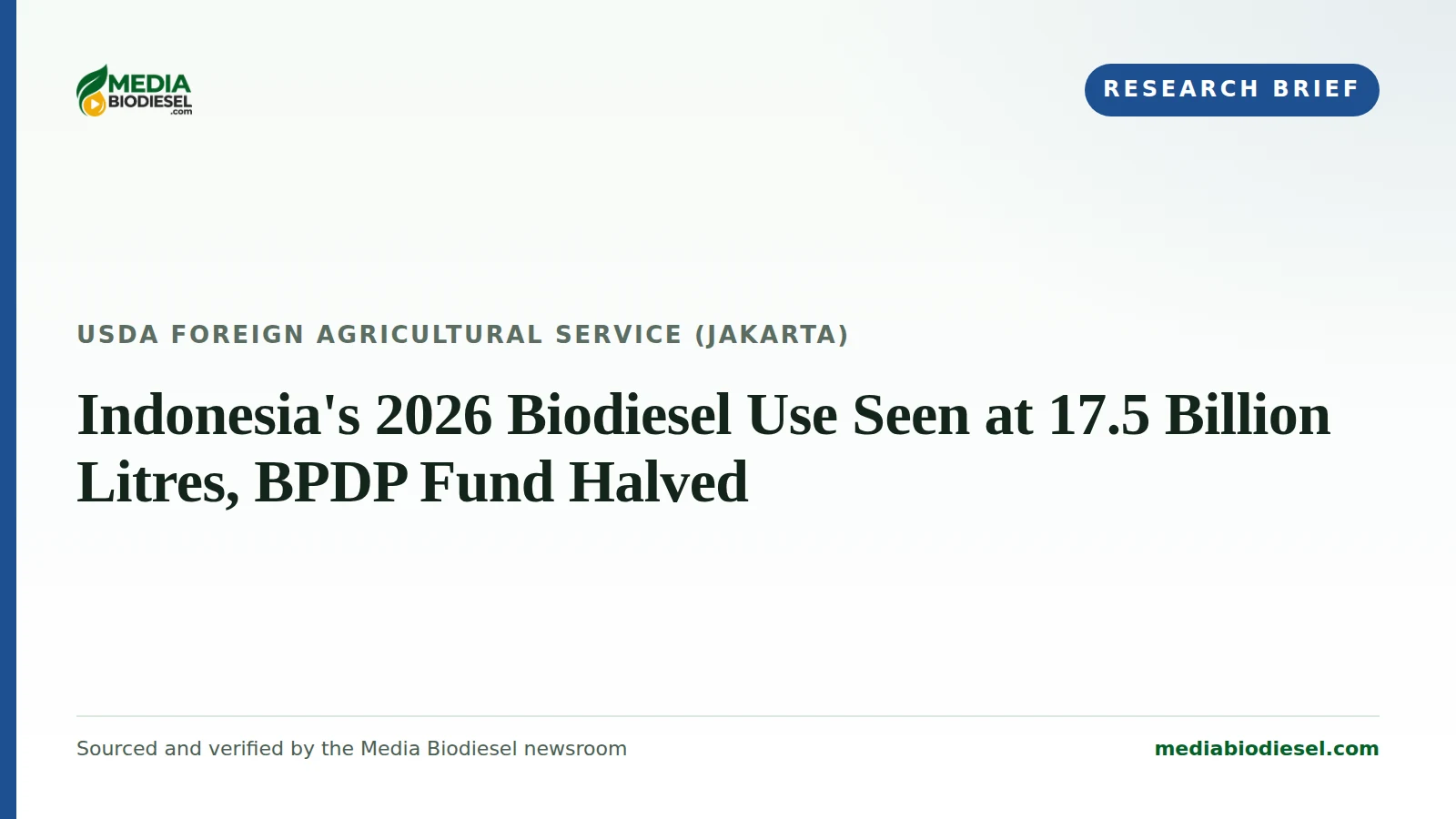
The figure shows the B50 mandate — a 50% blend of palm-based biodiesel and fossil diesel — running close to target over the final two months of 2026. This year's B50 biodiesel allocation stands around 16.7 million kL, up from about 15.6 million kL under B40, requiring roughly 15.2 million to 16.3 million tonnes of crude palm oil (CPO).
Uptake accelerates after the transition ends
Earlier ESDM data show how quickly consumption climbed. As of 7 September 2026, the Directorate General of New, Renewable Energy and Energy Conservation (EBTKE) recorded distribution of 10.69 million kL, still mixing B40 in January–June (7.27 million kL) and B50 since July (3.4 million kL). Over the next two months, once B50 took full effect from 1 October, uptake rose by about 3.15 million kL to 13.84 million kL.
For comparison, Reuters puts full-year 2025 biodiesel consumption at 14.9 million kL. With about 2.86 million kL left to reach the full allocation by end-December, the B50 programme is on track to close 2026 above the 2025 result.
A quoted figure, not a written report
The 13.84 million kL figure is consumption conveyed by an official to Reuters from the sidelines of IPOC 2026, not a written ESDM report. The B50 allocation has itself been cited in several versions: an initial ministerial decree set 15.65 million kL, later revised up to 17.6 million kL, while the government has also used a 16.8 million–18 million kL range. Opening IPOC 2026, Coordinating Minister for Economic Affairs Airlangga Hartarto put the B50 biodiesel requirement at about 16.7 million kL.
These differing allocation figures do not change the core story: the B50 mandate is absorbing feedstock in large volumes and running near target in the final two months of 2026.
Funding and price context
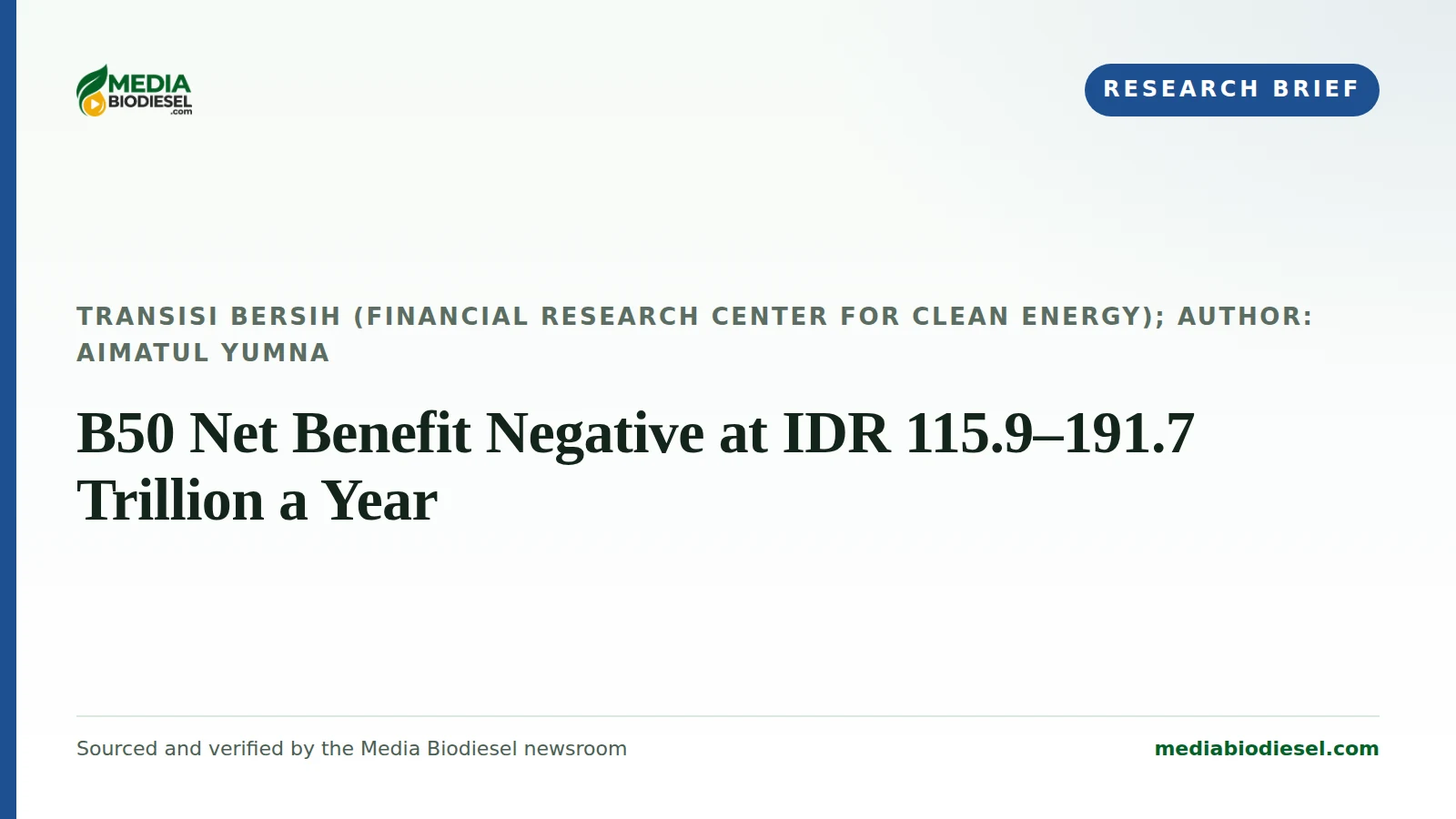
The price-gap incentive for biodiesel is paid from the plantation fund managed by the Plantation Fund Management Agency (BPDP), funded in part by palm oil export levies. Opening IPOC 2026, GAPKI Chairman Eddy Martono said B50 could save about IDR 170 trillion in foreign exchange this year, absorb around 14 million tonnes of CPO and support about 2.1 million jobs; the energy ministry projects emission cuts of about 44.46 million tonnes of CO2 equivalent.
On prices, the biodiesel market index price (HIP) for November 2026 was set at IDR 14,312 per litre, down from IDR 15,072 in October, tracking the average KPB CPO price over 25 September–24 October. The consumption figure does not by itself change the monthly HIP, but it shows the volume that underpins incentive payments to biofuel producers. See the biodiesel mandate data for allocation and progress details.
Sources & references
- Reuters, "Indonesian 2026 biodiesel consumption reaches 13.84 million kl as of November 10, official says" (12 November 2026) — URL
- Warta Ekonomi, "ESDM Catat Distribusi Biodiesel 10,69 Juta KL, B50 Capai 3,4 Juta KL" (9 September 2026) — URL
- GAPKI, "IPOC 2026: Industri Sawit Tetap Tangguh di Tengah El Nino, GAPKI Ajak Pemerintah Perkuat Sinergi" (12 November 2026) — URL
- SindoNews, "Gelar IPOC 2026, GAPKI Serukan Sinergi Kebijakan dan Pertumbuhan Berkelanjutan" (12 November 2026) — URL
Stay on top of Indonesian biodiesel
The weekly newsletter: the week’s key news, prices and data in one email every Friday. Or follow our channels for daily prices.