What Is Co-Processing? How Cilacap Makes J2.4 Bio-Jet Fuel and 2–3% Used-Cooking-Oil SAF
Co-processing refines vegetable oil together with fossil feedstock in existing refinery units. How it works, Indonesian examples at Cilacap, and how it differs from stand-alone green refineries.
Contents (4 sections)
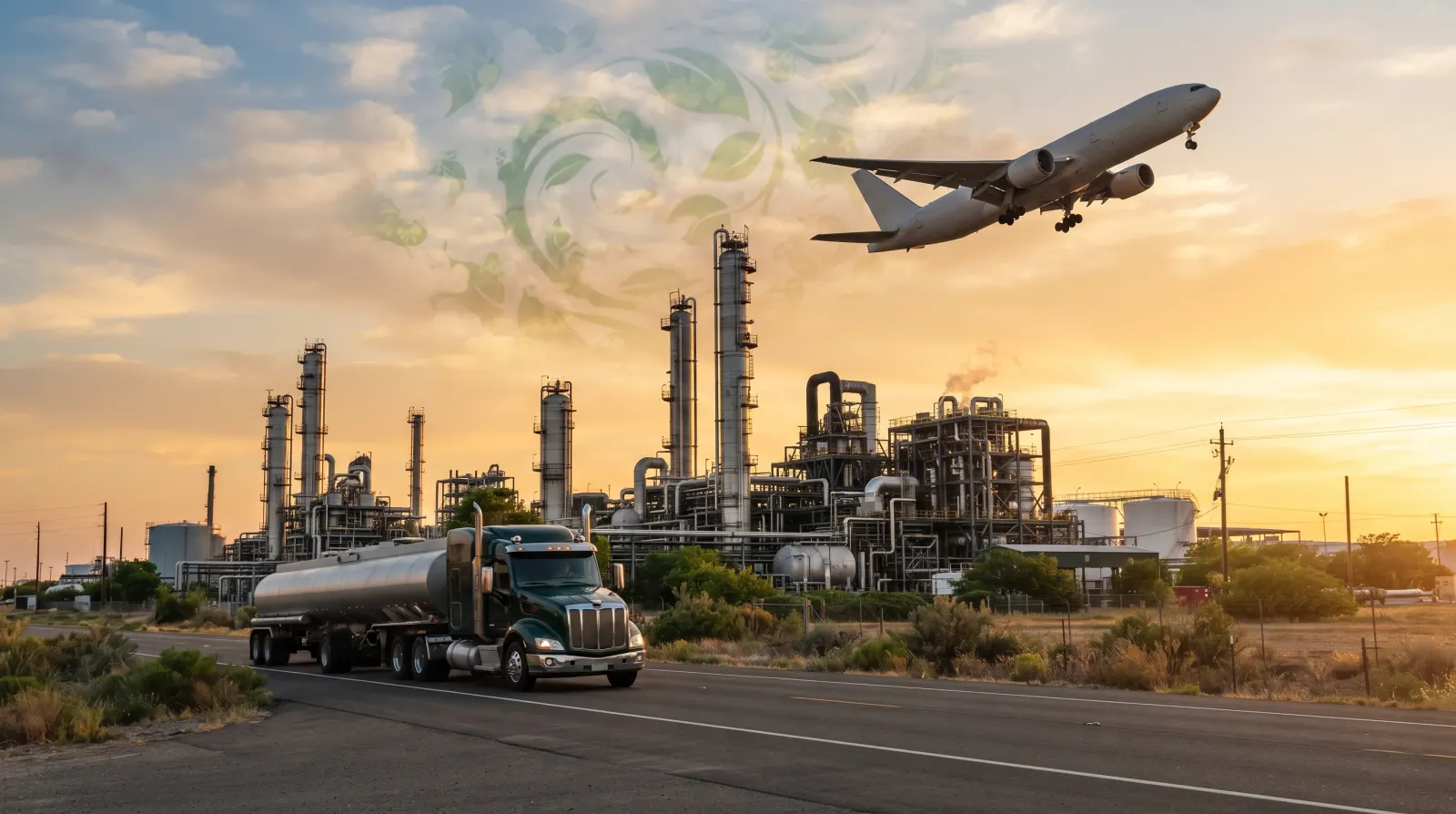
Co-processing is a way of refining plant-based feedstock, such as palm kernel oil or used cooking oil, together with fossil feedstock in an existing oil refinery unit, with the help of a catalyst. The result is a fuel in which a small share of the content comes from renewable sources. In Indonesia, the best-known examples are J2.4 bio-jet fuel from the Cilacap refinery, which contains 2.4% renewable content, and Pertamina SAF made from used cooking oil, first shipped on 12 August 2025 with a 2–3% used cooking oil share in its initial phase.
How co-processing works
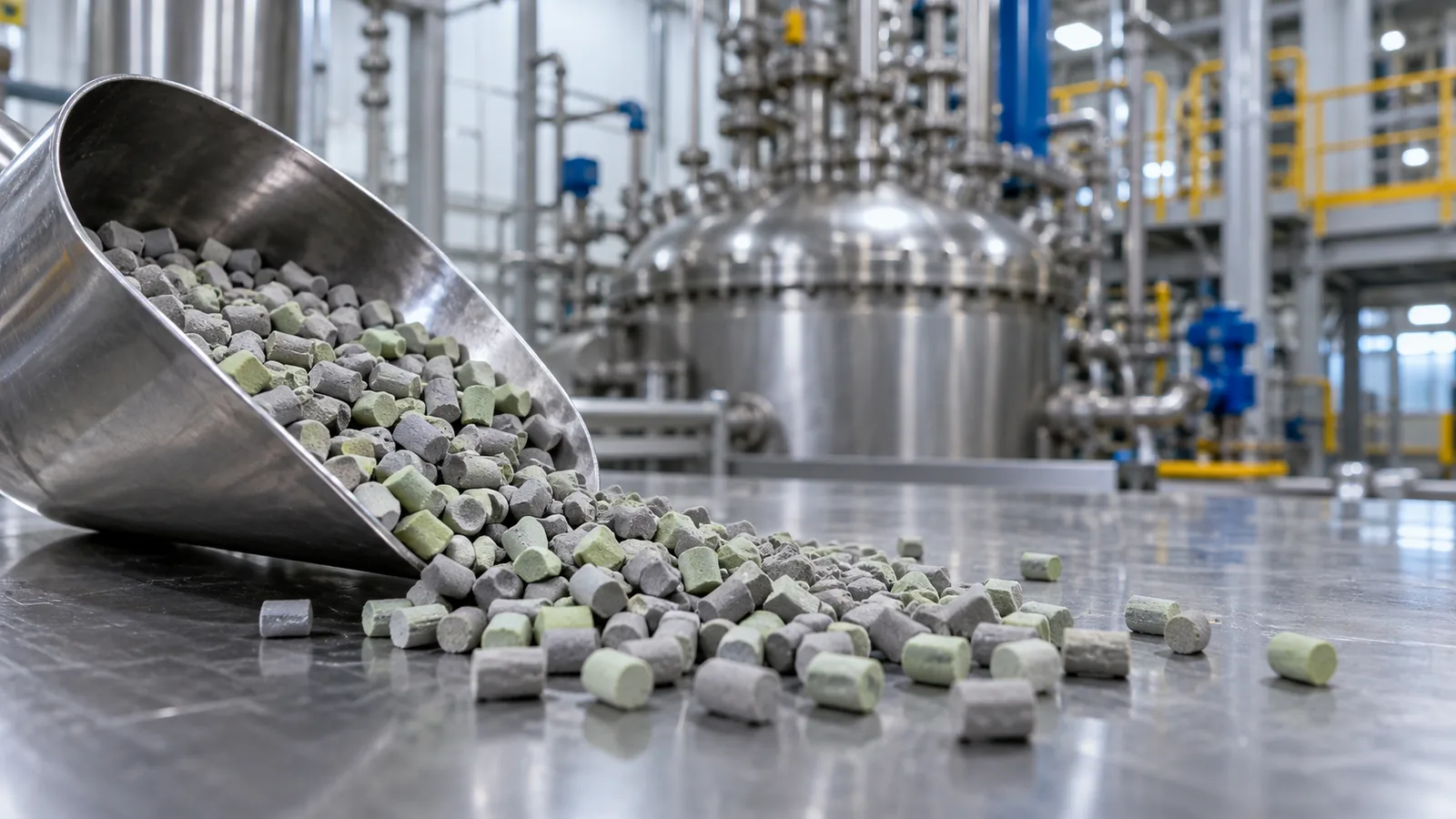
In co-processing, vegetable oil is not refined in a separate plant but blended into the fossil feedstock stream entering a refinery processing unit. The Ministry of Energy and Mineral Resources (ESDM) explained that in an industrial-scale trial at Pertamina's RU IV Cilacap refinery, refined palm kernel oil (RBDPKO) was mixed with kerosene and processed over the Merah Putih catalyst developed by Pertamina and ITB. The process took place in the Treated Distillate Hydro Treating (TDHT) unit, which at the time was described as having a capacity of 8,000 barrels per day.
The end product is still a fuel chemically similar to fossil jet fuel or diesel, not the FAME-type biodiesel blended into diesel under the mandatory programme. The differences between these fuel types are explained in our glossary.
Indonesian examples: from J2.4 to used-cooking-oil SAF
- J2.4 bio-jet fuel (2021): produced by co-processing RBDPKO and kerosene at RU IV Cilacap. Flight tests on a PT Dirgantara Indonesia CN235 aircraft from 8 September to 6 October 2021, including in-flight engine restarts, showed performance very close to fossil jet fuel. Pertamina's then President Director Nicke Widyawati said the performance gap was only 0.2–0.6%.
- Commercial aircraft trials (2023): according to detikFinance, a Garuda Boeing 737-800 flew Jakarta–Solo–Jakarta on bio-jet fuel in October 2023. InfoSAWIT also reported ground and flight tests on a CFM56-7B engine at Soekarno-Hatta Airport on 27 October 2023.
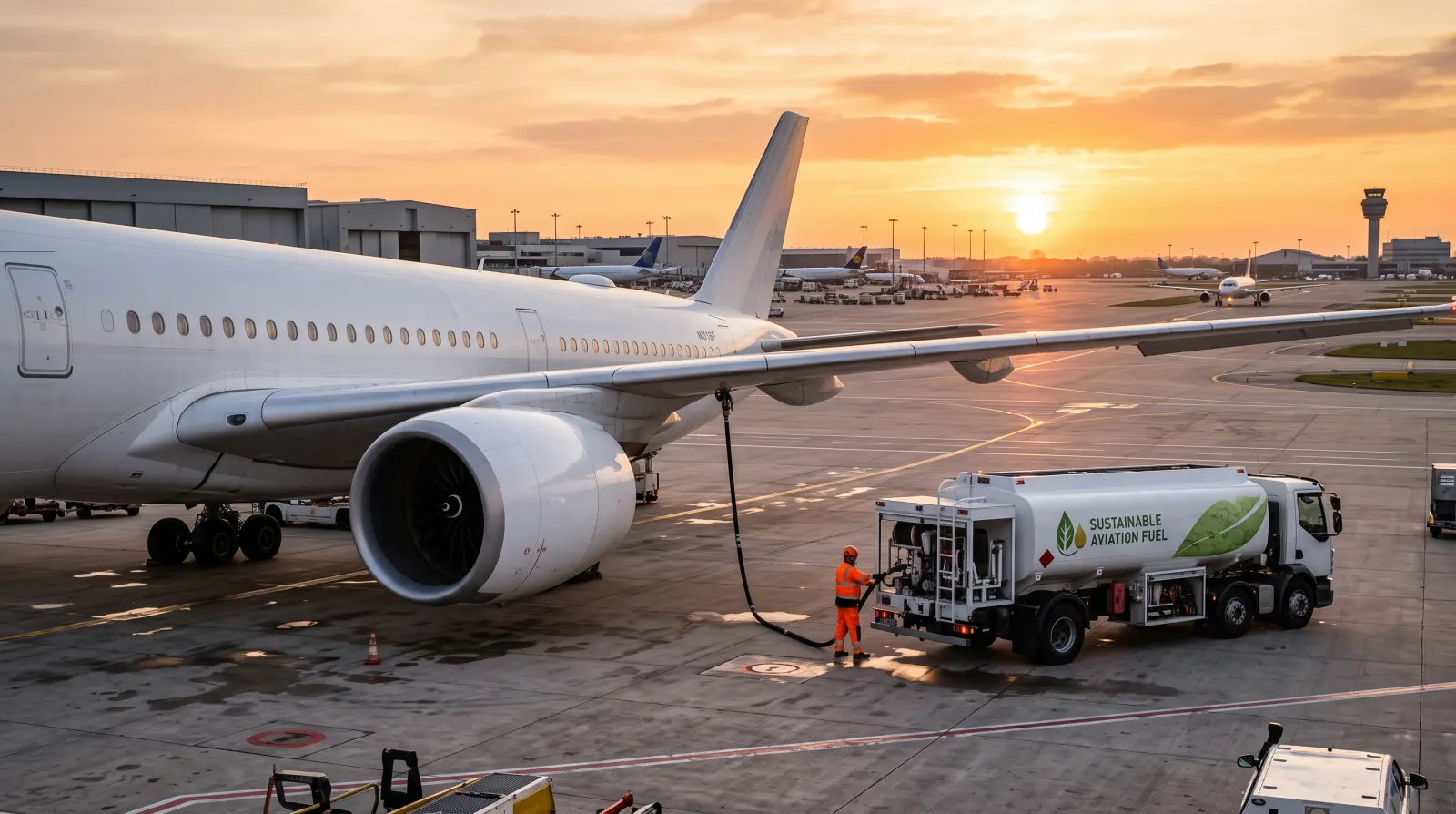
- Pertamina SAF from used cooking oil (2025): PT Kilang Pertamina Internasional (KPI) co-processes used cooking oil with fossil feedstock in the Cilacap TDHT unit, also using the Merah Putih catalyst. About 32 kilolitres were prepared for Pelita Air's first Jakarta–Denpasar flight, with a planned 1.7 million litre shipment to Soekarno-Hatta Airport. The product is stated to meet ASTM D1655 and DefStan 91-091 and carries ISCC CORSIA sustainability certification.
Emission-reduction claims for the used-cooking-oil SAF vary between sources: Pertamina cites up to 84% compared with fossil jet fuel, while detikFinance quoted KPI President Director Taufik Aditiyawarman giving a figure of 81%.
Strengths and limits
The examples above show the strength of co-processing: a refinery can begin producing fuel with renewable content using units already in operation, such as the Cilacap TDHT, while meeting international aviation fuel specifications.
The limit is the small renewable share. In 2021 Nicke Widyawati described the 2.4% renewable content of J2.4 as the maximum achievable with the catalyst technology available at the time. For the 2025 used-cooking-oil SAF, the initial used cooking oil share was likewise only 2–3%. In other words, most of the fuel still comes from crude oil.
Co-processing versus stand-alone green refineries
Raising the renewable share to 100% requires units that process purely plant-based feedstock. Examples already exist: in July 2020 the RU II Dumai refinery processed 100% refined palm oil (RBDPO) into D100 bio-hydrocarbon diesel. InfoSAWIT reported that phase 1 of the Cilacap Green Refinery, developed since February 2022, produces green diesel from 100% renewable material, while phase 2 is designed to raise HVO capacity from 3,000 to 6,000 barrels per day using CPO, RBDPO and used cooking oil, with operation targeted in 2026 alongside 100% plant-based bio-jet fuel.
| Aspect | Co-processing | Stand-alone green refinery |
|---|---|---|
| Feedstock | Mix of plant-based and fossil | 100% plant-based (CPO, RBDPO, used cooking oil) |
| Renewable share (Indonesian examples) | 2.4% (J2.4); 2–3% used cooking oil (SAF 2025) | 100% (D100 Dumai 2020) |
| Facilities | Existing refinery unit (Cilacap TDHT) | Dedicated unit, e.g. Cilacap Green Refinery phase 2 |
Similar plans are being prepared at the Plaju refinery. According to Indonesia Business Post in 2023, KPI planned 20,000 barrels per day of capacity for renewable diesel, bio-jet fuel and bio-naphtha, targeted for 2027 at an estimated cost of USD 200 million. All these figures and timelines remain company plans.
Sources & references
- Kementerian ESDM, "Keberhasilan Uji Terbang Pesawat Berbahan Bakar Bioavtur, Langkah Strategis Pemanfaatan Energi Terbarukan di Sektor Transportasi Udara" (6 October 2021) — https://www.esdm.go.id/id/media-center/arsip-berita/keberhasilan-uji-terbang-pesawat-berbahan-bakar-bioavtur-langkah-strategis-pemanfaatan-energi-terbarukan-di-sektor-transportasi-udara
- Indonesia Business Post, "Kilang Pertamina Internasional spearheads green refinery expansion for enhanced biofuel production" (17 July 2023) — https://indonesiabusinesspost.com/1517/investment-and-risk/kilang-pertamina-internasional-spearheads-green-refinery-expansion-for-enhanced-biofuel-production
- InfoSAWIT, "Pertamina Kilang Cilacap Ready to 100 Percent Produce Palm Oil Bioavtur in 2026" (5 November 2023) — https://www.en.infosawit.com/news/12887/pertamina-kilang-cilacap--ready-to-100-percent-produce-palm-oil-----bioavtur-in-2026
- Investortrust, "Pertamina Lifting Perdana Bioavtur Minyak Jelantah dari Kilang Cilacap" (12 August 2025) — https://investortrust.id/business/75471/pertamina-lifting-perdana-bioavtur-minyak-jelantah-dari-kilang-cilacap
- detikFinance, "Sejarah! Maskapai RI Terbang Pakai Bahan Bakar Olahan Minyak Jelantah" (23 August 2025) — https://finance.detik.com/energi/d-8075020/sejarah-maskapai-ri-terbang-pakai-bahan-bakar-olahan-minyak-jelantah