Youth Pledge Day 2026: Testing Palm Biodiesel Through Student Research
The Youth Pledge is an analogy for cooperation, not a historical biodiesel mandate. BPDP's student research call offers a chance to examine fuel, farms and impacts.
Contents (3 sections)
Jakarta — On Youth Pledge Day, 28 October 2026, the connection between the 1928 call for unity and palm-based biodiesel is not a direct historical link. It is a present-day question: how can young Indonesians test the benefits of biofuels while accounting for smallholders and the environment? The Plantation Fund Management Agency (BPDP) has invited proposals for its 2026–2027 student research competition, including work on biodiesel, palm traceability and waste management. The proposal deadline is 30 October 2026.
Indonesiabaik.id records that the Second Youth Congress met on 27–28 October 1928 and that the pledge associated with it affirmed national unity and the Indonesian language. Applying that spirit of cooperation to today's energy questions is an editorial analogy. It does not mean the congress participants advocated palm oil or biodiesel policy.
Unity is a reason to work across disciplines
Collective purpose cannot stand in for evidence. Questions about biodiesel feedstock, fuel quality, engine use and environmental effects require cooperation among agriculture, engineering, logistics, economics and public oversight. That cooperation is most valuable when the findings can be scrutinised rather than wrapped in a patriotic slogan.
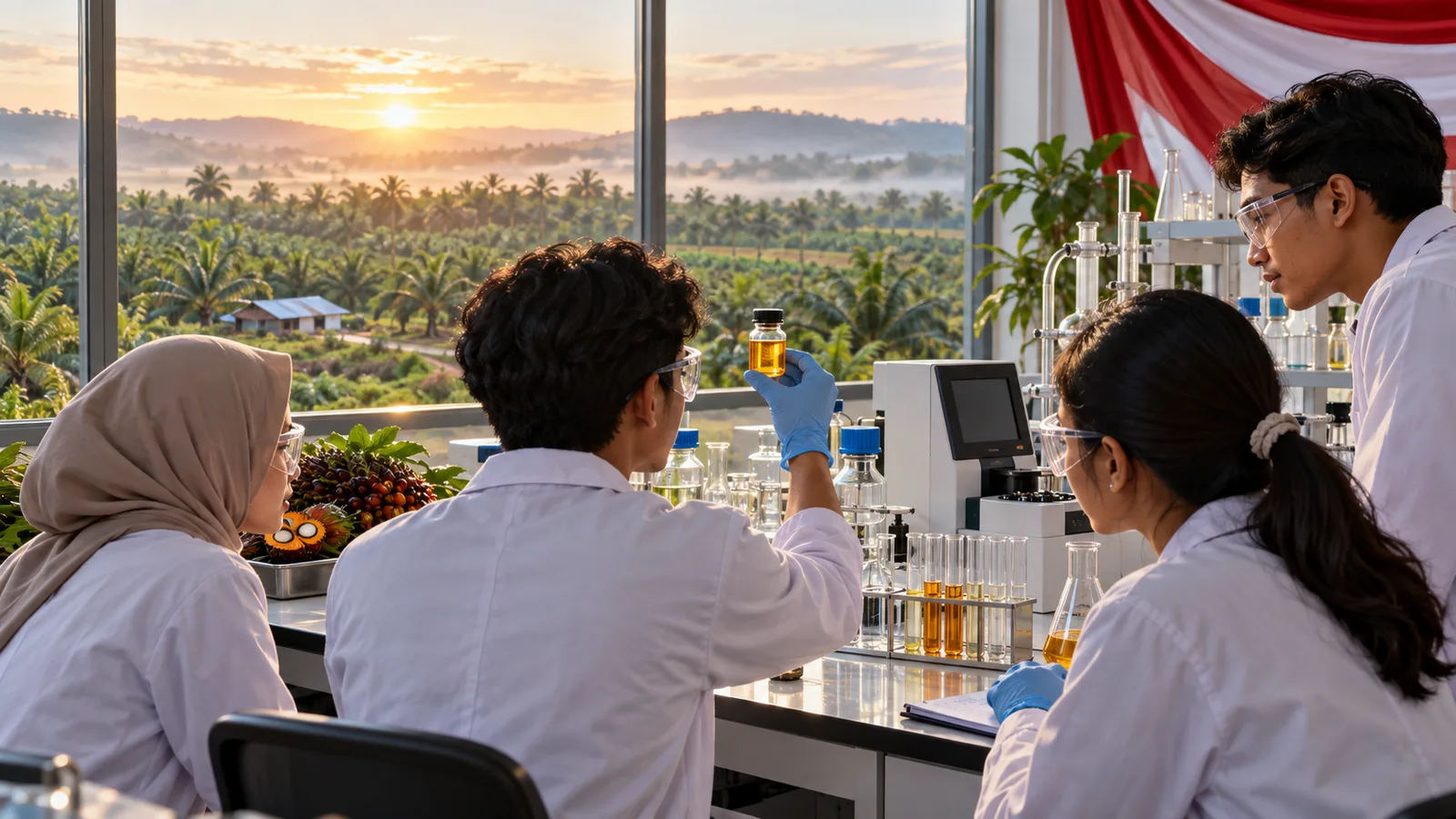
One immediate opening is BPDP's announcement dated 27 July 2026. It invites active vocational and undergraduate students to submit research proposals for its 2026–2027 competition by 30 October 2026. The priorities include bioenergy made from palm oil and palm biomass, conversion of palm oil mill effluent (POME) into energy, and applications of palm-based bioenergy in automotive, industrial and agricultural machinery. These are research opportunities, not reported proof that a particular technology has succeeded in practice.
Trace the feedstock and test the environmental case
The same BPDP document names palm fruit traceability systems using the Internet of Things (IoT) and artificial intelligence (AI) among its priorities. Its environmental topics include greenhouse gas emissions, POME management to environmental standards, biodiversity and peatland water management. Students therefore have room to ask not only how much fuel can be produced, but also where its raw material came from and how land and waste are managed.
A useful traceability design should allow the chain from farms and smallholders through processing to be checked, rather than merely recording numbers in an app. This is an editorial benchmark for research, not a finding that today's supply chain is already fully traceable. Similarly, a reported emissions saving is not the same as an assessment of impacts across production, including land-use change and waste treatment. Calling a fuel “green” cannot resolve those questions by itself.
The scale of the programme makes scrutiny consequential. The Ministry of Energy and Mineral Resources (ESDM) reported 14.2 million kilolitres of domestic biodiesel use in 2025 and attributed a reduction of 38.88 million tonnes of CO2 equivalent to the B40 programme. The latter figure is a government claim, not an independent verification of the full life-cycle climate impact of every litre. Large volumes make careful testing of fuel quality, land impacts and the underlying data more important, not less.
Smallholders must be part of the opportunity
In a press release dated 1 March 2026, BPDP said the government had increased 2026 funding for plantation education scholarships for 5,000 children of smallholders and technical or managerial training for 15,000 people. Those figures describe announced funding targets, not verified numbers of graduates or completed trainees. The value of such access will depend on whether smallholder families can use it and whether the skills address problems on farms.
On Youth Pledge Day, the measure of young people's contribution to palm oil and biodiesel is not allegiance to a commodity. It is their willingness to ask difficult questions: Can smallholders use an innovation? Will machinery run reliably? Can feedstock origins be verified? Are environmental impacts actually measured? The 1928 example can inspire people to tackle those questions together while leaving room for research results that challenge expectations.
Sources & references
- Indonesiabaik.id, "Jejak Sejarah Sumpah Pemuda Beda Kongres Pemuda I dan II" (page undated) — https://indonesiabaik.id/infografis/jejak-sejarah-sumpah-pemuda-beda-kongres-pemuda-i-dan-ii
- BPDP, "Call for Proposal Lomba Riset Tingkat Mahasiswa" (27 July 2026) — https://www.bpdp.or.id/uploads/2026/PENG-4%20BPDP%202026%20Call%20for%20Proposal%20Lomba%20Riset%20Mahasiswa.pdf
- BPDP, "Perubahan Tarif Pungutan Ekspor Kelapa Sawit, CPO, dan Produk Turunannya" (1 March 2026) — https://www.bpdp.or.id/uploads/Siaran%20Pers/Siaran%20Pers%20Perubahan%20Tarif%20Pungutan%20Ekspor%20PMK%209%20Tahun%202026.pdf
- Kementerian ESDM, "Realisasi Mandatori B40 Berhasil Tekan Impor Solar" (8 January 2026) — https://www.esdm.go.id/id/media-center/arsip-berita/realisasi-mandatori-b40-berhasil-tekan-impor-solar-indonesia-targetkan-bebas-impor-di-tahun-2026
Stay on top of Indonesian biodiesel
The weekly newsletter: the week’s key news, prices and data in one email every Friday. Or follow our channels for daily prices.