How Biodiesel Is Tested Before a Mandate: Lab Work, 50,000 km Road Tests and Engine Teardowns
Every biodiesel blend increase is preceded by lab tests, road tests over tens of thousands of kilometres, cold-start trials and engine inspections. Here are the stages from B30 to B50.
Contents (5 sections)
Before each increase in the biodiesel blend becomes mandatory, the Ministry of Energy and Mineral Resources (ESDM) runs a series of tests that typically starts in the laboratory, continues with road tests over tens of thousands of kilometres, and ends with technical recommendations. In the B40 and B50 tests, vehicles below 3.5 tonnes were set a 50,000 km target and vehicles above 3.5 tonnes 40,000 km. For B50, testing was expanded to six sectors, from automotive to ships and trains. Here is how the testing works and what is measured.
Stage 1: laboratory tests and fuel specifications
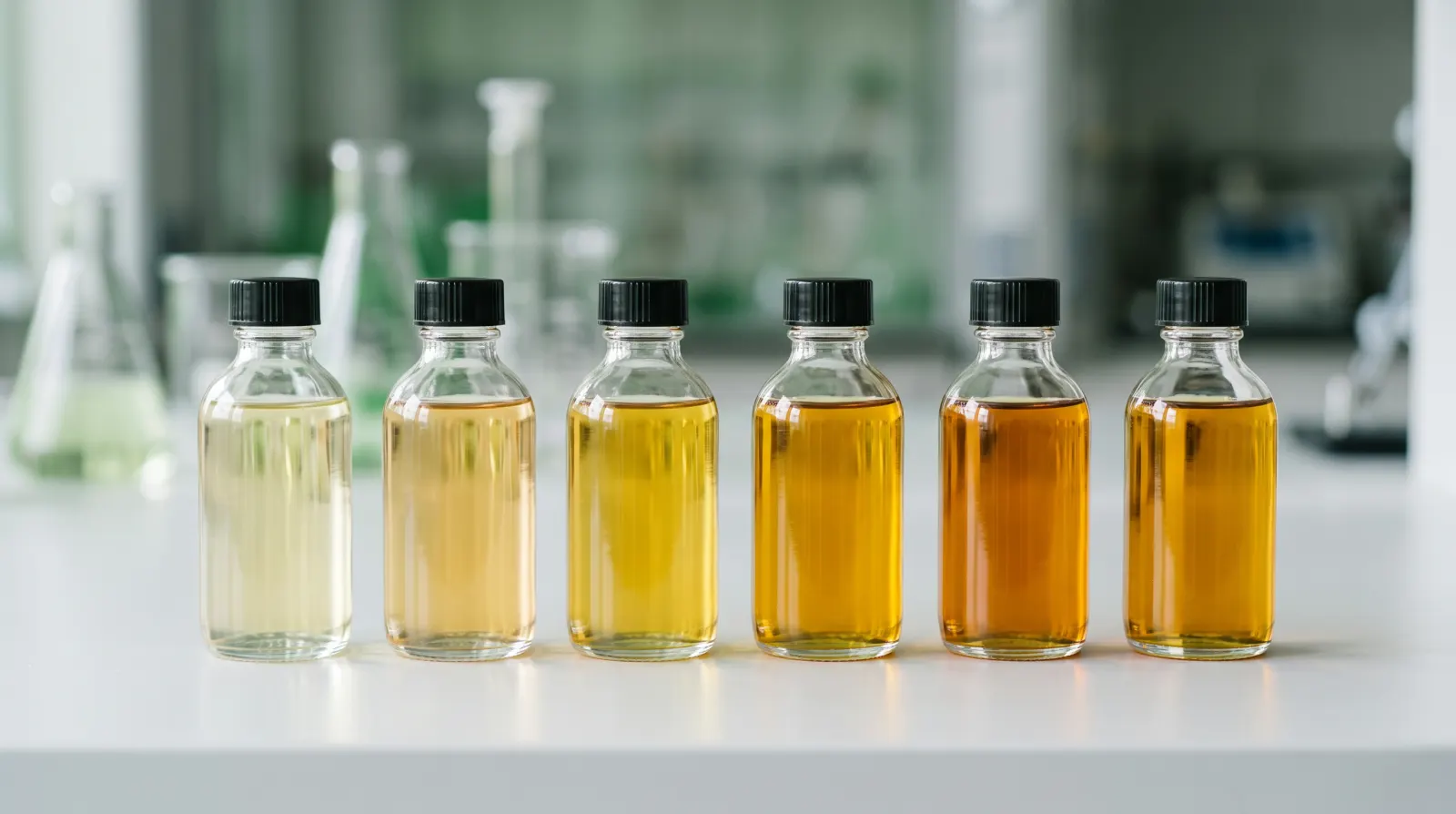
Testing begins by making sure the fuel meets quality requirements. For B50, EBTKE Director General Eniya Listiani Dewi explained that laboratory technical tests started in early 2025 and were completed by mid-year. The test programme also underpins proposed B100 specifications. In the 2019 B30 test, the recommendation was a maximum monoglyceride content of 0.55% by mass and maximum water content of 350 ppm. For B50, following recommendations from the Liquid Bioenergy Technical Committee, the limits were tightened to a maximum of 300 ppm water, a maximum of 0.47% monoglycerides by mass, and a minimum oxidation stability of 900 minutes.
Stage 2: road tests over tens of thousands of kilometres
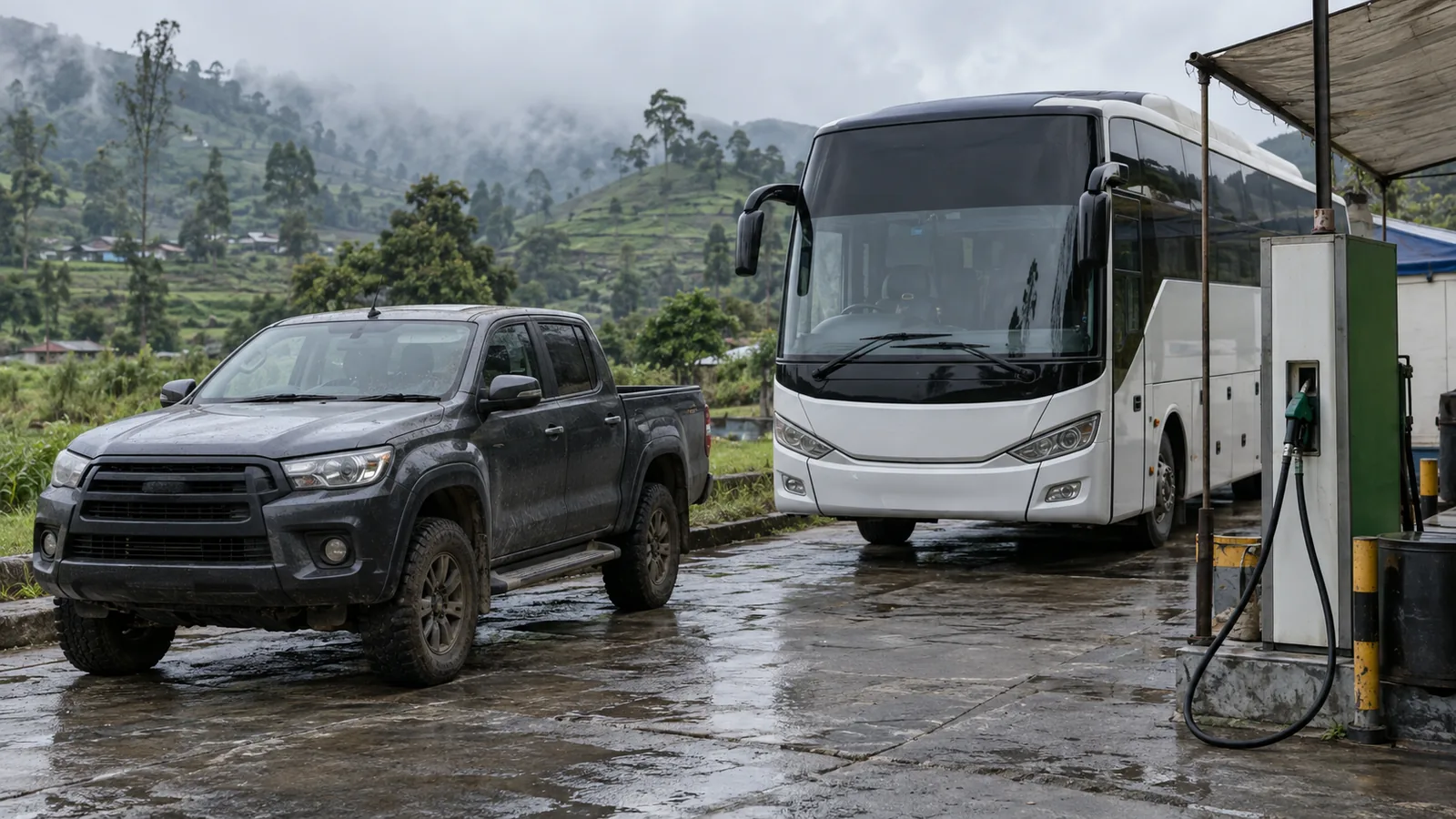
Road tests are the core of the programme. For B40, launched on 27 July 2022, ESDM deployed 12 vehicles: 6 below 3.5 tonnes with a 50,000 km target and 6 above 3.5 tonnes with a 40,000 km target. Daily targets were later raised to 650 km a day for smaller vehicles and 550 km a day for larger ones, on routes starting and ending at Balitsa and running along toll roads and intercity roads from West Java into Central Java.
According to ESDM releases at the launch and at the cold-start test, the parameters measured in the B40 test included:
- fuel consumption;
- fuel and lubricant quality;
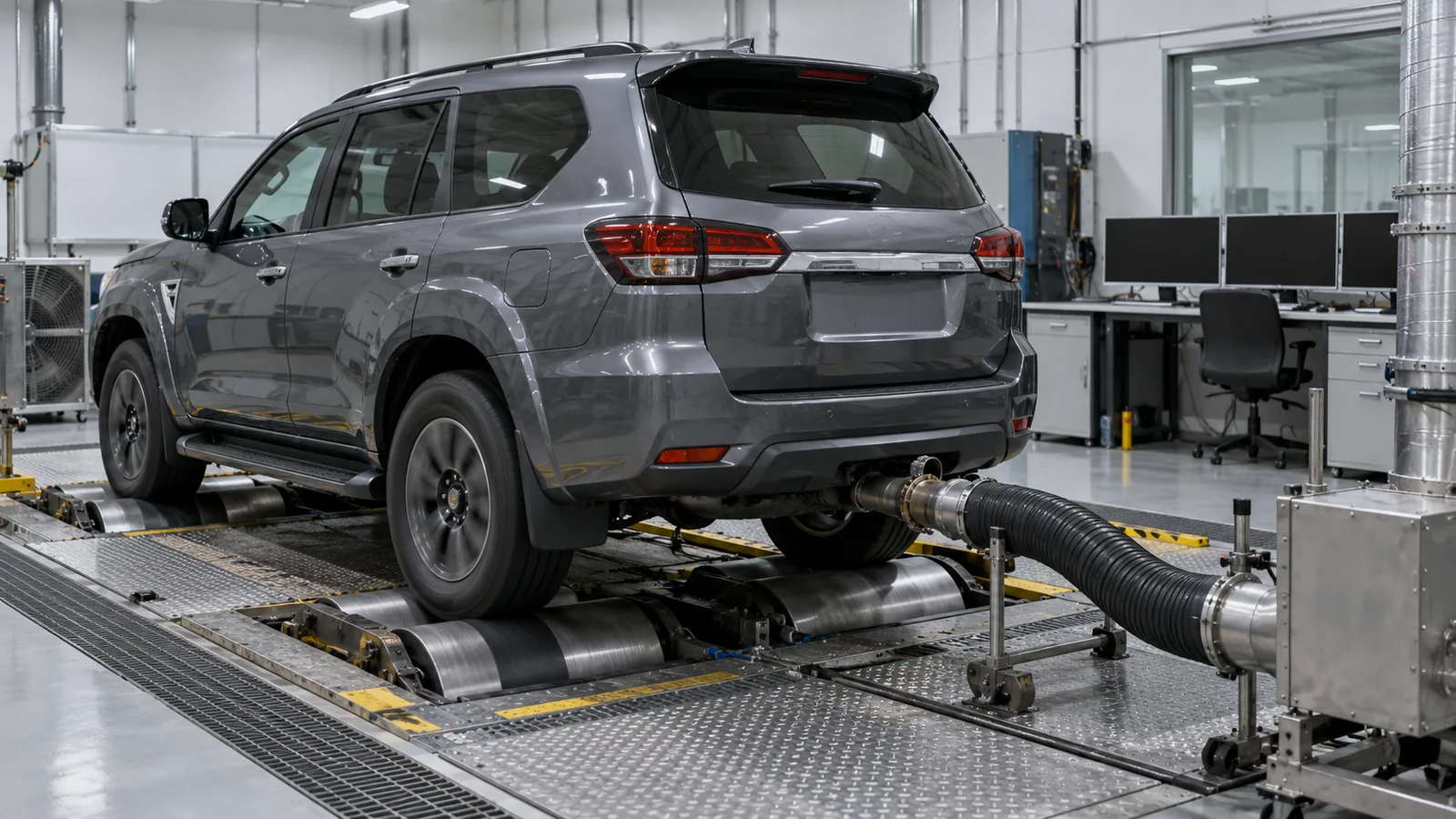
- performance on a chassis dynamometer;
- merit rating, or assessment of vehicle component condition;
- fuel storage stability and startability.
Many parties are involved. For B40, the EBTKE directorate general coordinated, the Lemigas oil and gas testing centre carried out the tests together with the EBTKE survey and testing centre and BRIN, and the work was funded by BPDPKS. For B30, Gaikindo provided the test vehicles, while Pertamina and the Indonesian Biofuel Producers Association (APROBI) supplied the fuel.
Stage 3: cold tests and engine teardown
Road tests are usually accompanied by cold-start tests. For B30, vehicles were left to stand for 3 to 21 days before being started, and all started normally in about 1 second. For B40, a test in Wonosobo at 1,400 metres above sea level recorded a fastest start of about 1 second against a 5-second limit. Once the distance target is reached, engines are inspected to assess the fuel's impact on components; for B50, ESDM said all engines would be checked after the vehicles complete 50,000 km.
What fuel filters reveal
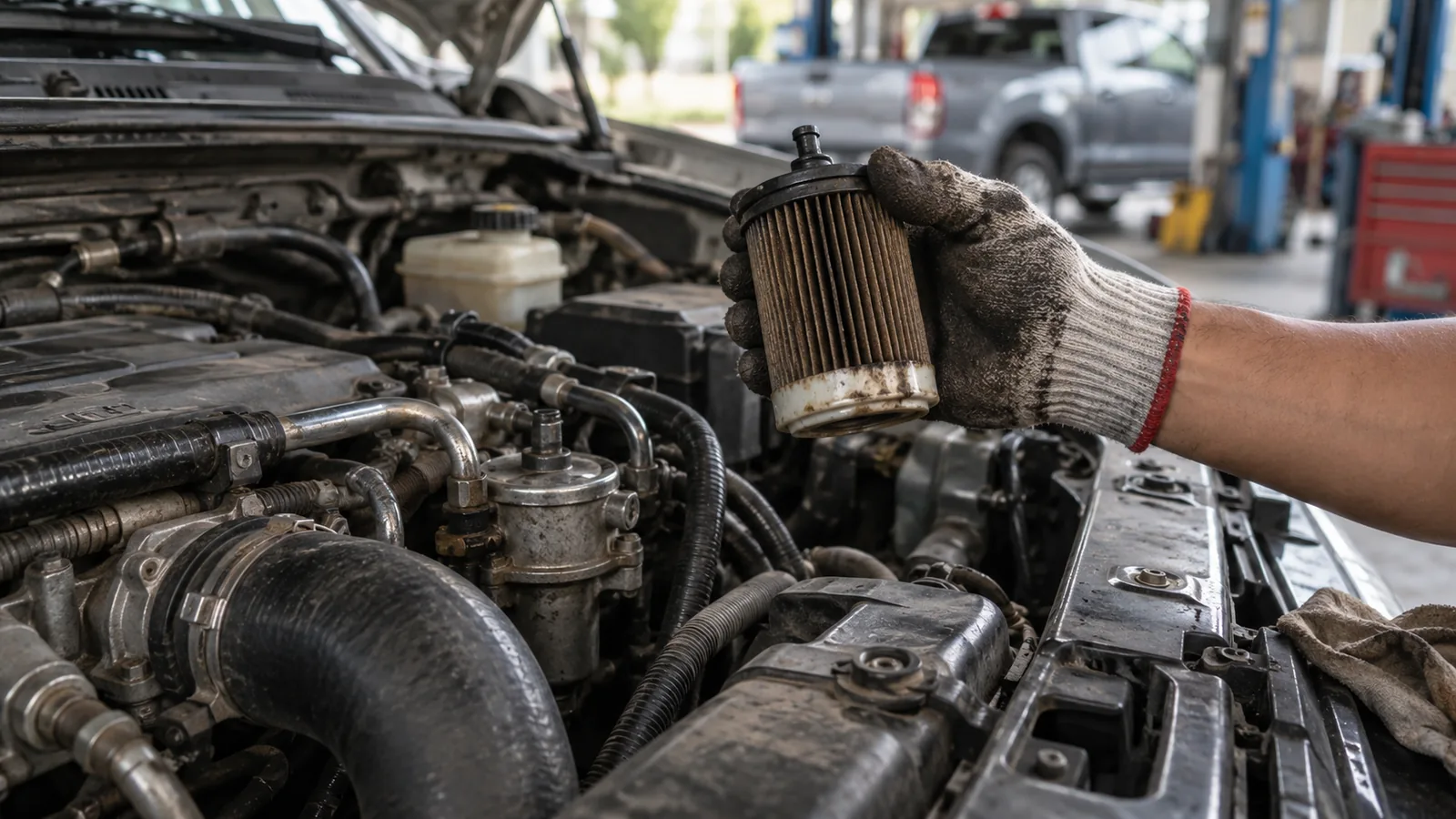
Fuel filters are the most closely watched indicator. The B30 test found that new vehicles, or those that had never used biodiesel, tended to need earlier filter changes at the start of B30 use because of clogging, before returning to normal. ESDM therefore recommended that brand holders (ATPM) inform customers. In the B40 test, then EBTKE Director General Dadan Kusdiana said there was no clogging in the main filter; the rule at the time was to replace filters every 10,000 km, and the test was used to find the actual replacement point, estimated at around 22,000–23,000 km.
For B50, Eniya claimed on an ESDM podcast, as quoted by KabarBursa on 15 July 2026, that test-vehicle filters did not need replacing at 10,000 km and were only changed after about 27,000 km, and that mining equipment filters normally changed every 250 hours were still fine at 500 hours. These claims come from the government and have not been accompanied by independent data.
B50: testing across six sectors
| Aspect | B30 (2019) | B40 (2022) | B50 (2025–2026) |
|---|---|---|---|
| Scope | Diesel vehicles | 12 diesel vehicles | Automotive, mining, agricultural machinery, ships, power generation, railways |
| Automotive distance target | n.s. | 50,000 km (<3.5 t); 40,000 km (>3.5 t) | 50,000 km (4 units <3.5 t); 40,000 km (5 units >3.5 t) |
| Cold-start test | Stood 3–21 days, ~1 second | Wonosobo 1,400 m, ~1 second | Bromo, 0.8 seconds (EBTKE Director General's claim) |
n.s. = not stated in the sources.
B50 testing has run simultaneously since 9 December 2025. Beyond automotive, KabarBursa reported that ESDM's vessel Geomarin had sailed on B50, outdoor storage tests in Lembang lasted 6–10 months, and evaluations in the rail and power generation sectors continue until the end of the year. ESDM also holds weekly monitoring with industry and takes fuel samples daily. B50 itself took effect nationwide on 1 July 2026. Related regulatory data is available on our biodiesel regulations page.
Sources & references
- Kementerian ESDM, "Uji Jalan Selesai, Kementerian ESDM Umumkan Rekomendasi Teknis Mandatori B30 di 2020" (28 November 2019) — https://esdm.go.id/id/media-center/arsip-berita/uji-jalan-selesai-kementerian-esdm-umumkan-rekomendasi-teknis-mandatori-b30-di-2020
- Kementerian ESDM, "Peluncuran Uji Jalan B40, Menteri ESDM: Indonesia Pionir Pemanfaatan Biodiesel" (27 July 2022) — https://esdm.go.id/id/media-center/arsip-berita/peluncuran-uji-jalan-b40-menteri-esdm-indonesia-pionir-pemanfaatan-biodiesel
- Kementerian ESDM, "Ini Hasil Uji Cold Startability B40 di Dataran Tinggi" (26 October 2022) — https://www.esdm.go.id/id/media-center/arsip-berita/ini-hasil-uji-cold-startability-b40-di-dataran-tinggi
- Kementerian ESDM, "Uji Jalan Selesai, B40 Bisa Segera Diimplementasikan" (1 November 2022) — https://www.esdm.go.id/id/media-center/arsip-berita/uji-jalan-selesai-b40-bisa-segera-diimplementasikan
- Kementerian ESDM, "Uji Jalan B50 Sektor Otomotif Tunjukkan Hasil Aman" (21 April 2026) — https://esdm.go.id/id/media-center/arsip-berita/uji-jalan-b50-sektor-otomotif-tunjukkan-hasil-aman
- CNBC Indonesia, "Siap-siap! RI Punya BBM Baru B50 Bulan Depan" (2 June 2026) — https://www.cnbcindonesia.com/news/20260602112625-4-739362/siap-siap-ri-punya-bbm-baru-b50-bulan-depan
- KabarBursa, "ESDM Ungkap Hasil Uji B50, Biaya Perawatan Mesin Diesel Turun" (15 July 2026) — https://www.kabarbursa.com/ekonomi-hijau/esdm-ungkap-hasil-uji-b50-biaya-perawatan-mesin-diesel-turun