Indonesia Launches Voluntary CPO Exchange Operated by ICDX
Indonesia launched a voluntary CPO exchange through ICDX to develop a transparent domestic benchmark for palm oil transactions.
Contents (3 sections)
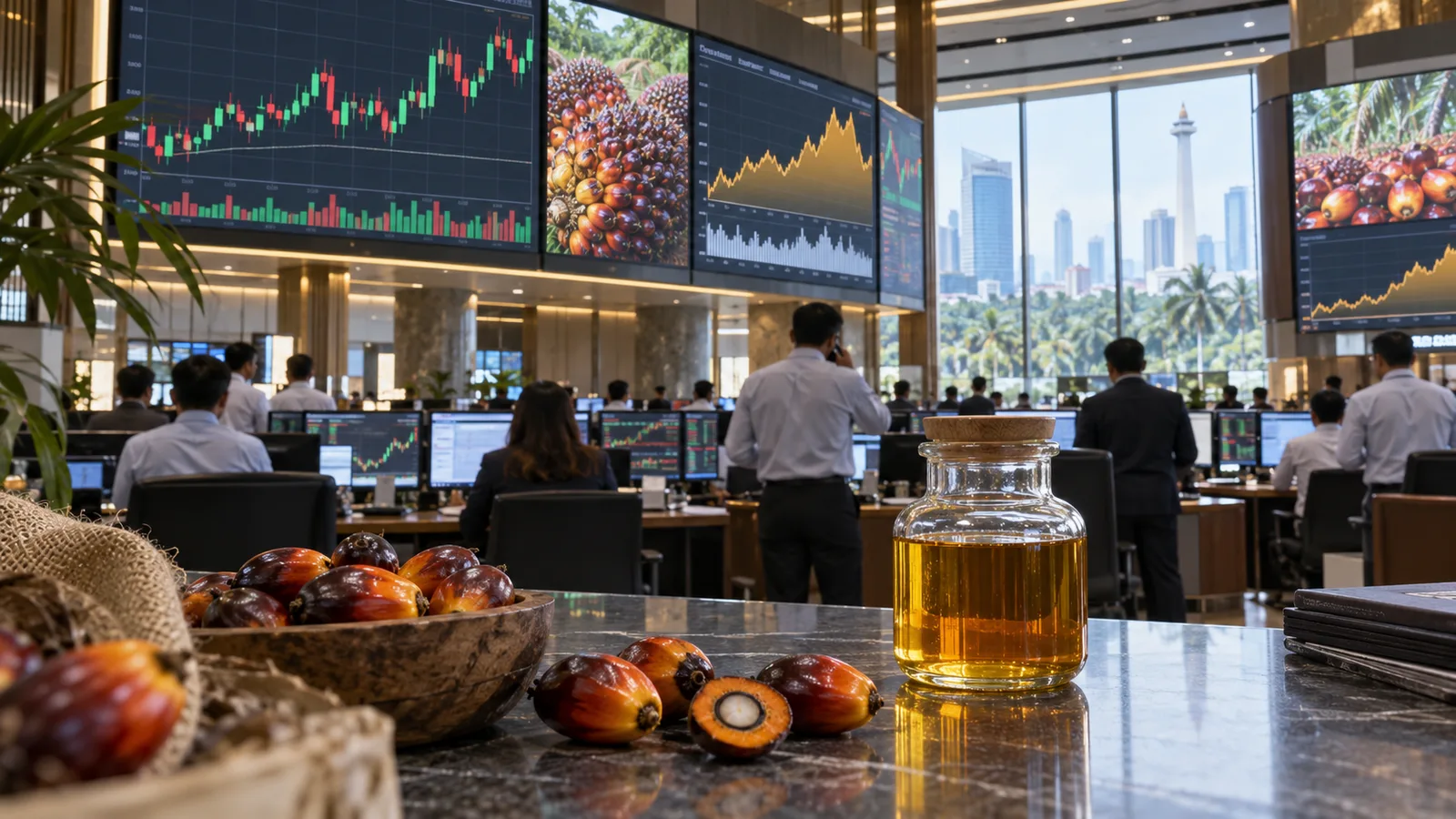
Jakarta — Indonesia launched its crude palm oil (CPO) exchange on 13 October 2023, appointing the Indonesia Commodity & Derivatives Exchange (ICDX) as operator. Trades are denominated in rupiah and participation is voluntary, while the government aims to develop a more transparent domestic benchmark in the world’s largest palm oil-producing country.
Trade Minister Zulkifli Hasan inaugurated the exchange after the Commodity Futures Trading Regulatory Agency, Bappebti, approved ICDX as its organiser. In its press release, Bappebti described the launch as an initial step towards improving governance in Indonesia’s CPO trade and developing a reference price that better reflects the domestic market.
Voluntary trading rather than an export requirement
The scheme does not compel every exporter to sell CPO through the exchange. Reuters reported a day before the launch that participation would be voluntary, a departure from an earlier proposal that had considered linking the exchange to export requirements.
S&P Global Commodity Insights reported that transactions would be settled in rupiah, with physical delivery supported through major palm oil ports including Belawan and Dumai. Several companies had expressed interest in joining during the initial stage, while five signed participation agreements at the launch.
The voluntary model means the exchange will have to build liquidity and market confidence gradually. Without sufficient trading volume, its prices may not immediately rival the influence of Bursa Malaysia Derivatives or Rotterdam physical prices, which are widely followed in international palm oil trade.
Indonesia seeks its own CPO benchmark
Indonesia is a leading producer and exporter of CPO, yet palm oil transactions have continued to rely heavily on benchmarks formed outside the country. The government expects recorded domestic trades to provide more transparent information on prices, volumes and delivery, helping Indonesia establish its own reference.
Bappebti presented the exchange as part of a wider governance effort: transactions are recorded, participants are identified and settlements take place within a supervised mechanism. Zulkifli said the inauguration was not the end of the process, as a credible benchmark would depend on consistent participation by sellers and buyers.
Reuters noted that the launch was not expected to transform the global market immediately because participation was voluntary. The policy’s success will therefore be judged by whether ICDX attracts representative physical volume, rather than simply by the availability of a trading platform.
Why it matters for the biodiesel value chain
CPO is an upstream feedstock for several palm-derived products, including fatty acid methyl ester (FAME) biodiesel. A domestic CPO benchmark is therefore relevant to how industry participants assess feedstock costs, although Indonesia’s biodiesel price also depends on the government formula, processing costs, freight and other components.
Media Biodiesel analysis: if the exchange develops liquid trading and reliable data, its domestic reference could provide an additional comparison for assessing the relationship between CPO prices, the biodiesel market index price and financing needs under the blending mandate. On launch day, however, that benefit remained a policy objective rather than a demonstrated outcome.
For businesses, the exchange’s early phase will test whether a voluntary mechanism is attractive enough to compete with direct contracts and established benchmarks. Transparency will be meaningful only if the price is based on real transactions with adequate sellers, buyers, quality specifications, delivery locations and volume.
Sources & references
- Bappebti, “Mendag Zulkifli Hasan Resmikan Bursa CPO Indonesia” (13 October 2023) — https://bappebti.go.id/resources/docs/siaran_pers_2023_10_13_yl3pg4io_id.pdf
- Reuters via Business Recorder, “Indonesia to launch crude palm oil futures exchange” (12 October 2023) — https://www.brecorder.com/news/40267621/indonesia-to-launch-crude-palm-oil-futures-exchange
- S&P Global Commodity Insights, “Indonesia launches palm oil futures exchange; participation voluntary” (13 October 2023) — https://www.spglobal.com/energy/en/news-research/latest-news/agriculture/101323-indonesia-launches-palm-oil-futures-exchange-participation-voluntary
Stay on top of Indonesian biodiesel
The weekly newsletter: the week’s key news, prices and data in one email every Friday. Or follow our channels for daily prices.