Research Group Urges E50 Land Test and B50 Opportunity-Cost Review
Transisi Bersih outlines an ethanol and land-use scenario for E50, while Indonesia's energy ministry is still planning stages from E20 to E50.
Contents (3 sections)
Jakarta — On Monday, 9 November 2026, the research group Transisi Bersih urged Indonesia to test feedstock readiness and disclose the economics before expanding its proposed ethanol-in-petrol programme towards E50. In a scenario in which all national petrol demand uses the E50 blend, the group estimates ethanol demand at 24 million kilolitres. That is the group's scenario, not a volume required by a mandate already in force.
The warning follows the Ministry of Energy and Mineral Resources (ESDM)'s statement that the government is planning a gradual path from E20 to E50. In a 3 November release, Energy Minister Bahlil Lahadalia said the president had asked about E20 readiness and that his ministry would coordinate feedstock planning with the agriculture ministry. The government has not announced an operational E50 obligation in that statement.
Land estimates are alternative scenarios
According to Maklumat's account of Transisi Bersih's statement, the group assumed national petrol consumption of around 40 million kL a year. If all of that demand were met with E50, it estimates a total blended-fuel requirement of about 48 million kL, including 24 million kL of ethanol. The full conversion methodology was not provided in the reports reviewed, so this should not be read as an official government forecast or an estimate for the initial E20 phase.
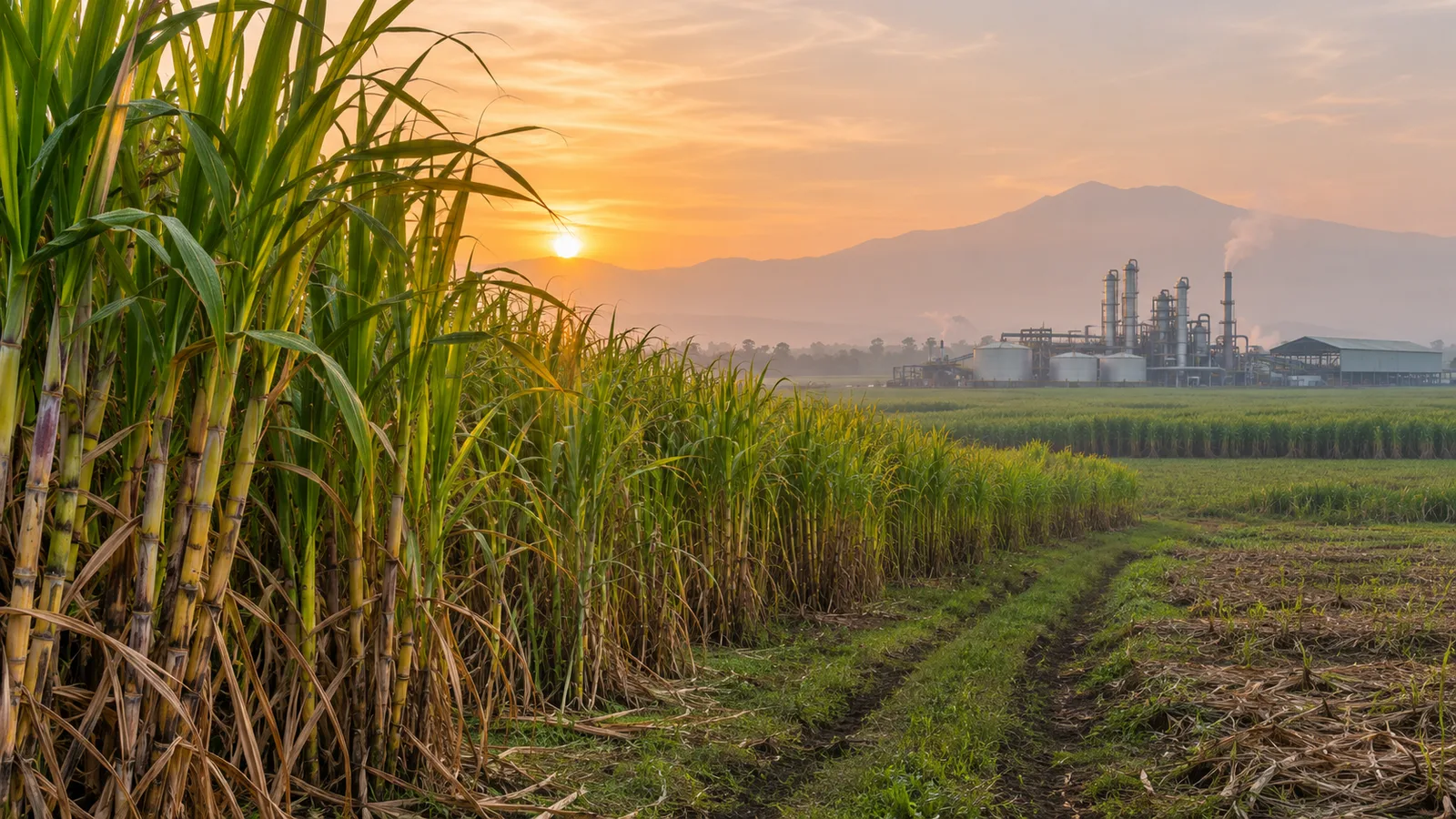
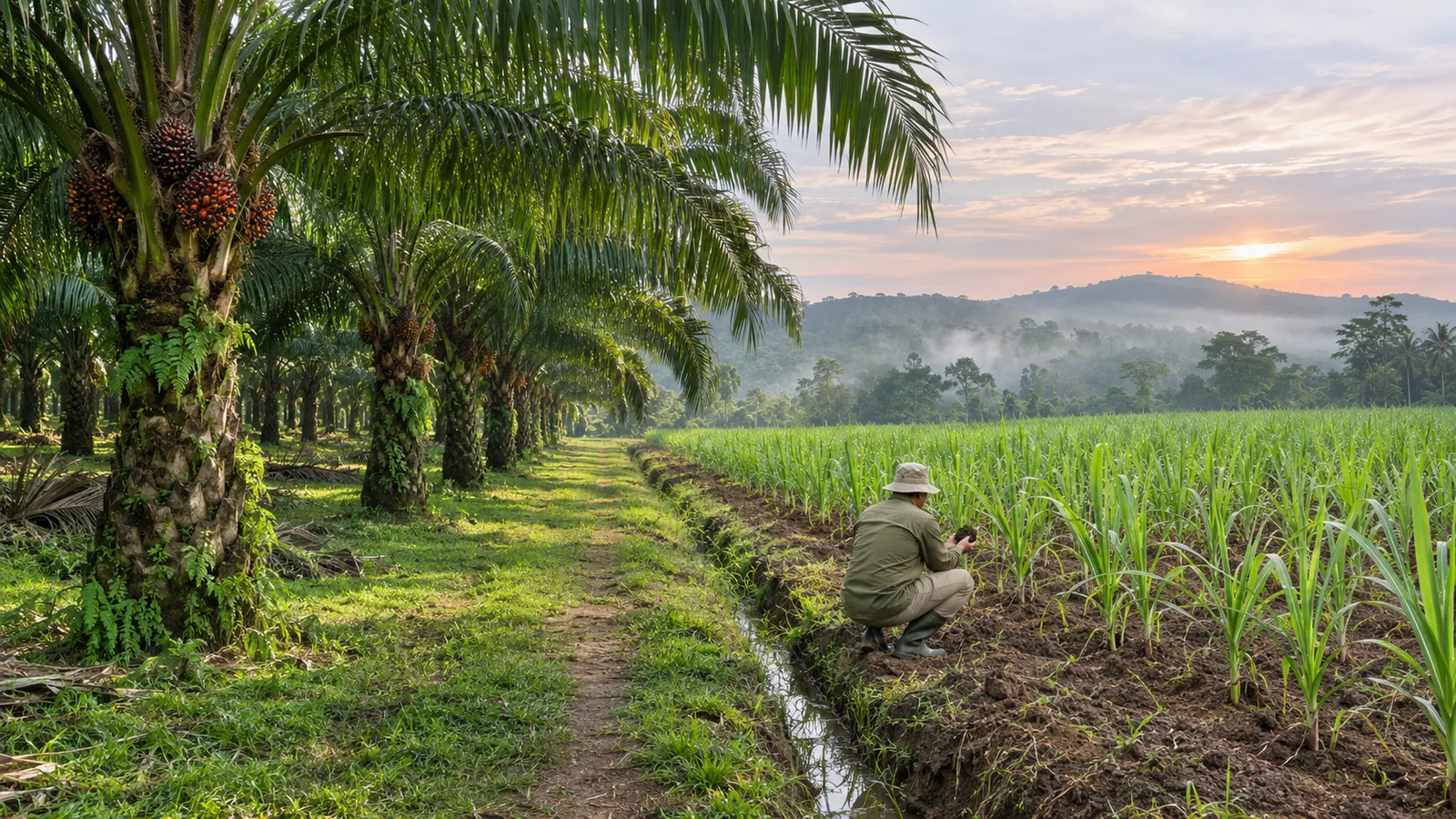
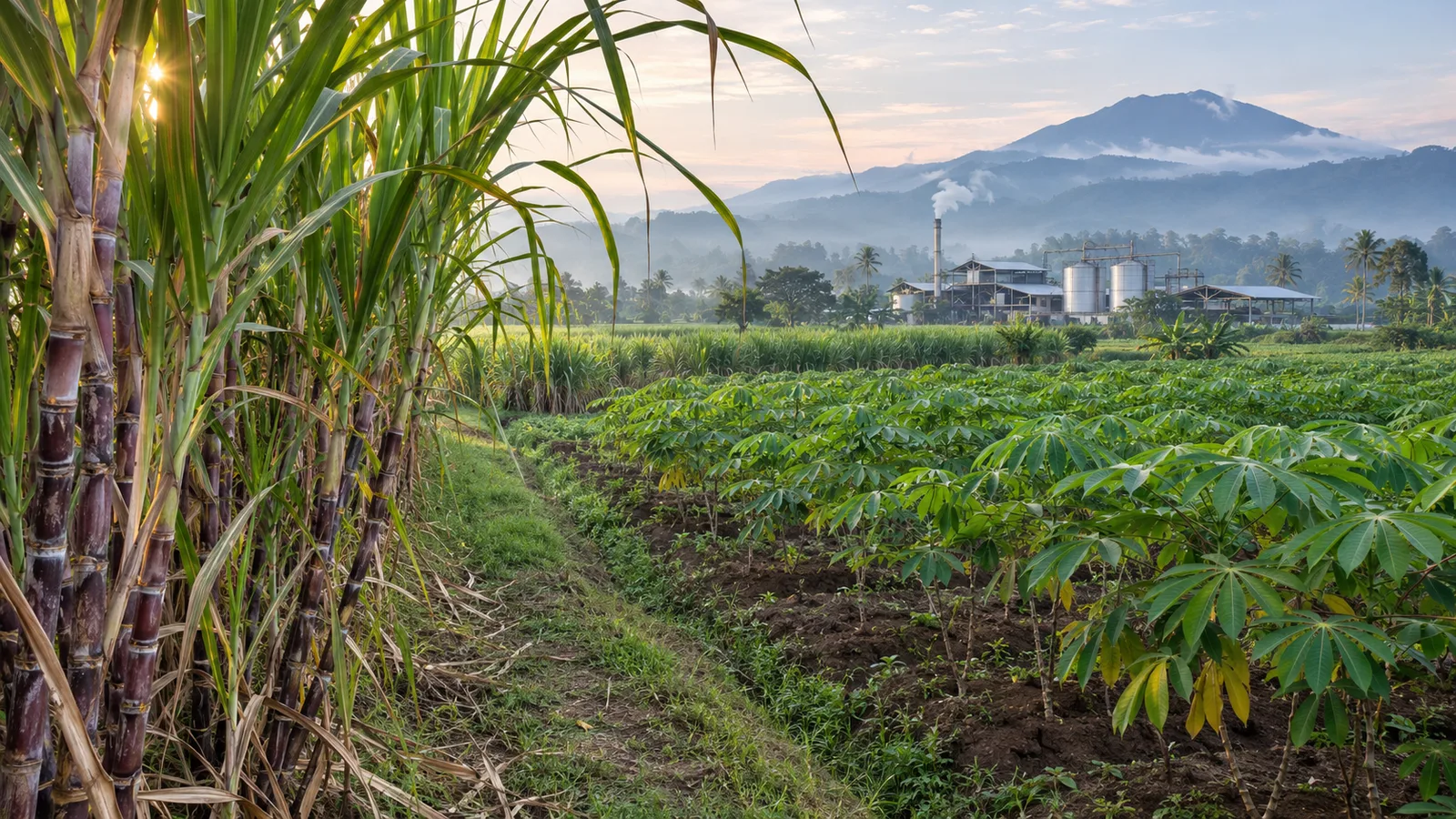
Transisi Bersih put the agricultural requirement at approximately 4.4 million hectares of sugarcane, or 5.1 million hectares of cassava, or 3.3 million hectares of maize. These are alternative feedstock cases, not areas to be added together. The group said it used national productivity figures for 2020–2025 and FAO conversion figures from 2008; its estimates exclude land for factories, roads and buffer areas.
Executive director Abdurrahman Arum cautioned that land classed as temporarily unused is not necessarily empty, free of rights or suitable for energy crops. He said a figure of around 11.77 million hectares in a 2025 agricultural statistics book actually refers to 2019 conditions. Irrigation needs, ecological functions and community rights all require scrutiny. This is the group's assessment, not a finding that every parcel in the category is unusable.
What B50 can and cannot tell us about E50
Transisi Bersih senior researcher Sisdjiatmo K. Widhaningrat linked the ethanol debate to the B50 biodiesel programme. In his view, lower diesel imports alone cannot establish the programme's net benefit because palm oil used domestically also has potential export value. The group says its calculation produces a negative net foreign-exchange effect after accounting for foregone exports. We have not obtained its full working paper to independently test assumptions about prices, volumes and time periods.
ESDM, meanwhile, presents B50 as part of a strategy to reduce dependence on imported fossil fuel and add value to domestic resources. Its 17 September statement said the president had directed officials to plan E50 while drawing lessons from B50. Those are distinct emphases: the government highlights energy security, while Transisi Bersih calls for a fuller public account of economic costs and land consequences.
A staged approach remains a proposal
Transisi Bersih recommends beginning with lower blends such as E10 or E20 in areas where vehicles and supply chains are ready. It also calls for no new forest clearing for energy crops, with higher yields on existing farmland, better irrigation and second-generation ethanol from residues given priority. Its other proposals include farmer and cooperative partnerships, and the release of feedstock balances, emissions assumptions and economic studies for public examination.
These recommendations must not be mistaken for adopted rules. The ESDM's 3 November release referred to a gradual E20–E50 plan and cooperation with the agricultural sector, but set no operational E50 start date. Actual ethanol supply, prices, vehicle compatibility and potential effects on food crops still need testing before a higher blend can be evaluated.
The comparison with B50 also has limits. B50 blends biodiesel with fossil diesel; E50 refers to ethanol in petrol. Their crops, processing and supply chains differ. The immediate public question is therefore not whether E50 is already running, but how much domestic feedstock is available, who would bear transition costs and what safeguards would protect land and food supplies.
Sources & references
- Maklumat, "Transisi Bersih Ingatkan Risiko Ekologi dan Ketahanan Pangan dalam Rencana Implementasi E50" (9 November 2026) — https://maklumat.id/transisi-bersih-ingatkan-risiko-ekologi-dan-ketahanan-pangan-dalam-rencana-implementasi-e50/
- Jakartamu, "Belajar dari B50, Transisi Bersih Ingatkan Risiko Ekonomi Program E50" (10 November 2026) — https://www.jakartamu.com/belajar-dari-b50-transisi-bersih-ingatkan-risiko-ekonomi-program-e50-33223
- Ministry of Energy and Mineral Resources (ESDM), "Perkuat Ketahanan Energi, Pemerintah Siapkan Storage Minyak hingga 60 Hari dan Bioetanol E20" (3 November 2026) — https://www.esdm.go.id/id/media-center/arsip-berita/perkuat-ketahanan-energi-pemerintah-siapkan-storage-minyak-hingga-60-hari-dan-bioetanol-e20
- Ministry of Energy and Mineral Resources (ESDM), "Usai B50, Pemerintah Siapkan E50 Langkah Baru Kurangi Ketergantungan BBM Impor" (17 September 2026) — https://www.esdm.go.id/id/media-center/arsip-berita/usai-b50-pemerintah-siapkan-e50-langkah-baru-kurangi-ketergantungan-bbm-impor
Stay on top of Indonesian biodiesel
The weekly newsletter: the week’s key news, prices and data in one email every Friday. Or follow our channels for daily prices.