Indonesia's B40 Use Reaches 14.2 Million kL in 2025
The energy ministry reports 14.2 million kL of B40 biodiesel use in 2025, above a 13.5 million-kL utilisation target; the original allocation differs.
Contents (3 sections)
Jakarta — Indonesia used 14.2 million kilolitres (kL) of biodiesel under its B40 blending mandate in 2025, Energy and Mineral Resources Minister Bahlil Lahadalia said at a ministry performance briefing on 8 January 2026. The reported volume exceeded the 13.5 million-kL utilisation target used in the briefing. Officials also linked the programme to a fall in diesel imports, while their estimates of economic benefits remain government calculations.
Reported use exceeds the stated target
Bloomberg Technoz reported that 14.2 million kL represented 105.2% of the 13.5 million-kL target. CNBC Indonesia independently reported both figures from the same ministry briefing. The unit measures biodiesel used under the mandate, not total sales of blended diesel to consumers. B40 designates a fuel blend containing 40% biodiesel.
The target comparison needs context. At the start of 2025, the energy ministry announced a B40 biodiesel allocation of 15.6 million kL across public-service-obligation (PSO) and non-PSO segments. By contrast, the January 2026 briefing described 13.5 million kL as a utilisation target. An allocation and a performance target are different measures. The available reports do not fully explain why the two figures differ, so the quoted 105.2% performance should not be described as a share of the 15.6 million-kL allocation.
Import reduction and estimated benefits
According to Bloomberg Technoz, Bahlil said diesel imports had fallen from approximately 8.3 million kL in 2024 to about 5 million kL in 2025. He attributed the decline of around 3.3 million kL to B40. CNBC Indonesia also reported a 3.3 million-kL reduction in its data narrative, although the quotation it transcribed used “tonnes” for the minister's 8.3 million and 5 million figures. This difference in reported units warrants caution: the volumes should not be converted or combined without a consistent underlying dataset.
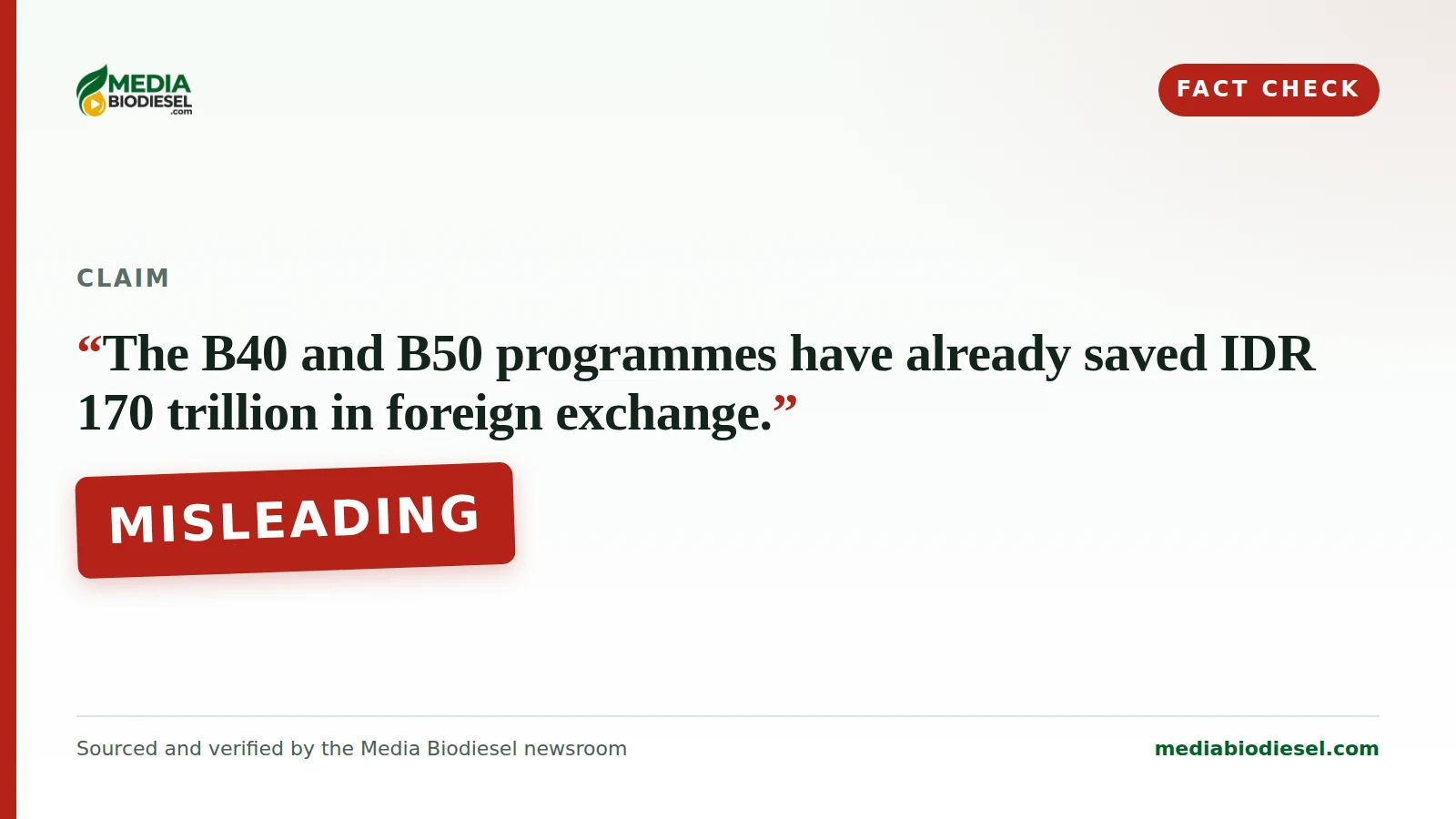
The ministry put foreign-exchange savings associated with B40 in 2025 at IDR 130.21 trillion, according to both reports. Officials also estimated IDR 20.43 trillion in added value from processing crude palm oil (CPO) into biodiesel and an emissions reduction of about 38.88 million tonnes of CO₂ equivalent. These are government estimates presented at the briefing; neither news account contains a full independent audit of the methods. The attribution of the import decline to B40 is likewise the minister's assessment, rather than evidence excluding every other possible contributor.
B50 remained a conditional plan
At the same briefing, Bahlil described plans for B50 testing in the first half of 2026 and said the higher blend could be considered for the second half if tests succeeded. He also linked a planned refinery start-up with his goal of reducing diesel imports. As of 8 January, B50 implementation and an end to diesel imports were not accomplished outcomes. They should be read as conditional government objectives, distinct from the reported 2025 B40 utilisation figure.
The year-end result offers a benchmark for assessing the mandate: the volume actually used, which target it is compared with, and how its claimed benefits are calculated. Further policy decisions would require operational evidence and transparent cost estimates. Readers can consult the biodiesel mandate timeline and B50 explainer for background on blending levels.
Sources & references
- Bloomberg Technoz, "Serapan B40 14,2 Juta Kl, Bahlil Kebut B50 Buat Semester II-2026" (8 January 2026) — https://www.bloombergtechnoz.com/detail-news/95690/serapan-b40-14-2-juta-kl-bahlil-kebut-b50-buat-semester-ii-2026
- CNBC Indonesia, "Ada Program Biodiesel B40, RI Berhasil Hemat Devisa Rp130,21 T di 2025" (8 January 2026) — https://www.cnbcindonesia.com/news/20260108152801-4-700744/ada-program-biodiesel-b40-ri-berhasil-hemat-devisa-rp13021-t-di-2025
- Ministry of Energy and Mineral Resources, "Wujudkan Ketahanan Energi dan Kurangi Impor, Menteri ESDM: Mandatori B40 Berlaku 1 Januari 2025" (3 January 2025) — https://www.esdm.go.id/id/media-center/arsip-berita/wujudkan-ketahanan-energi-dan-kurangi-impor-menteri-esdm-mandatori-b40-berlaku-1-januari-2025
Stay on top of Indonesian biodiesel
The weekly newsletter: the week’s key news, prices and data in one email every Friday. Or follow our channels for daily prices.