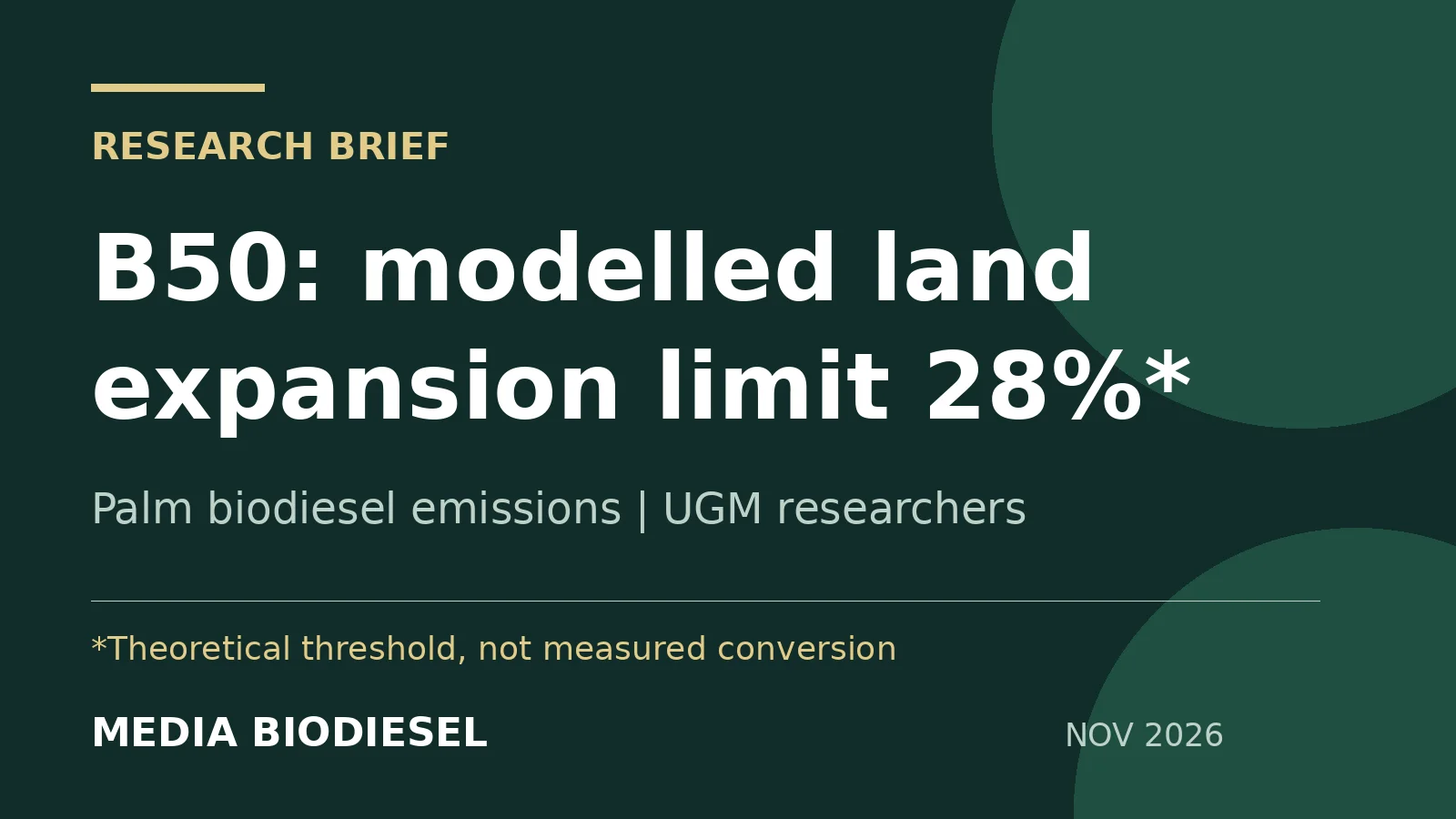
Research Brief: UGM — B50 Climate Benefit Hinges on a 28% Land-Expansion Limit
UGM researchers model a theoretical 28% limit for incremental feedstock from forest-conversion-equivalent land, not measured expansion.
The latest news, data and analysis on Indonesian biodiesel and renewable energy from Media Biodiesel.
UGM researchers model a theoretical 28% limit for incremental feedstock from forest-conversion-equivalent land, not measured expansion.
GAPKI forecasts Indonesian palm product exports at 29.73 million tonnes in 2027 as output eases and domestic consumption, including biodiesel feedstock, rises.
Indonesia's energy ministry plans a review of the 2027 B50 mandate next week, weighing palm feedstock, distribution readiness and financing. The current programme has not…
Mistry forecasts a Malaysian palm oil benchmark of RM4,500–RM5,000 a tonne through April 2027, as global exports tighten and Indonesia reviews B50.
Reuters reports 13.84 million kL of biodiesel use by 10 November; IPOC weighs B50 funding while KPBN and FCPO recover through Thursday.
Indonesia's palm oil-based biodiesel consumption reached 13.84 million kL by 10 November 2026, or 83% of the B50 allocation, Reuters reported citing an ESDM official at…
Coordinating Minister Airlangga Hartarto said palm downstreaming targets biodiesel B50 and SAF, with the biodiesel requirement rising from 15.6 million kL to 16.7 million…
S&P projects a 4.4-million-tonne drop in Indonesian palm oil output in 2027; LPEM UI models B50 support of up to US$2.6 billion at Brent US$70.
Pertamina targets 288,000 kL of combined SAF and HVO output a year from 2029, without disclosing the product split or secured cooking-oil feedstock.
USDA links part of Indonesia's reduced vegetable-oil trade with India to rising domestic palm-oil use under biodiesel blending mandates.
Eight FFB price series updated: Riau plasma and South Sumatra gained, while partnered independent Riau and Jambi declined. Effective periods vary.
Pertamina reports SAF production at its Dumai refinery using feedstock containing 5% used cooking oil; commercial sales and emissions calculations were not disclosed.