Nasir Inspects Red and White Catalyst Trial at Dumai Refinery
Pertamina and ITB tested co-processing palm oil with fossil feedstock at Dumai. ANTARA cited 10% palm input; ESDM reported RBDPO input of up to 12% in the trial.
Contents (3 sections)
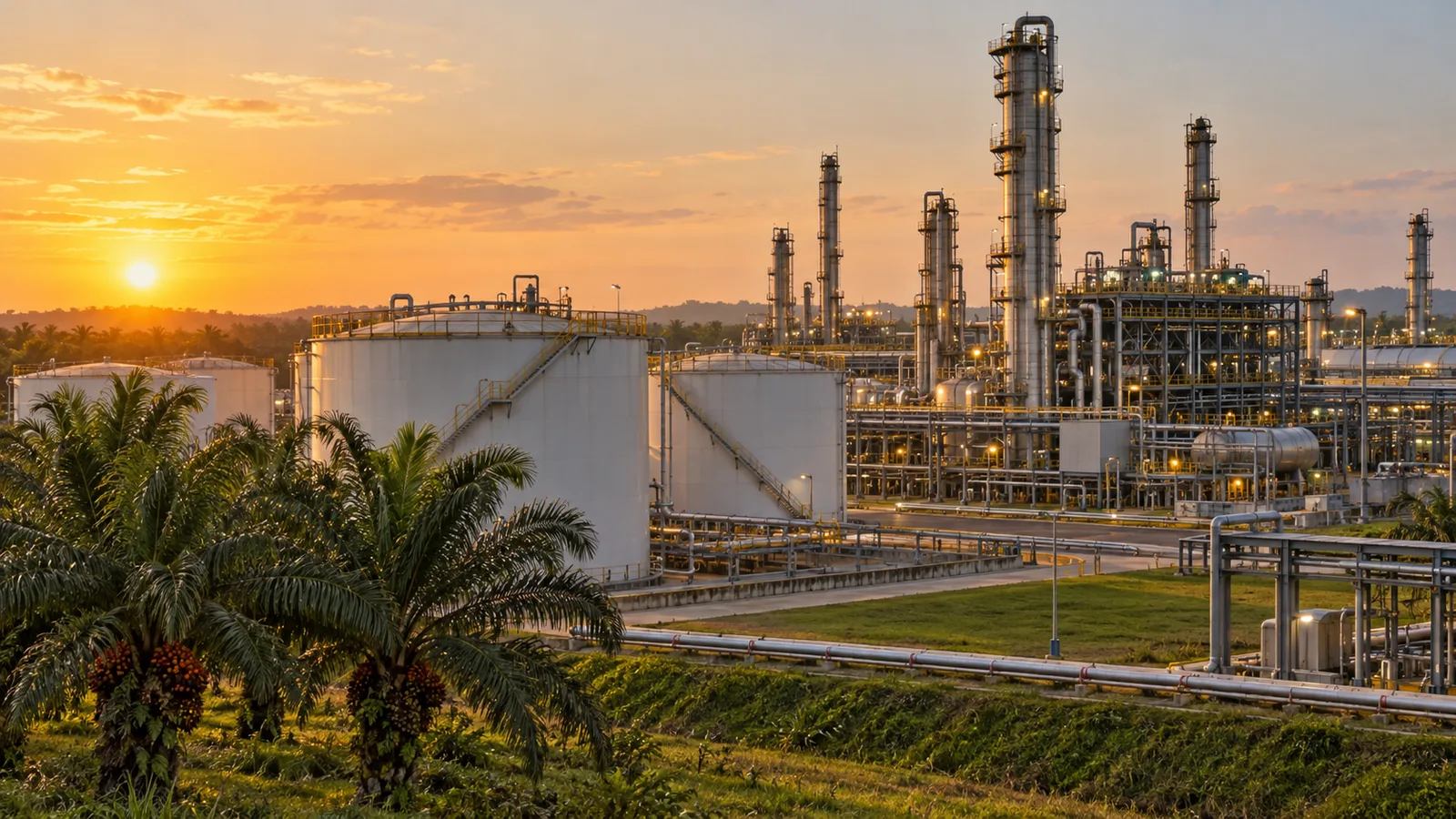
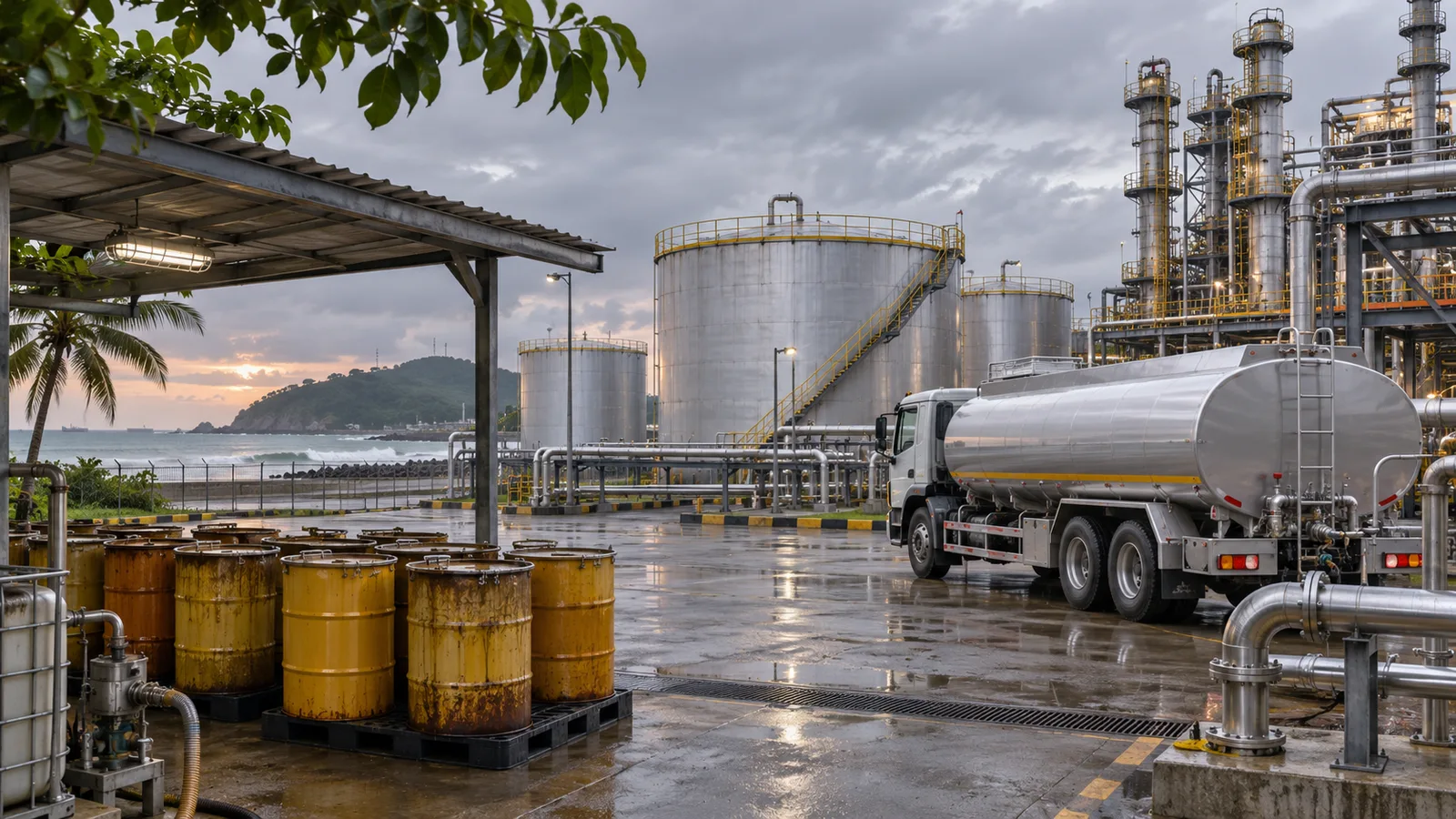
Dumai, Riau — Research and Technology and Higher Education Minister Mohamad Nasir inspected a Katalis Merah Putih trial at Pertamina’s RU II Dumai refinery on Thursday, 16 May 2019. The test processed palm-derived material alongside fossil feedstock in a distillate hydrotreating unit (DHDT) to make a diesel-range fuel component. ANTARA described a trial feed of 10% palm oil and 90% fossil oil, while Indonesia’s Ministry of Energy and Mineral Resources (ESDM) said the unit had tested refined, bleached and deodorised palm oil (RBDPO) input of up to 12%.[1][2]
Those percentages refer to co-processing inside the refinery, not a diesel product made entirely from palm oil. ANTARA reported the visit on 16 May; the ESDM account appeared on 17 May. Both identified Pertamina and the Bandung Institute of Technology (ITB) as partners in developing the domestic catalyst.[1][2]
How the Dumai trial worked
Nasir visited the refinery’s DHDT unit, where a catalyst developed through Pertamina–ITB research was being applied to processing fossil and palm-based inputs, ANTARA reported. Its account said the collaboration had received research funding from the Ministry of Research, Technology and Higher Education’s innovation directorate since 2017. ESDM described the approach as co-processing: feeding vegetable and fossil oils into the same refinery process using the locally developed catalyst.[1][2]
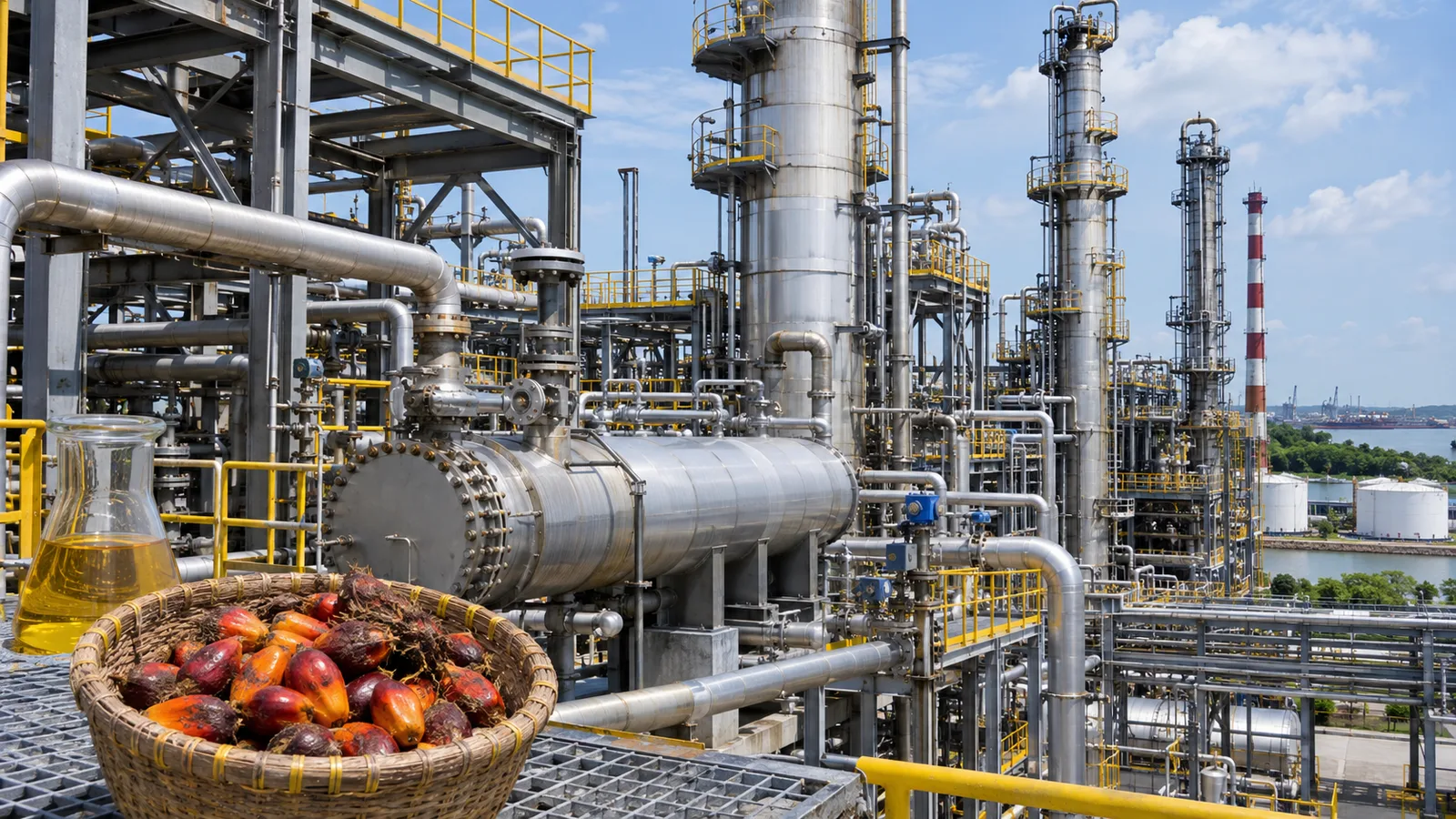
The palm feedstock cited by ESDM was RBDPO, a processed palm oil rather than unrefined fruit oil. ESDM said replacement of the old catalyst began in February 2019 and injection of vegetable feedstock followed in March. These were stages of an ongoing refinery test by the time officials visited in May, not evidence that all Dumai diesel output had changed feedstock.[2]
Why the reported 10% and 12% differ
ANTARA said that, during the testing stage, Pertamina could produce 12,000 barrels per day of palm-containing diesel using a reported 1,200 barrels of palm oil, or 10% of the feed, alongside 90% fossil oil. In the same report, Dumai refinery general manager Nandang Kurnaedi referred to a provisional test at 12% palm input. These figures describe the trial as reported, not verified commercial sales or a guaranteed daily production rate.[1]
ESDM more specifically said the DHDT co-processing trial could absorb RBDPO feed of up to 12%. The accounts need not be flattened into a single fixed blend: ANTARA provided a 10% feed composition in one description, while ESDM described the higher level achieved in testing. Neither percentage is the FAME biodiesel blending rate in finished diesel.[1][2]
Nasir told ANTARA the tested fuel had a cetane number of 58, against a fossil-diesel comparator of 51. Nandang also cited a rise to 58 and lower sulphur content in ESDM’s account. These are reported trial-quality claims, not proof of final commercial certification or long-term performance in vehicles.[1][2]
Barriers to wider use
The work offered a possible route for using palm oil in a refinery-made diesel component alongside fossil feedstock, distinct from blending FAME biodiesel into finished diesel. ESDM expressed a hope that the catalyst’s performance could be replicated at other Pertamina refineries and supplement the existing biodiesel mandate. It did not announce that such replication had already happened.[2]
Nandang identified limited RBDPO storage and hydrogen requirements as constraints, according to ANTARA. ESDM’s bioenergy director, Andriah Feby Misna, said commercial deployment would also need upstream feedstock development, a catalyst plant, further process work, and downstream policies, standards and incentives. In May 2019, the Dumai operation remained a technology trial rather than a commercial rollout of pure palm-based diesel.[1][2]
Sources & references
- [1] ANTARA, "Menristekdikti tinjau uji katalis di Kilang Pertamina" (16 May 2019) — https://www.antaranews.com/berita/872845/menristekdikti-tinjau-uji-katalis-di-kilang-pertamina
- [2] Kementerian ESDM, "Pengembangan Katalis Berteknologi Tinggi Untuk Pengembangan BBN di Kilang Pertamina" (17 May 2019) — https://www.esdm.go.id/id/berita-unit/direktorat-jenderal-ebtke/pengembangan-katalis-berteknologi-tinggi-untuk-pengembangan-bbn-di-kilang-pertamina
Stay on top of Indonesian biodiesel
The weekly newsletter: the week’s key news, prices and data in one email every Friday. Or follow our channels for daily prices.