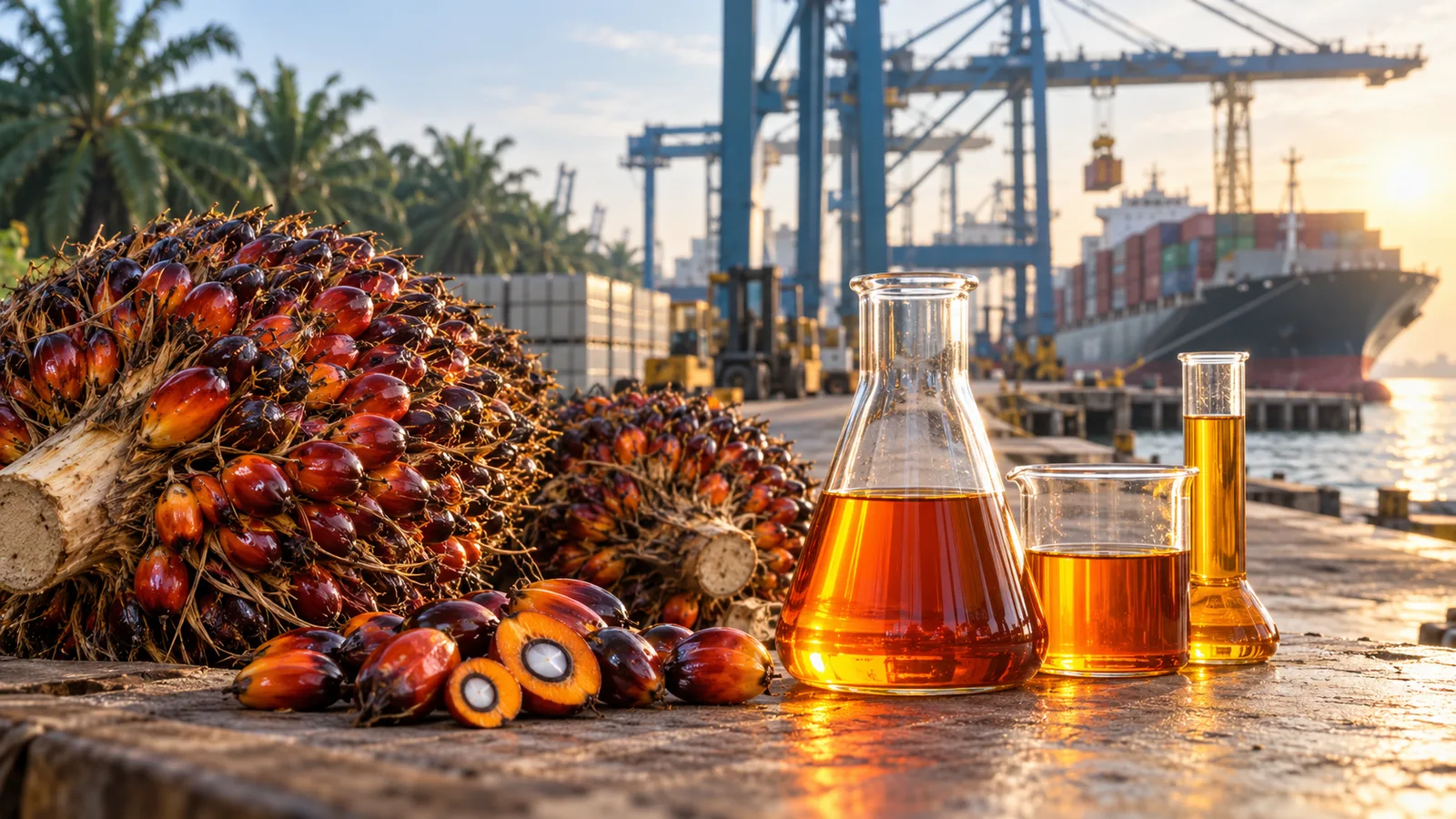
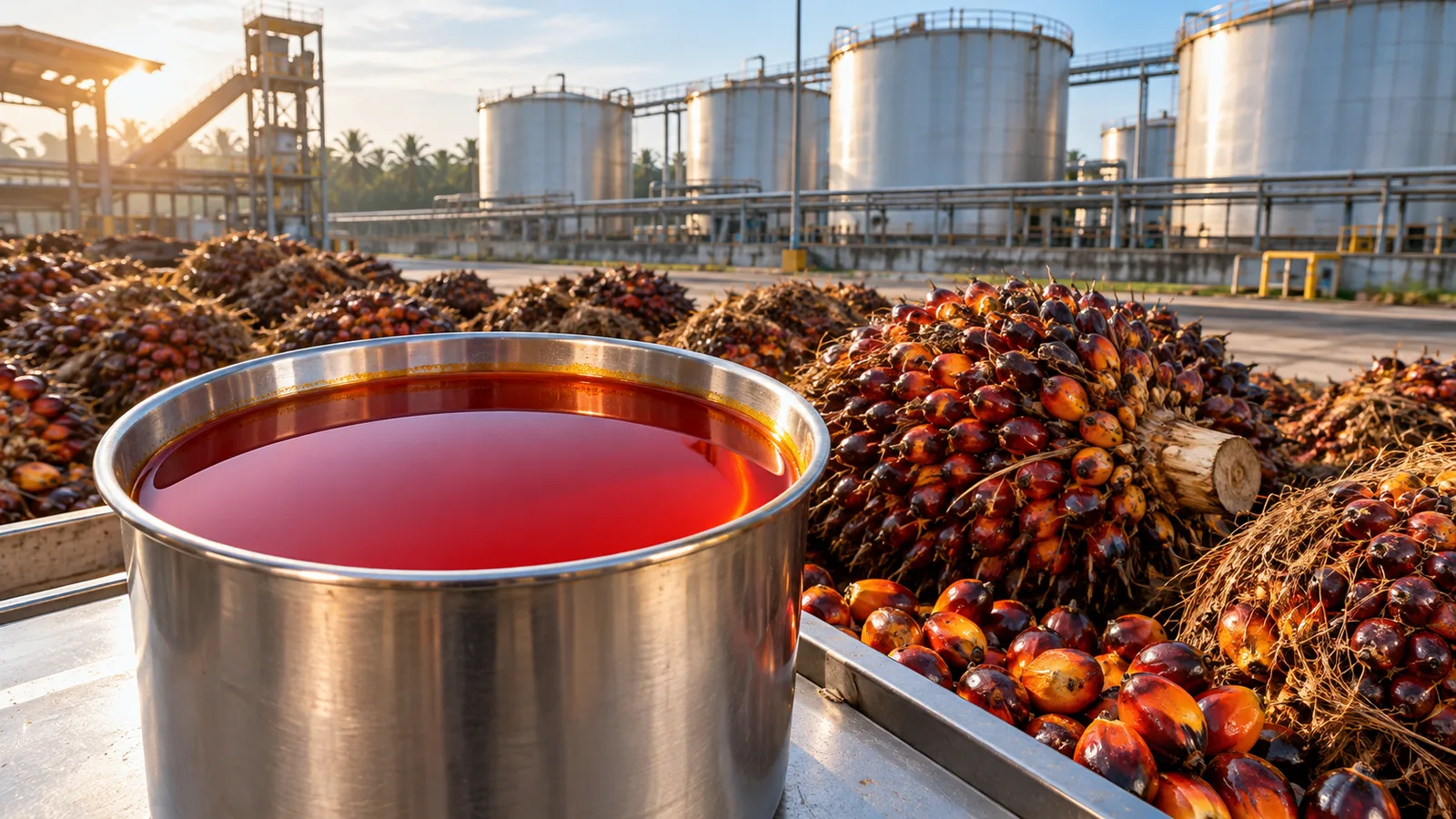
Malaysian Palm Futures Fall to RM4,650 as Export Costs and Crude Weigh
Malaysia's January palm futures closed at RM4,650 a tonne; lower Indonesian export costs and weaker crude weighed on the session.
Contents (3 sections)
Jakarta — Malaysia's benchmark January crude palm oil (CPO) futures closed at RM4,650 a tonne on Monday, 2 November 2026, down RM31 or 0.66%, Reuters reported through Business Recorder. The first November session weakened as traders weighed lower Indonesian export costs, softer crude oil and concerns about stockpiles. The Malaysian futures settlement is neither an Indonesian physical CPO tender price nor the monthly biodiesel market index price (HIP).
A reversal after Friday's gain
InfoSAWIT, citing Bernama, reported that the January 2027 Bursa Malaysia contract had closed at RM4,681 a tonne on Friday, 30 October. Reuters' Monday figure describes a decline in the same delivery month across those two sessions. Two trading days alone do not establish a sustained market trend or tell growers the price they received for fresh fruit bunches (FFB).
Reuters said lower Indonesian export costs intensified competitive pressure on Malaysian palm oil, alongside weaker crude and concerns about rising inventories. A Kuala Lumpur-based trader linked the market adjustment to Indonesia's lower November CPO reference price and export levy. This is a trader's explanation for the session, rather than proof that any single policy caused the closing price.
Sunvin Group analyst Anilkumar Bagani also pointed to uncertainty over a Malaysian export-tax waiver, according to Reuters. The same report said cargo surveyors estimated October Malaysian palm-product exports had risen by between 45.4% and 73.5% from September. Those divergent estimates are not final official monthly trade figures.
Energy markets and biodiesel feedstock
Reuters reported that crude oil fell nearly 4% around the session. Cheaper fossil fuel can make palm oil less commercially attractive as biodiesel feedstock. That market relationship does not mean Indonesia's compulsory biodiesel blend automatically changes whenever crude oil prices move. Palm oil also competes with other vegetable oils, while inventories and the ringgit affect trade; attributing a session entirely to fuel prices would overstate the evidence.
The distinction between a market price and a statutory levy matters. In a March press release, the Plantation Fund Management Agency (BPDP) said Indonesia's Group II CPO export levy was 12.5% of the trade ministry's reference price. A US-dollar-per-tonne levy amount follows the applicable reference price, not the daily settlement of a single Malaysian futures contract. RM4,650 therefore cannot simply be translated into an Indonesian levy or a biodiesel HIP.
What it means for Indonesia
As an editorial analysis, cross-border price competition may affect the competitiveness of Indonesian palm-oil offers. A single day's decline does not, however, establish a drop in BPDP receipts, a change in farmers' FFB prices or a revision of B50 funding costs. Actual levy collections depend on export transactions and applicable rules; regional FFB prices follow their own fixing periods and methods.
InfoSAWIT put the KPBN Dumai CPO tender at IDR 15,125 per kilogram excluding value-added tax on Friday, 30 October, while it reported the Malaysian January contract at RM4,681 per tonne that day. Those quotations differ in currency, unit, market and delivery terms. Readers can consult the separate CPO price series and biodiesel HIP data. None of the cited figures establishes that HIP changed on 2 November.
Sources & references
- Reuters via Business Recorder, "Palm slides on lower Indonesian export costs, weak crude, rising stockpiles" (2 November 2026) — https://www.brecorder.com/news/40447044
- InfoSAWIT, "Harga CPO KPBN Inacom Naik Pada Jumat (30/10/2026), Perdagangan CPO di Bursa Malaysia Ditutup Mayoritas Menguat" (31 October 2026) — https://www.infosawit.com/2026/10/31/harga-cpo-kpbn-inacom-naik-pada-jumat-30-10-2026-perdagangan-cpo-di-bursa-malaysia-ditutup-mayoritas-menguat/
- BPDP, "Siaran Pers Perubahan Tarif Pungutan Ekspor PMK 9 Tahun 2026" (1 March 2026) — https://www.bpdp.or.id/uploads/Siaran%20Pers/Siaran%20Pers%20Perubahan%20Tarif%20Pungutan%20Ekspor%20PMK%209%20Tahun%202026.pdf
Stay on top of Indonesian biodiesel
The weekly newsletter: the week’s key news, prices and data in one email every Friday. Or follow our channels for daily prices.